Opportunities abound to ram up UK-Taiwan relations

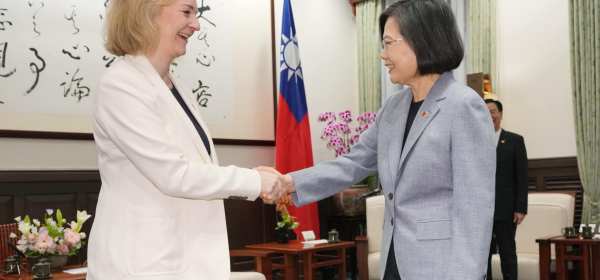
Written by Huynh Tam Sang and Phan Van Tim. By and large, there are ample opportunities for the UK and Taiwan to deepen their relationship, given Taiwan’s geopolitical importance and rising prominence as a robust democracy and resilient economy. Moreover, should London genuinely devote its time and energy to pushing its “Indo-Pacific Tilt”, engaging with Taiwan would benefit London as it helps the great power establish a firm footprint in the area while demonstrating the country as a responsible stakeholder in the region.

Three Musketeers against Mis/disinformation: Assessing Citizen-led Fact-checking Practices in Taiwan 

Written by Chiaoning Su and Wei-Ping Li. From sophisticated disinformation campaigns to patriotic trolling and clickbait, the flood of mis/disinformation has become a global phenomenon. Studies have shown that Taiwan’s young democracy ranks as one of the countries most exposed to misleading viewpoints or false information from foreign forces, especially China. These campaigns often seek to demonise high-profile Taiwanese politicians and divide Taiwanese society. They also aim to steer Taiwan away from anti-China policies or international alliances, notably with the United States.  

Who are the Allies of the Chinese Communist Party (CCP)? Neologisms, Netizens, and Nationalisms 

Written by Hsin-I Sydney Yueh. Recently, Taiwan’s Ministry of National Defense rejected a Japanese news report suggesting a widespread tendency among retired Taiwanese military officials to “sell out” their country. Wu Sz-Huai, a retired lieutenant general and incumbent opposition KMT party legislator, was among those who denounced this allegation.  

“Are we Chinese spies (共諜)?” Wu angrily asked this rhetorical question during a session of the National Defense Committee at Taiwan’s Legislative Yuan on March 2, 2023. While Wu denied being a Chinese spy, Taiwanese netizens teased him by sharing a photo of Wu and other retired Taiwanese military officials attending a CCP-hosted event, where they had sat attentively and listened respectfully to China’s leader Xi Jinping in 2016. Wu’s use of the term “Chinese spies” reminds us of another similar expression in Mandarin Chinese: “allies of the CCP” (中共同路人). This expression has recently gone viral in Taiwan’s online communities, used for self-mockery and as an attacking label.

“Governing by Memes”: COVID-19, Conspiracy, and Digital Democracy in Taiwan 

Written by Wen Liu and Hsin-I Sydney Yueh. The COVID-19 pandemic has significantly rearranged our social relations and affective connections. Amid disinformation and virus-origin conspiracy theories circulating across the social landscape, governmental responses to the pandemic have included various public health measures, such as lockdowns and mask mandates, and political measures, such as escalating geopolitical conflicts between the United States and China. Around the world, fear has been one of the most prominent affective responses to the pandemic, as driven by disinformation practices, intensified geopolitics, and our raw psychic fear about the unknown.

Freedom Fighting: Taiwan’s Resistance against China’s Ethnonationalism   

Written by Hsin-I Cheng. In the past decade, the world has heard the resisting voices of dissidents across Asia. From the 2014 Sunflower Movement to the Occupied Central Movement in Hong Kong later in the same year, citizens peacefully held their governments accountable. Since then, we have witnessed mass protests for freedom and transparency in nations. These challenges against authoritarianism generated transnational synergy, as demonstrated in the “#Milk Tea Alliance.” This movement started in 2020 when young Thai netizens fought cyberattacks against two Thai celebrities who expressed support for Taiwan and Hong Kong’s autonomy. Shockingly, two years later, the world witnessed Russia’s further invasion of Ukraine—it is a less militarily powerful neighbouring nation. Against these backdrops, we launched the book: Resistance in the Era of Nationalisms: Performing Identities in Taiwan and Hong Kong.

Taiwan Cabinet Reshuffle, DPP’s Fundamentalist Shift, and Faction Infighting Ahead of the 2024 Election Cycle

Written by Milo Hsieh. On January 30th, the Tsai administration finalised its cabinet reshuffle. With former vice-President Chen Chien-jen (陳建仁) taking the helm of Taiwan’s Executive Yuan as premier, Tsai brings back a former ally as the four-year tenure of former Premier Su Tseng-chang (蘇貞昌) concludes after a series of electoral fumbles by the DPP. Moreover, with Taiwan’s 2024 presidential and legislative election less than a year away, the party also shifts back closer to its founding principles with the election of Vice-president William Lai (賴清德) as chair.

Judicial Reform in Taiwan in the context of the Citizen Judges Act

Written by John Burn. In her inauguration speech in 2016, it was claimed that Tsai Ing-Wen received her most rapturous applause for her pledges to institute reform of the judiciary and criminal law proceedings. In a climate of widespread public mistrust in a perceived detachment of judges’ interpretations of the law and public morality, Tsai embarked upon her stage of the long and slow relay of reform. So far, her administration’s most significant stride in this direction has been the Citizen Judges Act, which came into effect on the 1st of January this year. Yet this measure is only the latest legislative development in the long, complicated course of Taiwanese judicial reform.

Taiwanese Theatre’s Struggle: The 228 Incident and White Terror Era

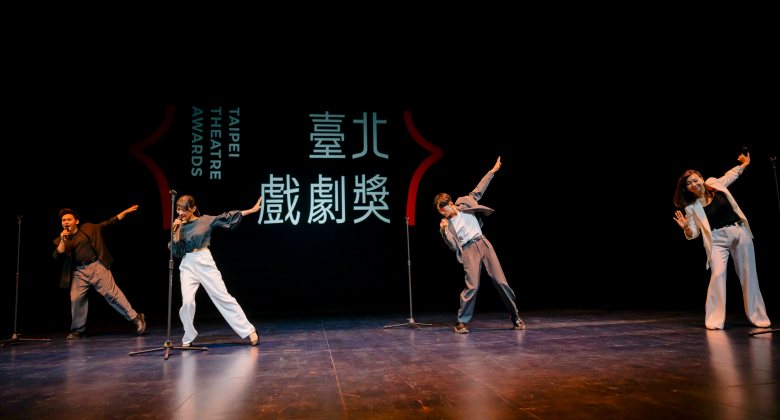
Written by Yin-Chen Kang. This year marks the 76th anniversary of the February 28 Incident, also known as the 228 Incident. Occurring 76 years ago, this event was sparked at the end of February, leading to the KMT military’s brutal campaign in March against those they considered dissidents, resulting in the slaughter of numerous civilians. This marked the beginning of an extended period of White Terror. While the incident profoundly impacted Taiwanese society, many people may not be aware of the significant consequences of the 228 Incident and the ensuing White Terror on the development of modern Taiwanese theatre.

History was Reconfigured at the Time of Discovery: The Life and Afterlife of Chiang Wei-Shui

Written by Fang-Long Shih. The life and afterlife of Chiang Wei-Shui (蔣渭水 1891–1931) have echoed what the film Rashomon has denoted: “History was not found at the time of its occurrence, but was reconfigured at the time of discovery” (dir. Akira Kurosawa 1950). In 1921, Chiang Wei-Shui founded Taiwan Cultural Association (TCA, 台灣文化協會), the first culture-based organisation in Taiwan’s history. The TCA was established “to promote Taiwan to a position of freedom, equality and civilisation”. The TCA also had a political aim to “adopt a stance of national self-determination, enacting the enlightenment of the Islanders, and seeking legal extension of civil rights”.

Transformation of Women’s Status in Taiwan, 1920-2020

Written by Doris T. Chang. Among all the gains made by Taiwanese women in the past century, achieving leadership roles in the political arena is perhaps Taiwanese women’s greatest achievement. During the Japanese colonial era, women had no right to vote. However, after lifting martial law in 1987, Taiwan emerged as a vibrant democracy. Due to political parties’ commitment to nominating more qualified women candidates for elections in the late 1990s and after that, the percentage of women elected to Taiwan’s Legislative Yuan reached 42 per cent in 2020 — the highest in Asia. This is equivalent to the percentage of women legislators in most Scandinavian countries. But Taiwanese women’s achievement in the political arena would not have been possible without making significant progress in their educational attainment throughout the twentieth century.

Hybrid Taiwanese Opera: The Vitality of “Opeila”

Written by Jasmine Yu-Hsing Chen. In Taiwan, outdoor Taiwanese opera performances next to temples have been essential to Taiwanese religious traditions for decades. Most troupes adhere to the etiquette of performing “classical plays for matinees and opeilas for evening performances.” Unlike performances in the afternoon, which are mostly classical repertoires based on books and legends, evening performances are always energetic. With the accompaniment of an electronic piano and jazz drums, the actors on stage sing pop songs and dress in shining sequin robes, fancy suits, or colourful Japanese costumes. This hybrid performance style has been called “opeila” (oo-phiat-a), which is phonetically adapted from the Japanese pronunciation of “opera” (o-pe-ra オペラ) in Taiwanese. This unique subgenre of Taiwanese opera has livened memories in numerous Taiwanese people and is one of the most concrete testimonies of vital Taiwanese culture.

Why Does Taiwan’s Development in the Past Century Matter?

Written by Peter C.Y. Chow. By the end of the 20th century, most former colonies had become independent though few qualify as modern states. Taiwan is an exceptional case in modern development history. Although still a Japanese colony until WWII, Taiwan became a modernised country with remarkable achievements in socio-political and economic developments by the end of the 20th century. Its unique development trajectory is worthy of in-depth analysis such that other developing countries can share its experience in the struggle for modernisation.

1 40 41 42 43 44 134