Choosing Between Confronting China or Reviving the Economy: Why Taiwan’s Recall Campaign Backfired on the Ruling Party

Written by Chang, Chunhao. This article argues that the defeat of the recall campaign indicates that Taiwanese voters are unwilling to reverse electoral outcomes through post-election manoeuvres. The DPP fails to understand the priorities of moderate, unaffiliated, or floating voters. They want responsible governance, not political revenge, and are deeply committed to the democratic process.

Beyond Tragedy and Beijing’s Cultural Monopoly: Taiwan’s Democracy Is the True Future of Chinese Civilisation

Written by Bright Isle. This article argues that the true value of Taiwan’s democracy is to be the future of Chinese civilisation, in contrast to the authoritarian CCP. Taiwan demonstrates Confucian values in its political leadership and civic education. However, Taiwan’s democracy has to be constantly defended, including deepening democratic governance and strengthening national defence.

Mandarin Soft Power with Taiwanese Characteristics: Values, Visibility, and Challenges

Written by Elaine Chung and Qipeng Gao. This article examines Taiwan’s efforts to promote Mandarin education abroad as a tool of soft power, particularly in the UK. Drawing on student interviews, it explores how political values, language ideologies, and structural constraints shape learners’ choices. It offers insight into how Taiwan can strengthen its visibility and appeal in global language education.

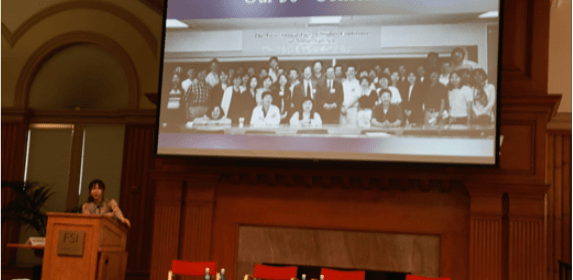
First Round of Early Career Scholars Workshop on Taiwan Studies: Reflections of the Organisers 

Written by Raian Hossain & Ping-An Wei. This article offers a reflection on the motivations behind organising the first Early Career Scholars Workshop on Taiwan Studies, the key achievements of the event, and the broader vision of establishing an Early Career Scholars Network under the Taiwan Research Hub. The organisers highlight how the workshop created opportunities for interdisciplinary exchange, professional development, and long-term community building among emerging scholars in the field.

Lesson from India-Pakistan: Weaponisation of Chokepoints

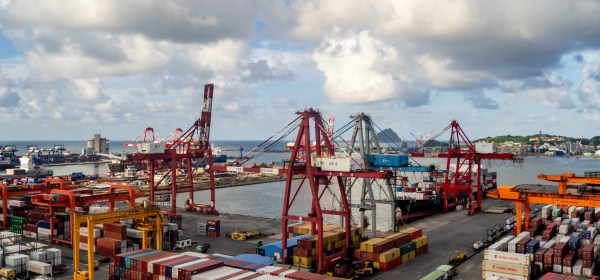
Written by Ritika Passi. The article discusses the weaponisation of different chokepoints, using the India-Pakistan water dispute as a case study. It applies these insights to Taiwan, underscoring its vulnerabilities in the Taiwan Strait for trade and subsea cables for data. The author emphasises the need for Taiwan to enhance its economic security and resilience against potential disruptions.

A Strategic Wake-Up Call: Insights from South Asia for Taiwan’s Defence Posture 

Written by Hsiao-Chen Lin. The article examines how South Asia’s recent strategic developments, particularly Pakistan’s use of integrated C4ISR systems, offer crucial insights for Taiwan’s defense. It highlights China’s export of integrated warfare doctrines and Taiwan’s efforts to enhance its resilience through defence reforms, societal readiness, and strategic realignment amidst evolving Indo-Pacific dynamics.

India-Pakistan Conflict: Lessons for Taiwan

Written by Sana Hashmi. This article discusses how the 2025 India-Pakistan conflict served as a critical case study for Taiwan, especially concerning a potential Chinese invasion. The author argues that China’s indirect support for Pakistan during the conflict allowed Beijing to test limited war scenarios, grey-zone tactics, and cognitive warfare strategies, mirroring Taiwan’s own strategic environment. This highlights Taiwan’s need to diversify its defense partnerships and enhance its resilience against disinformation.

From Missiles to Malware: India-Pakistan Cyber Rivalry and Lessons for Taiwan 

Written by Sameer Patil. This article discusses how the May 2025 India-Pakistan conflict unveiled a new chapter of cyber warfare and cognitive warfare. As the two nations exchanged conventional blows, an intense battle simultaneously unfolded in cyberspace, targeting digital infrastructure and spreading disinformation. Pakistan aggressively launched cyberattacks and propaganda, while India largely adopted a retaliatory and defensive cyber posture. This highlights the critical and evolving role of cyberspace in modern conflicts and offers key lessons for Taiwan regarding cybersecurity and countering disinformation.

The Implications of Recent India-Pakistan Conflict for Taiwan: Raising Awareness of Security Threat and Strengthening Will to Resist Aggression

Written by Mei-chuan Wei. This article examines the recent India-Pakistan conflict’s implications for Taiwan, highlighting the importance of developing advanced defence systems like data links and integrated air defence. It underscores the critical need for Taiwan to bolster public awareness of security threats and cultivate an unwavering will to resist potential Chinese aggression, viewing these as crucial for national defence.

1 6 7 8 9 10 134