How Vital is the CPTPP Membership to Taiwan?

Written by Yun-Chieh Wang. On September 22, 2021, six days after the Chinese government submitted its application to the Comprehensive and Progressive Agreement for Trans-Pacific Partnership (CPTPP), the Taiwanese government handed in its application to the depository in New Zealand. According to World Trade Organisation (WTO) data, Taiwan ranks as the top 15 goods export and the top 18 goods import economy in 2020. However, Taiwan has only signed a few trade agreements with its trading partners and cannot join critical regional trade agreements such as Regional Comprehensive Economic Partnership (RCEP). Therefore, participating in CPTPP is expected to promote Taiwan’s trade ties with the trade partners effectively.

A Comprehensive and Progressive Agreement for Trans-Pacific Partnership (CPTPP): A Game of Go? Or Three-dimensional Chess?

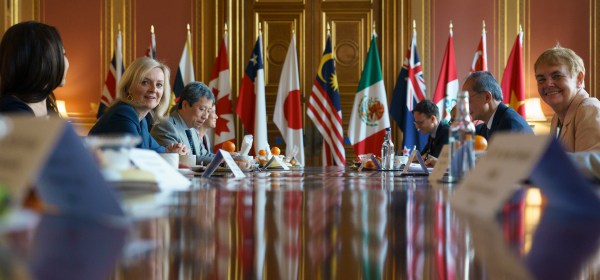
Written by Chun-Yi Lee and Michael Reilly. The CPTPP is an ambitious, wide-ranging free trade agreement (FTA) signed between Australia, Brunei Darussalam, Canada, Chile, Japan, Malaysia, Mexico, Peru, New Zealand, Singapore, and Vietnam in March 2018. The CPTPP was originally named as the Trans-Pacific Partnership and comprised twelve members. However, after the Trump administration withdrew the USA from it in 2017, the remaining eleven countries reorganised and renamed it. After leaving the EU, the UK applied to join in February 2021, followed by China and Taiwan in September. South Korea has been considering joining but has yet to do so. Countries seeking to join the bloc must negotiate tariffs and other market access conditions with each of the eleven original members. 

USA, China, and Taiwan: Post-Endemic Strategies for a New Global Economy

Written by Ian Inkster. Joe Biden’s recent scooping up of the fog of ‘strategic ambiguity,’ the seldom re-specified policy of the USA towards China in the case of an overt attack on Taiwan, was made in haste but has set the tail of the cat alight and its very colour in doubt. In Japan, Biden warned that China was ‘flirting with danger’ and then admitted that the US would defend Taiwan against invasion by China as contra to the Ukraine case. He was then asked directly if the US would defend Taiwan militarily if China invaded, when it has not done so in the invasion of Russia against Ukraine.

Taiwan’s Enduring Controversy on Absentee Voting and the Role of Media

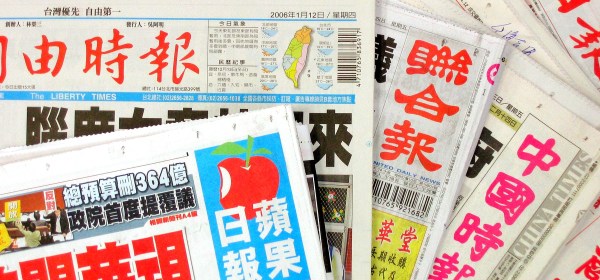
Written by Julia Marinaccio and Jens Damm. However, Taiwanese journalism also did its share. Like the political party system, Taiwan’s existing media landscape is ideologically divided over the question of how to fashion cross-Strait relations. Through their ideological orientation paired with a lack of investigative journalism, they act as mouthpieces of political parties. In doing so, they reinforce existing political cleavages rather than exercising their role as informants and watchdogs.

OTT in Taiwan: How Global Platforms Meet Local Productions and Politics

Written by Yu-peng Lin and Chang-de Liu. The development of over-the-top (OTT) media services is currently the main concern of Taiwan’s audiovisual industries. An OTT media service is an audiovisual streaming service provided directly to the audience by the Internet. The Taiwanese government wishes to strengthen this industry while also seeking balanced growth for international and local operators. For the latter, how to accelerate the production of their content in the face of global competition is the biggest concern. Furthermore, given the recent success of the Asian market, international operators are interested in co-producing content with Taiwanese companies.

Resilience, State Capacity and Public Trust in Combating Pandemics, Case of Taiwan (Part I)

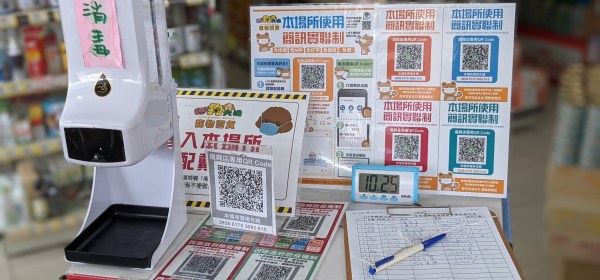
Written by Chun-Yi Lee. When it comes to combating pandemics, the public’s trust is crucial to the government’s response. The experience of COVID-19 demonstrates how well a government led its citizens through the pandemic depends on how citizens trust and comply with government regulations. As a result, COVID-19 has challenged not only health management but also governance issues more generally. As Fukuyama indicated, the Covid-19 pandemic was like ‘a bright light shone on existing institutions everywhere’ – the way a government and society reacted to the pandemic exposed the strengths and/or inadequacies within the existing institutions. 

Hard Cash or Soft Values? Assessing the ‘Lithuanian Model’ of Eastern European Relations with China and Taiwan

Written by Dominika Remžová. Over the last year and a half, Lithuania has been at the forefront of the EU’s improving relations with Taiwan and worsening relations with China. This culminated with Lithuania leaving the 17+1 framework of cooperation between China and 17 (now 16) eastern European countries on the one hand and the opening of the Taiwanese Representative Office in Vilnius on the other. The two events occurred in May and November 2021, respectively, with the latter being particularly controversial, as China argued that the denomination ‘Taiwanese’ breached the EU’s One China policy, which led to the imposition of Chinese economic sanctions on Lithuanian products. However, as Lithuania’s economic relations with China are negligible, at least when compared to western European countries, Beijing made the unprecedented move of targeting EU-wide supply chains that contain Lithuanian products. This effectively escalated the bilateral disagreement to the EU level, with the bloc filing a WTO case against China.

Cat-Warriors vs Wolf Warriors: How Taiwan Promotes Its Brand in the Face of a More Assertive China

Written by Simona Grano. According to China, Taiwan is a splinter province to be re-conducted under Beijing’s sphere of influence at all costs; likewise, China forbids international recognition of Taiwan under its “One China” principle. Through dealing with such hindrances for decades, the island has become skilled at swerving Chinese diplomatic aggression. Taiwan uses its soft – or “cat warrior” – diplomatic power to counter attacks on its sovereignty, promoting itself as a freedom-loving, peaceful nation in contrast to a belligerent China.

No Island Left Behind: Cross-Strait Relations in China’s National Museums

Written by Shih Chang. On October 25th, 2020, an exhibition commemorating the 75th anniversary of the recovery of Taiwan from Japanese colonial rule was held at the National Museum of China. The exhibition is divided into six sections that aim to show the “complete history” of the island of Taiwan from ancient to modern times. The first four sections: “Treasure Island, Taiwan,” “Nine States of Common Sorrow,” “Protecting Sovereignty against Japanese” Sovereign,” “Long Song as a Sword,” “Taiwan fending off the Japanese,” and “Cross-Strait Dreams,” objectively recreates the history of Taiwan’s “return to the motherland” and the development of cross-strait relations.

1 5 6 7 8 9 15