Harnessing national digital power to prevent COVID-19: the case of Taiwan

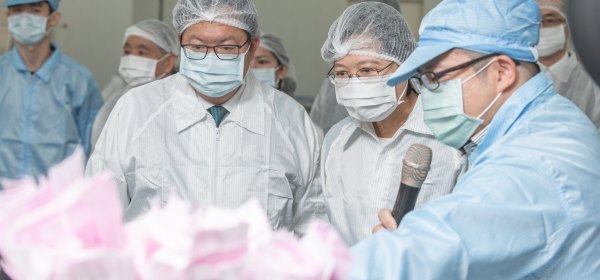
Written by Chih-Wei Chen. Over the past 18 months, the whole world has been severely challenged by the COVID-19 pandemic, which caused enormous numbers of infections and deaths, as well as economic recessions worldwide. Many countries took a series of actions to contain the spread of coronavirus, such as large-scale lockdowns and the provision of economic stimulate. Taiwan has often been positioned as a success story in terms of pandemic management. It did this largely by harnessing the national digital power, the core of which lies in the flexible and meaningful employment of technologies in governance, and supporting this with comprehensive policy planning for the whole society.
Taiwan’s Economy: GDP Growth is a Bright Spot for Now

Written by John F. Copper. The recent economic news emanating from Taiwan is the impressive growth in its gross domestic product (GDP)—one of the basic indicators of economic vitality. This is certainly good to hear. After experiencing negative growth throughout most of 2020, conditions changed in the last quarter of the year. As a result, Taiwan even bested China’s GDP growth. Furthermore, the upward trend accelerated this year, with GDP expansion the highest in two decades. If this growth is sustained, 2021 will end with a welcomed 5 per cent or better rise.

China and Taiwan: The ‘One-China’ Policy and the Controversy of ‘Vaccine Diplomacy’

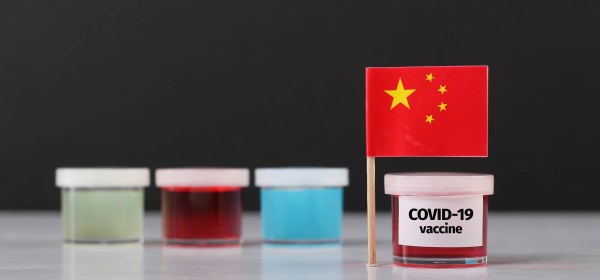
Written by Daouda Cissé. Since the beginning of the Covid-19 pandemic, China has exerted its influence at home and abroad through providing personal protective equipment (PPE), masks, medical equipment and so on. Due to its capacity to manufacture such equipment based on its past experience to survive other pandemics, it seems that China was a bit more prepared than other countries to face the Covid-19 pandemic.

Taiwan Is ‘a’ Dangerous Location on Earth

Written by Chieh-chi Hsieh. Yes, I get it. Not many can resist a bold and eye-catching title. However, if you supplement this with an articulated argument underpinned with a fair amount of empirical evidence, one can expect the article to reach a broader readership. Yet, the underlying issue of placing a bold statement at the forefront is that it is frequently misleading. This is precisely why I am sceptical about the recent article published by The Economist, which states Taiwan as ‘the most dangerous place on Earth.’

The Future of Taiwanese industries’ Supply Chain Reallocations Under Covid-19

Written by Chun-Chien Kuo. By adding fire to the existing US-China Trade War, Covid-19 has accelerated the current economic adjustment pace, along with the need for supply chain reallocation in industries. Thus, industries and firms in Taiwan have responded to adjust their production of diverse parts and components. They have also attempted to establish their own sufficient domestic supply chains. New trends in supply chain reallocation have also emerged, such as localised supply chains, shorten supply chains and digitalisation under the Covid-19 threat.

Attracting and Retaining Talent: Taiwan’s Challenges and Opportunities amid COVID-19

Written by Michael C.Y. Lin. Taiwan’s success in battling the novel coronavirus has promoted its international image, attracting businesses, investment, and a skilled workforce to the country. These trends offer Taiwan a potential opportunity to deepen its talent pool. Over the past two decades, Taiwan has experienced stagnant real wage growth, driving out skilled domestic workers and discouraging overseas Taiwanese talent from returning to their homeland. In particular, talent outflow from Taiwan to China has raised serious concerns.

The governmentality of Taiwan’s anti-epidemic politics

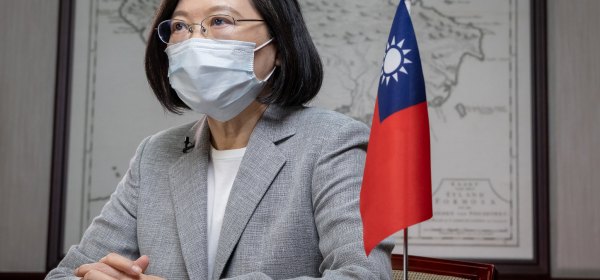
Written by Gunter Schubert. Taiwan has earned worldwide praise for its success in fighting the coronavirus crisis. It has become a shining example for those pushing the argument that state capacity in anti-epidemic politics is not preconditioned upon an authoritarian mode of government. Rather, the Taiwan case has shown that effective top-down policy steering, strict compliance of the populace with quarantine measures, hygiene measures and social distancing, and legitimate comprehensive tracing of digital data are all possible in a democracy.

KMT Begins to Call for Tsai Administration to Accept Chinese Covid-19 Vaccines

Written by Brian Hioe. The latest front on which the KMT has sought to attack the Tsai administration’s response to COVID-19 has been on the issues of vaccines. In particular, with the Tsai administration having enjoyed widespread public praise for its effective response to COVID-19, the KMT has tried to find ways to criticize or denigrate the Tsai administration’s response to COVID-19. In recent memory, this has included calls in January to lock down the city of Taoyuan in response to the Taoyuan General Hospital cluster.

Capitalising on Taiwan’s Advantages to Attract New Investments

Written by Lotta Danielsson. The Taiwan economy fared well in 2020 and continues to do so into early 2021. This is primarily due to strong domestic demand, robust technology exports driven by the global shift to remote work, and a rebound in export orders for industrial goods. According to recent figures released by its national statistics bureau, Taiwan’s economic growth in 2020 was 2.98%, outperforming China’s same-year growth of 2.3% for the first time in 30 years.

The Biden Administration and Taiwan’s Post-Covid Economic Prospect

Written by Min-hua Chiang. With 2.98% of growth rate in 2020, Taiwan’s economy has outperformed many countries in the world. The moderate economic expansion was attributed to the surging external demand for information and communications technology (ICT) goods and the growing investment repatriation. The domestic consumption remained resilient thanks to the growth in domestic tourism and economic stimulus measures. After all, Taiwan’s success in containing the COVID-19 underpinned the whole economy well amid the ongoing global pandemic crisis.

Post-COVID-19 Taiwan in the Global Semiconductor Industry: The Context of the New U.S. Administration

Written by Yu-Ching Kuo and Robyn Klingler-Vidra. Early into the global pandemic — and amidst ongoing U.S.-China trade tensions — the International Monetary Fund’s (IMF) World Economic Outlook in April 2020 forecast that Taiwan’s GDP would shrink by 4% in 2020. However, by October 2020, Taiwan’s exports unexpectedly grew by 3.4% and GDP increased by 2%. The outperformance was partly due to Taiwan’s capacity to fight COVID-19, which contributed to the export growth rate of semiconductors and electronics and information technology industries, which was as high as 20%. #Taiwan #economy #industry #covid #Trump @RobynVidra

1 2 3 4 5 6 10