The Power of “Taiwan Can Green”: Energy transitions as a discursive response to Cross-Strait Geopolitical Tensions 

By Anthony Ho-fai Li. This article explores why the Democratic Progressive Party (DPP) has been so committed to the aggressive target of domestic solar energy installation despite intensified controversies since 2016. It argues that its commitment goes hand in hand with enhancing its ideational power through the narrative of “Taiwan can green,” which helps Taiwan navigate the escalating cross-Strait geopolitical tensions and the DPP to cope with domestic political challenges.
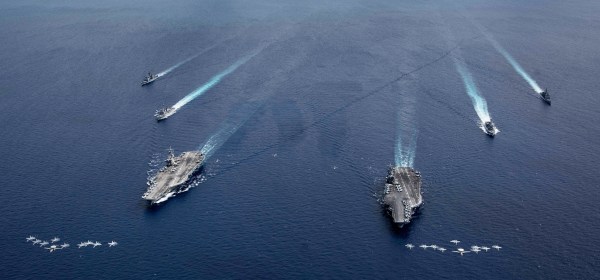
What’s behind the spike in Chinese incursions into Taiwan’s air defence zone?

Written by Corey Bell. A problem in recent public commentary on tensions between China and Taiwan has been a conflation of what we know and what we fear. Nowhere is this more evident than on the topic of incursions by Chinese military aircraft into Taiwan’s air defence identification zone, or ADIZ. is month saw a shift from a pattern of incremental increases in the number of People’s Liberation Army Air Force aircraft participating in coordinated incursions into Taiwanese airspace to an exponential explosion. The campaign peaked at 56 aircraft on 4 October, with 159 over the four-day period of 1–4 October.

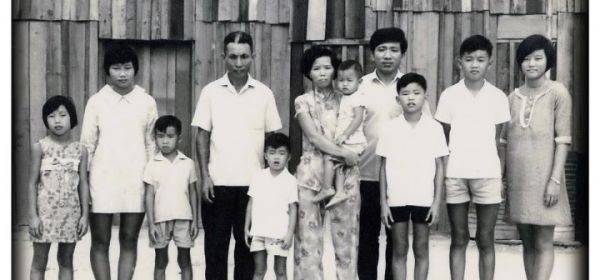
What is ‘Home’ and Who are the ‘Overseas Chinese’?

Written by Yun Seh Lee. This year marks the 100th anniversary of that first KMT-CCP coalition, and the competition across the Taiwan Strait is still going strong. Focusing on the Overseas Chinese communities across the globe – a term populated by the prominent scholar Wang Gungwu – both players have been enthusiastically trying to win the hearts and minds of this diaspora. The label ‘Overseas Chinese’ itself hints at an ongoing link to China, but the PRC and Taiwan dispute the nature of that link and its contemporary manifestation.

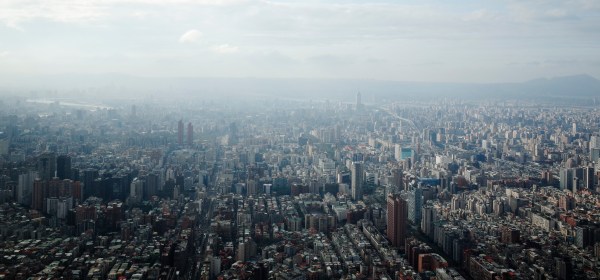
Taiwan’s Real Estate Development from the Cross-Strait Perspective

Written by Wei-Che Fu and Yu-Chih Tseng. global economic and political geolocation, the challenges of its local industry development and social inequality were still ahead during the Sino-American conflicts. The mass capital escape from China is generally regarded as another chance for attracting investment. Taiwan experienced a new wave of housing inflation since the global financial crisis in 2008.

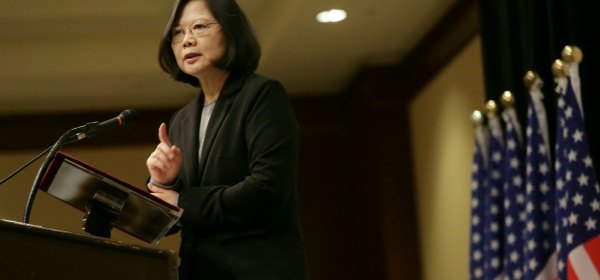
Avoiding a Military Conflict over Taiwan

Written by Scott L. Kastner. relationship has become dramatically more antagonistic since 2016. Since taking office in that year, Taiwan President Tsai Ing-wen has been less willing to accommodate the PRC on core sovereignty issues than was her predecessor, Ma Ying-jeou. Beijing, in turn, has steadily increased coercive pressure on the island. Most notably, PRC military activities near Taiwan have increased sharply over the past few years.

Taiwan, the Most Dangerous Place on Earth?

Written by Shih Yueh Yang. Is Taiwan the Most Dangerous Place on Earth? Not yet, as the Economist has put it. Although the tension between the two sides of the Taiwan Strait has grown, not a single shot has ever been fired. In contrast, thousands of rockets have already exploded over Gaza/Israel border, and hundreds of people have died. Taiwan still enjoys peace and happiness either in relative or absolute terms.

Cutting Through the Fog of War in the Taiwan Strait

Written by J. Michael Cole. A recent cover story in The Economist referring to the Taiwan Strait as “the most dangerous place on earth” has caused mixed reactions in Taiwan and elsewhere. While the headline was certainly alarmist—one can imagine more dangerous places than Taiwan to be in, from Yemen to Afghanistan, Somalia to some neighbourhoods in Mexico, for example—the article nevertheless reflects the reality that no other geopolitical flashpoint today is as likely to spark major armed conflict than the Taiwan Strait. China has shown much greater hostility in the past year.

US-Taiwan Relations Under President Joe Biden

Written by Elizabeth Freund Larus and Shirley Martey Hargis. After a protracted battle, the election of Joe R. Biden as the 46th US President is all but certain. All eyes in Taiwan are now turning to Biden to see whether he will continue President Donald J. Trump’s hardline against China and support of Taiwan. For the past four years, the Trump administration and the US Congress have responded to Beijing’s attempts to ostracize Taiwan by increasing support for Taipei. During his campaign, Biden promised to get tough on China. Yet his history as a political moderate makes it unlikely that he will be antagonistic to China, especially when it involves Taiwan.

Deterrence & Dialogue: How Washington Can Prevent a US-China War Over Taiwan

Written by Bas van Beurden. Can the United States and China escape Thucydides Trap? While international relations experts grapple with the question whether the two powers are destined for war, a storm seems to be gathering in the Asia-Pacific, and it seems increasingly clear where lightning might strike. Considering recent developments, the Taiwan Straits seems to be the most likely battleground for Sino-American conflict. The prospect of conflict appears to be looming as Beijing closes in on Hong Kong and ratchets up its rhetoric on a forceful reunification with Taiwan.

In the Wake of Taiwan’s January 2020 Election, how are Cross-Strait Relations?

Written by John F. Copper. In January this year, Taiwan held a key national election. The Democratic Progressive Party’s (DPP) president, Tsai Ing-wen, won reelection while the DPP kept its majority in the national legislature. It was an across-the-board victory for the pro-independence party. Fast forward to autumn, nine months later. How does Taiwan look politically? Not much different! Reassessing campaign policies and reality-checking that usually follow a big election have been mostly missing.

1 2 3