Facing the Uncertainty of Trump’s Taiwan Policy: Taiwan’s diplomatic, economic, and military approaches to address the significant challenge

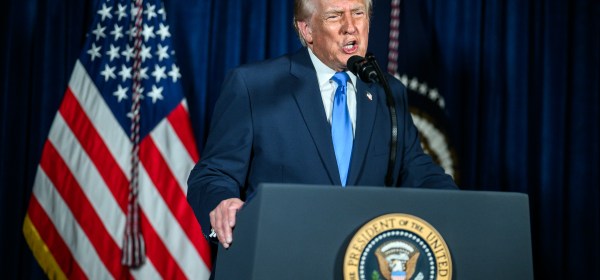
Written by Baosheng Guo. This article analyses Taiwan’s options in the face of Trump’s uncertain and unpredictable Taiwan policy. It suggests that Taiwan should urge the US to provide strategic clarity and strengthen its relationship with Europe. Taiwan should also weaponise the interdependence of its semiconductor industry with the US and prepare to restart its research and development of nuclear weapons.

Time to Reposition Taiwan within Europe’s Indo-Pacific Vision

Written by Laura Bonsaver. This article proposes that Europe should move beyond threat-centric framings of Taiwan and recognise it as an innovative, democratic, and technologically advanced partner. It recommends de-hyphenating Taiwan from militaristic narratives, normalising its role in Indo-Pacific strategies, and reframing Europe-Taiwan relations as mutually beneficial collaborations rather than dependency or crisis management.

Taiwan’s Arctic Imperative: Navigating a New Global Frontier

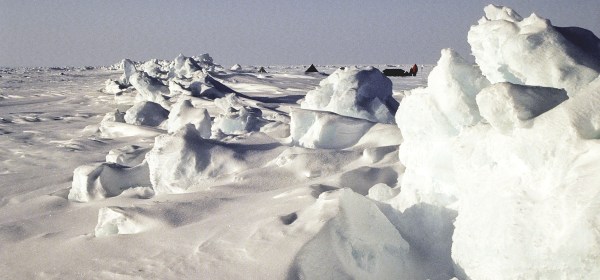
Written by Aileen A. Espiritu, Marc Lanteigne, and Tse-Kang Leng. This article argues that Taiwan should construct a clear, multifaceted Arctic policy to safeguard its future prosperity and strengthen the country’s international standing. It outlines multiple areas where Taiwan can contribute and benefit, including trade, climate, science, diplomacy, Indigenous communities and geopolitics. An inclusive Arctic policy is not distant curiosity but a strategic aspiration.

Taiwan-India University Cooperation: Emerging Corridors of Academic Exchange and Technological Diplomacy

Written by Neeraj Mehra. This article examines the growing educational partnership between Taiwan and India as a strategic soft power tool. Nearly 1,500 Indian students now study in Taiwan, primarily in engineering and technology fields, facilitated by a 2010 MOU and Taiwan’s New Southbound Policy. This collaboration offers complementary benefits: Taiwan’s semiconductor expertise paired with India’s demographic dividend and emerging tech sector. While recent high-level delegations signal strong governmental commitment, challenges remain in administrative barriers, visa processes, and funding stability. The author argues that with proper institutional mechanisms, this partnership could become a major Indo-Pacific academic alliance serving both knowledge diplomacy and technological self-reliance.

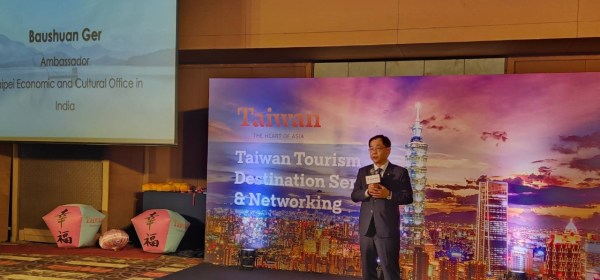
From Overcrowding to Opportunity: Taiwan’s Appeal for Indian Tourists

Written by Neeraj Mehra. This article discusses Taiwan’s untapped potential in India’s booming outbound tourism market, highlighting shared cultural ties, natural attractions, and democratic values. The author proposes that easing visas, improving air connectivity, boosting targeted marketing, and fostering educational exchanges may expand tourism, strengthen Taiwan’s soft power, and advance its New Southbound Policy goals.

Resolution 2758 and Taiwan’s Global Struggle for Recognition

Written by Yenting Lin. This article examines the misinterpretation and misuse of UN Resolution 2758, which defines China’s representation in the UN but not the status of Taiwan. But it has been used by Beijing to endorse the “One China Policy”. Pushback against China’s interpretation has begun to emerge in recent years as Taiwan’s contributions to international society are recognised.

How Fisheries Shaped Taiwan’s Pacific Diplomacy: A Case Study from Australia 

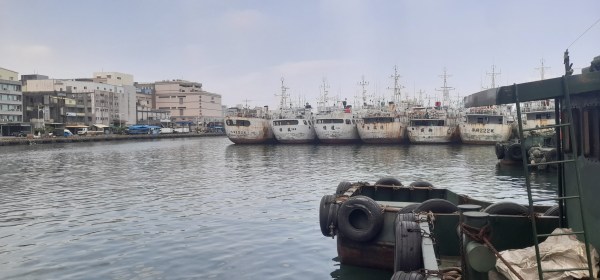
Written by Jess Marinaccio. This article examines how Taiwan’s post-1949 expansion into Pacific fisheries, amid shifting maritime laws and Pacific decolonisation, led to frequent illegal fishing incidents. These disputes complicated diplomatic ties, engaged both allies and non-recognisers of the ROC, mobilised diaspora communities, and entrenched fisheries, both legal and illegal, as central to Taiwan-Pacific relations.

What I saw and heard: Vatican Diplomacy and Taiwan

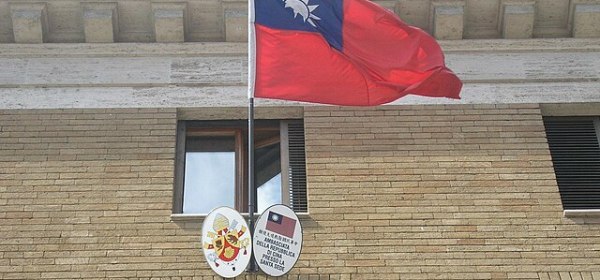
Written by Thomas Ching-Wei TU. This second part of the article presents possible suggestions for promoting Taiwan-Vatican relations. For instance, it could review the visa difficulties of foreign clergy and nuns and strengthen educational and technological exchanges. Only through a greater understanding of the Vatican’s special diplomacy can the friendship with Taiwan’s only European diplomatic partner be deepened.

What I Saw and Heard: Triangular Relations among Taiwan, China, and the Holy See

Written by Thomas Ching-Wei TU. This two-part article reflects on Taiwan’s diplomacy with the Holy See from a high-level politics perspective and examines how Taiwan can enhance cooperation. It argues that in addition to calling for religious freedom in China, the Taiwanese should understand the primary goals of the Vatican’s diplomacy and its differences with secular states. 

1 2 3 9