For The Good of Taiwan. Truss, Sunak, or Complete Indifference?

Written by Ian Inkster. The most likely manner in which the choice of Tory candidates might be of interest in Taiwan would be through foreign or economic policy. Unfortunately, though these two areas of government are meant to complement each other in normal times, our days are increasingly abnormal, thus the array of rhetoric, the focus on personalities, the exaggeration of anomalies, and the fixation on trust, veracity, and the lack thereof. And that is just in one party. Look around to your left and see the mirror image. Look across the Channel and see confusion and a reluctance to debate all major socio-economic problems. Look across the greater sea to find headless leadership. Not a charming prospect.

Tension Across the Taiwan Strait: Perspectives, Concerns & Dynamics from South Asia

Written by Raian Hossain. This article looks into the reactions and concerns from Asian countries due to the complex triangular relationship of the US-China-Taiwan in the Taiwan Strait. While analysing the dynamics, it also unpacks whether this ongoing crisis would further shrink Taiwan’s space for engagements in the international space like trade, commerce, and people-to-people connectivity (not focused on diplomatic recognition). Therefore, this article takes the South Asian region as a case study to answer these two queries.

Dire Straits – the Price Taiwan Needs to Pay in the Wake of Pelosi’s Visit

Written by Li-Chiang Yuan. To counteract the United States Speaker Nancy Pelosi’s visit to Taiwan, China warned the US that it was “playing with fire” through wolf warrior diplomacy and punishment of Taiwan. After Pelosi left Taiwan, China conducted the largest-ever military exercise against Taiwan since the 1996 Taiwan Strait Crisis. The People’s Liberation Army’s 4-day live fire exercise from 4th to 8th of August, 2022, has broken the record and set “three firsts”: 1. Missiles directly flying over Taiwan; 2. PLA’s crossing the median line of Taiwan Strait, and 3. Exercise areas encircle Taiwan, and PLA reaches Taiwan’s 12 territorial seas and airspace. Naturally, no one in Taiwan would welcome these “Firsts”.

Discourse and Disinformation in the Pelosi Visit and Its Aftermath

Written by Brian Hioe. More generally, while several organisations in Taiwan are devoted to fact-checking and combating disinformation, these primarily focus on targeting disinformation that circulates within Taiwan, which aims to affect domestic politics. There is less focus by such organisations on disinformation that spreads about Taiwan in the English-language sphere. Taiwanese generally read news and international discourse about their country in Chinese rather than English, so they may not be aware of disinformation circulating globally about Taiwan. At the same time, the English language world may not be able to verify information circulating in Chinese due to lacking language ability. Perhaps more translingual fact-checking practices must be developed to cope with this issue. This may be the corollary to increased discussion to the fact that the voices of Taiwanese have been left out of international media reporting on the Pelosi visit and military drills that followed.

Pelosi’s Taiwan Visit: More Symptom than Cause of the Trouble in US-China Relations

Written by Jacques deLisle. The August 2022 visit to Taiwan by United States House Speaker Nancy Pelosi has been characterized as “reckless” and even risking war or, at least, a dangerous military incident between the US and China. On the other hand, Pelosi’s trip has been celebrated for standing up to Chinese bullying or even a political victory born of an unforced error by Xi Jinping’s overreaching. Such dire or triumphalist views risk overlooking the broader and deeper meanings of Pelosi’s brief sojourn in Taipei: It is more a symptom than a cause of a deeply troubled and increasingly troubling US-China relationship; its most significant consequences are likely more complex and indirect.

Nancy Pelosi’s visit to Taiwan did go through: A major milestone in Taiwan’s relations with the rest of the world

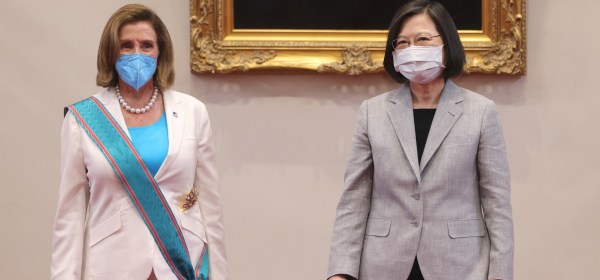
Written by Gerrit van der Wees. The picture circulating on the internet of Speaker Pelosi and President Tsai Ing-wen standing next to each other was indeed a powerful image of two women who are determined to bend history in the right direction. The main conclusion of the episode is that it was crucial that Speaker Pelosi stood her ground and pushed through her plans for a visit to Taiwan. It is a win for democracy and a major milestone in Taiwan’s relations with the rest of the world.

USA, China, and Taiwan: Post-Endemic Strategies for a New Global Economy

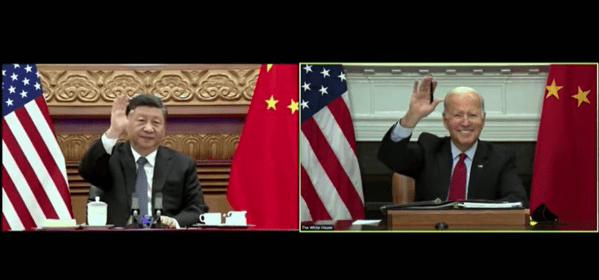
Written by Ian Inkster. Joe Biden’s recent scooping up of the fog of ‘strategic ambiguity,’ the seldom re-specified policy of the USA towards China in the case of an overt attack on Taiwan, was made in haste but has set the tail of the cat alight and its very colour in doubt. In Japan, Biden warned that China was ‘flirting with danger’ and then admitted that the US would defend Taiwan against invasion by China as contra to the Ukraine case. He was then asked directly if the US would defend Taiwan militarily if China invaded, when it has not done so in the invasion of Russia against Ukraine.

Health for Whom, from Where, and by What? Story(ies) About a Medical Mission from Taiwan to Africa

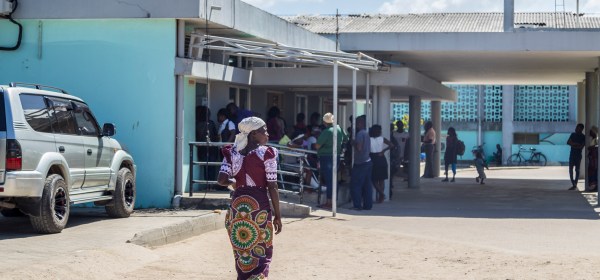
Written by Chia-Shuo Tang. This article is a story about Taiwan’s multi-million US dollars health aid in an African country and its aftermath. It involves two hospitals, some doctors, several aid agencies, and a global pandemic intersecting at the dawn of the 21st century. In addition, this story is about how a Taiwanese hospital turned a bilateral medical aid mission into a non-governmental endeavour after severing diplomatic ties between the two countries. 

Hard Cash or Soft Values? Assessing the ‘Lithuanian Model’ of Eastern European Relations with China and Taiwan

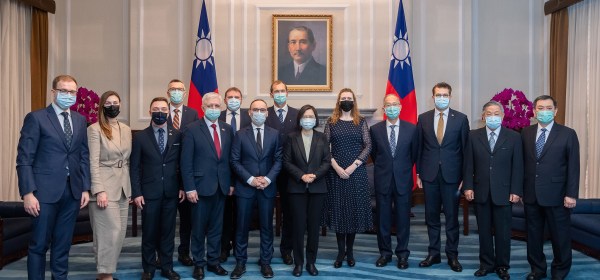
Written by Dominika Remžová. Over the last year and a half, Lithuania has been at the forefront of the EU’s improving relations with Taiwan and worsening relations with China. This culminated with Lithuania leaving the 17+1 framework of cooperation between China and 17 (now 16) eastern European countries on the one hand and the opening of the Taiwanese Representative Office in Vilnius on the other. The two events occurred in May and November 2021, respectively, with the latter being particularly controversial, as China argued that the denomination ‘Taiwanese’ breached the EU’s One China policy, which led to the imposition of Chinese economic sanctions on Lithuanian products. However, as Lithuania’s economic relations with China are negligible, at least when compared to western European countries, Beijing made the unprecedented move of targeting EU-wide supply chains that contain Lithuanian products. This effectively escalated the bilateral disagreement to the EU level, with the bloc filing a WTO case against China.

Cat-Warriors vs Wolf Warriors: How Taiwan Promotes Its Brand in the Face of a More Assertive China

Written by Simona Grano. According to China, Taiwan is a splinter province to be re-conducted under Beijing’s sphere of influence at all costs; likewise, China forbids international recognition of Taiwan under its “One China” principle. Through dealing with such hindrances for decades, the island has become skilled at swerving Chinese diplomatic aggression. Taiwan uses its soft – or “cat warrior” – diplomatic power to counter attacks on its sovereignty, promoting itself as a freedom-loving, peaceful nation in contrast to a belligerent China.

Taiwan’s Middle Power Humanitarian Diplomacy

Written by Huynh Tam Sang. As the resurrection of great-power politics has tragically befallen smaller powers, Taiwan has enhanced its agency via embracing humanitarian diplomacy and has sought a meaningful role in the global arena by supporting like-minded countries. The lesson from Taiwan’s humanitarian diplomacy is that when democracy is exposed to challenges, middle powers should potentially play a responsible role by investing in diplomatic support and humanitarian aid to vulnerable people.

What Does the Ukraine Crisis Tell Us About the Fate of Taiwan?

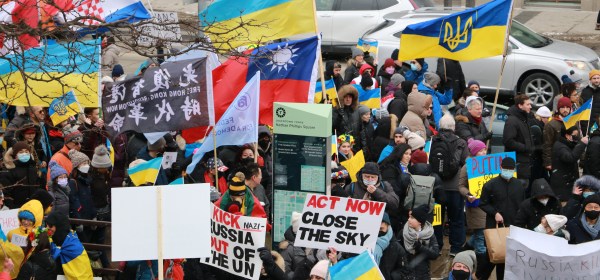
Written by Raian Hossain. The Russian invasion of Ukraine raises a serious concern over international peace, security, and stability. This led to numerous debates among analysts, academics, and journalists over the possibility of Beijing’s aggregation toward Taipei. There are good reasons why such concerns are in discussion. Chinese fighters’ incursion of Taiwan’s Air Defence Zone has become a regular practice in recent times. Hence, these lead toward analysing the possibility of the Peoples Republic of China (PRC) invasion of the Republic of China (ROC), often known as Taiwan, using the lens of security, political economy, and diplomacy.

1 3 4 5 6 7 9