When the Waters Rose, So Did Taiwan’s People

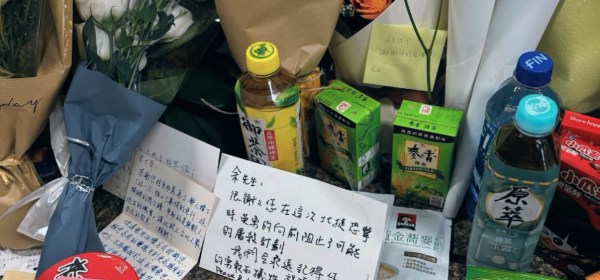
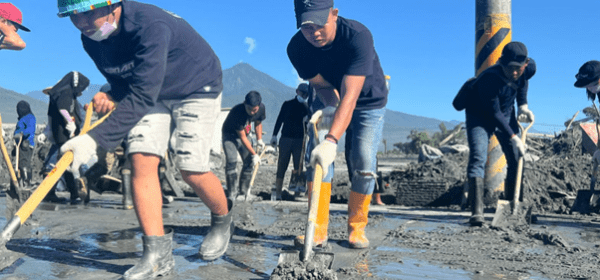
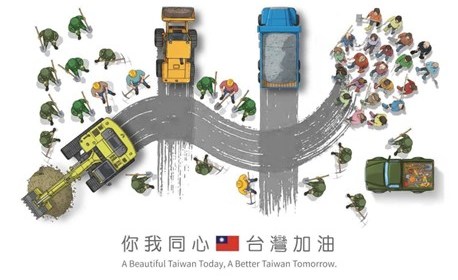
Written by Meng Kit Tang. This article reflects on Taiwan’s remarkable civic response to the 2025 Hualien floods, where thousands of volunteers, faith groups, and ordinary citizens mobilised overnight. The essay ultimately suggests that Taiwan’s story offers lessons not just for its own politics, but also for neighbours and rivals alike: that true strength and attraction emerge not from control, but from authenticity.  

Climate Change Adaptation in Taiwan: Empowerment Workers and Mental Health Challenges in Post-Morakot Reconstruction  

Written by Tzu-Ming Liu. Based on the author’s experience participating in reconstruction after the 2009 Morakot Typhoon, this article focuses on the role of disaster companions (empowerment workers) who connect disaster victims with external resources, highlighting the need for their mental health support for companions and strengthened communication with the government.

Indigenous Post-Disaster Decision-Making Mechanisms and Negotiation Strategies of Traditional Women Leaders 

Written by Valagas Gadeljeman; translated by Yu-Chen Chuang. Since Typhoon Morakot, the government and academia have not thoroughly explored why Indigenous knowledge is fading and why Indigenous adaptation is becoming more difficult for Indigenous communities. Why can’t Indigenous people have the same freedom and right to choose where their tribe lives as they once did? What policies and laws have limited their ability to move freely? In short, there’s a lack of Indigenous perspectives in Taiwan’s post-disaster recovery discussions, especially when it comes to the importance of ancestral traditional territories. In this article, I’ll discuss the traditional decision-making processes and negotiation strategies in Indigenous communities, with a focus on Paiwan women leaders’ insights. 

Sustainable Traditional Knowledge: Land Ethics and Disaster Resilience in Cinsbu 

Written by Bayis Atung; translated by Yu-Chen Chuang. In recent years, due to climate change, community members have begun to think more about how to minimise the impact of disasters before they occur. When engaging in farming, we have started to think and take action to incorporate traditional land use knowledge from the past. We continuously experiment and face challenges, ultimately returning to traditional land use and cultivation ethics. We have discovered that this approach can be used to adapt to and address climate change, as it helps Cinsbu adapt to the ever-changing challenges posed by disasters. In this article, I share our land ethics and explain how sustainable land use relates to disaster prevention. Even though the intensity of climate change has increased, the Tayal people have not given up on using the land. Instead, there have been even more changes in how we use the land.

Indigenous Disaster Justice: Reflecting on Typhoon Morakot Recovery 

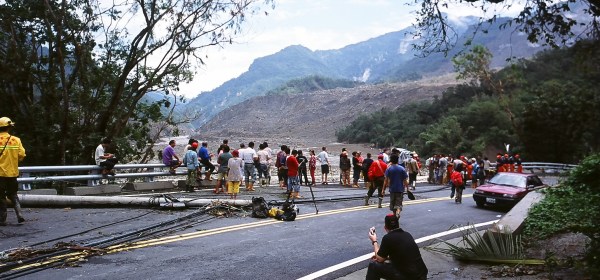
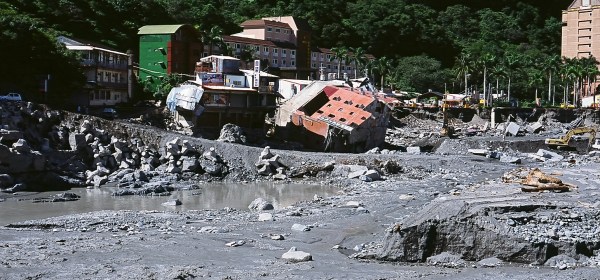
Written by Yi-Te Yu. In the past two decades, Taiwan has endured two major disasters: the 921 Earthquake in 1999 and Typhoon Morakot in 2009. Both events resulted in immense loss of life and property. The Indigenous regions of Taiwan, in particular, have borne the enduring impact that is yet to see a complete recovery. Taking Typhoon Morakot in 2009 as an example, during its onslaught in Taiwan, it unleashed a record-breaking deluge of rain. This led to a large-scale landslide in Mt. Xiandu(獻肚) in Jiaxian District, Kaohsiung, burying the village Xiaolin beneath a deluge of soil and debris. Moreover, this catastrophe also inflicted the mountainous Indigenous communities in the central and southern regions of Taiwan, including Chiayi, Kaohsiung, Pingtung, and Taitung counties, with the onslaught of floods, landslides, and debris flows. In total, it resulted in 678 fatalities and 33 injuries. 

Tracing Disaster Injustice: Indigenous Peoples’ Vulnerability and Resilience in Taiwan 

Written by Yu-Chen Chuang. In August 2023, Typhoon Khanun swept across Taiwan, particularly impacting the mountainous regions of central Taiwan. The resultant severe floods and landslides caused significant damage to infrastructure and disrupted the livelihood of local residents. One of the most severely affected areas was Renai Township in Nantou County, which is home to several Indigenous communities. The damages caused by Typhoon Khanun demanded significant labour and financial resources from Indigenous communities to manage the lengthy post-disaster reconstruction. This special issue, titled ‘Indigenous Peoples and Disaster Justice,’ will feature contributions from scholars and practitioners deeply involved in Indigenous-centered disaster management in Taiwan. We hope to foster discussions about the past, present, and future of disaster management, with a particular focus on addressing colonial injustice.