Does “Hong Kong Influence” Linger in the 2024 Taiwan Election?

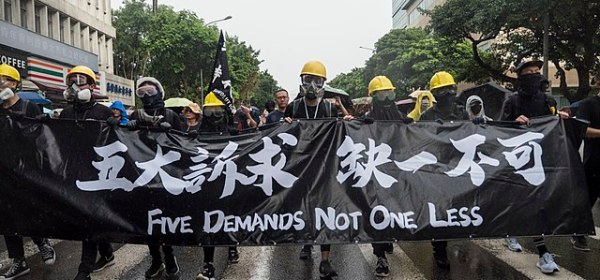
Written by Sanho Chung. It has been widely recognised that Hong Kong’s Anti-Extradition Movement in 2019 was the turning point of the 2020 General Election in Taiwan. In the last general election, Beijing’s hardline crackdown on the protests in Hong Kong gave rise to the Taiwanese’s mistrust of China and finally brought a big win to the Democratic Progressive Party (DPP), which was expected to lose both their majority over the Legislative Yuan and their presidency. But after three years of National Security Law (NSL) enactment in Hong Kong, the Hong Kong issue in this general election seems no longer as focal as it was. How should we make sense of this huge contrast in attention? Has “Hong Kong Influence” faded out totally?

As Two Go Blue, will Green be the Tertius Gaudens of Taiwan’s 2024 Elections?

Written by Jasper Roctus. What then transpired in November went completely beyond general expectations. While a desponded Gou could have been expected to go independent or join forces with Ko Wen-je, the former mayor of Taipei (2014–2022) and founder of the third force, “white” (白) Taiwan People’s Party, an outright electoral pact between Hou and Ko seemed out of the question. The idea that Ko, who in the past has been perceived as greener than even the DPP as he, for instance, mingled with student protestors during the 2014 Sunflower Movement and later stumped for deep Green rockstar Freddy Lim, would join forces with the KMT representative of the establishment he claimed to loathe, seemed a contradiction in terms.

Why are the 2024 elections seemingly less competitive than the 2020 elections?

Written by Brian Hioe. Compared to the 2020 elections, it has often been remarked that the 2024 elections have been decidedly less competitive. Certainly, this does seem to be true, in that for most of the election cycle, DPP presidential candidate Lai Ching-te has been ahead. Nevertheless, what are the structural factors at work here, which differentiate the 2024 elections from the 2020 elections? We might take a look.

Taiwan’s Presidential Elections in Full Swing

Written by Gerrit van der Wees. Mid-November has thus fundamentally changed the picture of the campaign. The addition of Hsiao Bi-khim as VP candidate has reinvigorated Lai Ching-te’s campaign, while on the Blue-White side, the move to attempt a merger of the tickets had backfired and set bad blood. With Hou Yu-ih and Ko Wen-je running separate campaigns, the differences are now becoming increasingly clear.

Computational Propaganda and Democracy in Taiwan: AI’s Impacts on Pre-Existing Challenges

Written by Tommy Hall and Margaret Siu. When generative, artificial intelligence (AI) programmes are used with malicious intent in the realm of politics, the resulting “deepfakes” can be both convincing (at a glance) and extremely damaging to the target’s image. This article will argue that a unified and proactive response is necessary for Taiwan to successfully navigate the gauntlet of challenges created by AI in a democratic political environment.

Taiwan and Europe – Partners of choice, not obligation

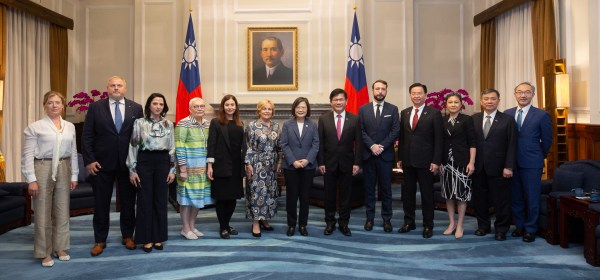
Written by Zsuzsa Anna Ferenczy. In January 2024, Taiwan will elect a new president. Facing an existential threat from China, for Taiwan cooperation with the EU as a partner is essential to strengthen its democratic resilience. To expand the partnership however, a better understanding of the complex nature of the EU and developing a greater sense of clarity about what Taiwan wants will be indispensable. 

Why is there so little policy debate in Taiwan’s presidential campaigns?

Written by Gunter Schubert. Taiwan is gearing up for another round of national elections, scheduled for next January. As always, media coverage of election campaigns focuses on the presidential aspect of the national ballot, as this is where elections become most personalized. This is the essence of Taiwanese political culture. All politics becomes personal, involving interactions between candidates and voters, particularly at the local level.

The Green Party Taiwan’s Achievements and Challenges in Promoting Gender Equality

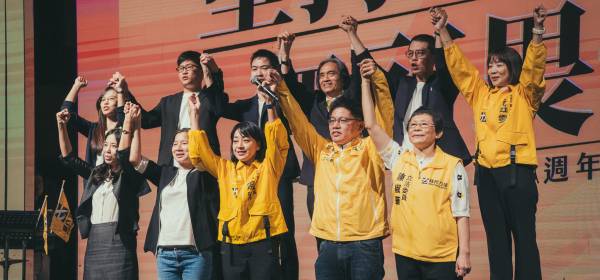
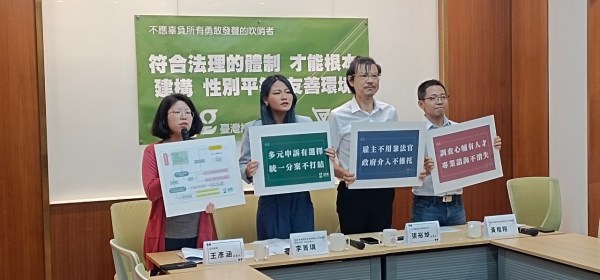
Written by Wang Yan-han, Dafydd Fell and Peng Yen-wen. Founded in January 1996, Green Party Taiwan (GPT) was the first Green Party to be established in Asia. It is one of the oldest movement parties in Taiwan, created through the efforts of student activists and several civil society groups, including activists from the eco-feminist Homemakers United Foundation. One of the main reasons Taiwan has made such impressive progress in the realm of gender equality has been due to civil society activism. Since Green Parties operate on the boundaries between civil and political society, an examination of the GPT’s case can bring a different perspective on Taiwan’s achievements and challenges in the realm of gender equality.

The difficulty of being Hou

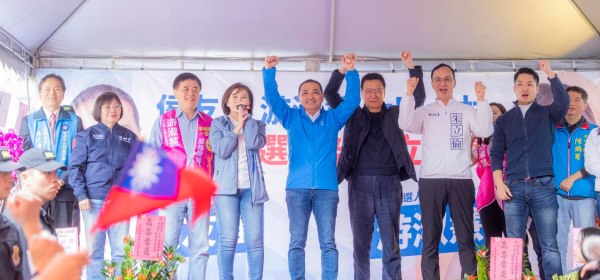
Written by Jonathan Sullivan. The KMT’s stellar showing in local elections last November had many in the party dreaming of a return to power in the January 2024 national elections. As has happened in every previous election following a two-term president in Taiwan, a change of party in power (政黨輪替) looked a likely outcome as the DPP haemorrhaged city mayorships and town council seats. In hypothetical polling match-ups at the time, re-elected Xinbei Mayor Hou You-yi handily beat VP Lai Ching-te. Those two and former Taipei Mayor Ko Wen-je have now been formally nominated by their parties to compete for the ROC presidency.

The Fluidity of the Presidential Field

Written by Jonathan Sullivan. Although the main parties have nominated their Presidential candidates, the composition of the field remains fluid and unsettled. On the DPP side, current VP Lai Ching-te long ago locked down the nomination unopposed, and as a continuity candidate enjoying the benefits of incumbency, his campaigning thus far has been relatively smooth. However, Lai’s responsibility for answering any gripes with government policy over the last eight years and the stubborn ceiling to his poll numbers over the last few months suggest substantial challenges to come. But for now, the main uncertainties and drama are on the opposing side of the fence.

Taiwan’s 2024 presidential election candidates: What will Hou or Lai’s election mean for tensions across the Taiwan Strait?

Written by Corey Lee Bell. Taiwan’s main opposition party, the Beijing-friendly Kuomintang (KMT), recently selected its candidate for the 2024 presidential election. With the main competitors for Taiwan’s top job essentially locked in, each has been interrogated on their policies on cross-strait relations in recent weeks. With tensions high across the Taiwan Strait, and between Beijing and Washington, what each candidate stands for could have profound ramifications for, and perhaps even beyond, the Indo-Pacific region.

KMT’s Lost Opportunity to Reinvent Itself Again for Survival

Written by Chieh-Ting Yeh. If—and it’s a big if—the KMT could reinvent itself again, it could find a way to shed the old rifts between the ideological and the opportunistic camps. It could present a platform that is clear in its stance on major social issues. It could take the lead in reviewing its own past as a perpetrator of human rights abuses, even if just to get the issue off its back. It could convince Taiwan’s voters that its China policy is no longer motivated by the older generation’s national identity crisis but based on a pragmatic approach to protecting Taiwan’s sovereignty and security. It could be hopeful. But looking at how the KMT finally settles on its presidential candidate, the KMT still has a very long way to go—and not very much time.

1 2 3 4