Indigenous Identity in Taiwan’s Contemporary Cinema: From Screen to Self

Written by Ana Paloma Martínez Gómez. This article explores how Indigenous identity is portrayed on screen and how film supports cultural revitalisation and self-representation through a decolonial and gendered lens. As a new Taiwanese national identity emerges, the gap between official recognition and ongoing cultural marginalisation reveals the complex space Indigenous communities occupy.

Voices Lost Between the Frames: On Island in Between

Written by I-Lin Liu. This article provides a critical analysis of the Oscar-nominated short documentary Island in Between, asking who the film is for and what lies beyond the representations. The author traces the history of when and how nonfiction films became a medium for intercultural communication, which resonates with the director’s experiences and goals for the film. Despite the film’s deliberate distance from forms of government-produced propaganda, connections can still be seen, particularly that government-sponsored or produced films, in fact, dwindled from the Best Documentary Short Film category decades after its establishment. In addition, the depiction of Kinmanese in the film, in conversation with national identities and boundaries, remains contested through the director’s lens.


Invisible Nation Documentary is Making Taiwan More Visible

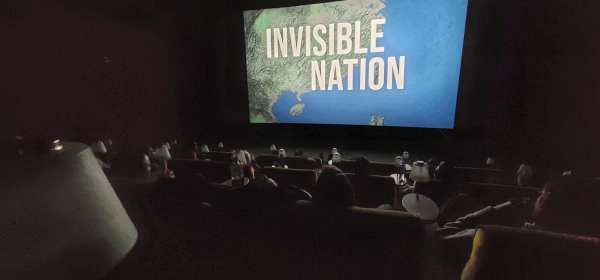
Written by Shawna Yang Ryan and Gerrit van der Wees. During the past weeks, a new documentary about Taiwan, Invisible Nation, has been making the rounds at various film festivals in the United States and Europe, including the International Documentary Film Festival Amsterdam on November 14-18, 2023.  Invisible Nation is the work of Vanessa Hope, who built up the film around the everyday life of President Tsai Ing-wen, in the process creating a fascinating picture of how the low-key President is ably leading Taiwan towards a better future.

Placing Relationship over the Project: Filmmaking in Oceania

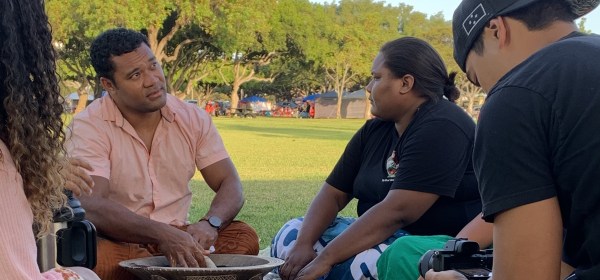
Written by Cheng-Cheng Li. My filmmaking story in Oceania started with the Re/presenting Oceania course at the University of Hawai‘i. My Kumu (professor) Tarcisius Kabutaulake, who comes from the Solomon Islands, has been teaching and researching across the region for decades. His course invites me to critically engage with and discuss how the Pacific Islands have been represented in scholarly and other mediums. He brings me onto the ‘voyage’ across the ‘storyscapes’ of scholars, artists, performers, poets, and filmmakers to understand the politics of representation. This article will first discuss my filmmaking experience in Hawai‘i with the Pacific Island community. In the second section, with an increasing number of Indigenous Taiwanese wishing to connect with Oceania, I will address the interconnection story between Taiwanese Indigenous filmmakers and the Oceanic community. The theme of ‘relationship’ as ‘Priority’ will be interwoven into the stories. 

Indigenous/Islander Fanaticism Across the Pacific: A Perspective from Films

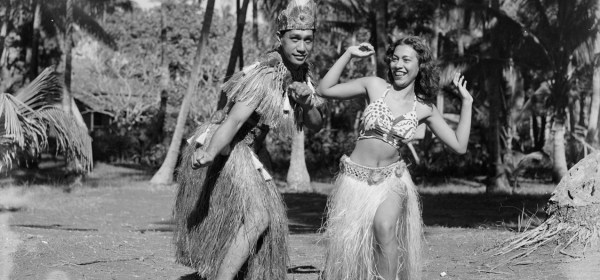
Written by Yawi Yukex; translated by Yi-Yu Lai. A type of Taiwanese is extremely fond of anything about the Indigenous peoples of Taiwan. They are captivated by all the totems and material cultures associated with Indigenous peoples, yet they frequently only believe what they already know about Indigenous cultures. Besides, they usually turn a deaf ear to Indigenous peoples’ enormous burdens and struggles. I call these individuals “Indigenous fanatics.” In the early 2000s, a series of Taiwanese films, such as “The Sage Hunter” (2005) and “Fishing Luck” (2005), portrayed Indigenous communities as shelters for those wishing to escape reality and contrasted cities with the communities. People believe that the expansion of civilisation causes problems, whereas mountains and forests represent the solution.