How Young Taiwanese Women’s Views on Romantic Romance Are Shaping Taiwanese Society

Written by Elspeth Lewis. Taiwan has the lowest birthrate in the world. This article explores this trend by putting women at its centre, challenging what we thought we knew. Beyond the vague idea of becoming more liberal, it explores the difference between the younger generation and their parents. Moreover, the traditional society does not condone the newly created ideas around dating, sex and relationships either.

How Tsai Ing-Wen’s fashion sense can provide explanations for gender inequality within Taiwanese politics

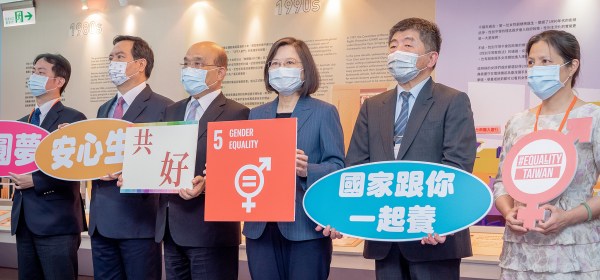
Written by Carlotta Rose Busetto. This article examines Tsai Ing-wen’s fashion in her two successful presidential campaigns and how posting certain outfits online increased her electability. It finds that clothes matter in Taiwan and Tsai was not free to wear what she wanted. Moreover, clothes matter more than gender because Tsai also utilised them to promote her own political agenda.

Gender, Remittances, and Taiwan’s Migrant Worker Financial Ecosystem: Beyond the Numbers

Written by Renee Te-Jung Chen. This article looks beyond the numbers of Taiwan’s Small-Amount Remittance Services for Foreign Migrant Workers from a gender perspective. It argues that the milestone of becoming the primary remittance channel obscures the gendered patterns in adopting the new platform. It suggests that the collection of sex-aggregated data is necessary.

#MeToo movement’s legacies on gender-sensitive social movements in Taiwan  

Written by Ting-Sian Liu. This article explores how gender-sensitive and inclusive environments emerged from the recent Bluebird action, challenging past cultures of misogyny and discrimination. It examines how the #MeToo movement has contributed to creating new spaces for collective healing that push social movements in Taiwan forward in thinking about the politics of difference.

“Rage is a Virtue”: Re-reading Lin Yi-Han’s Fang Si-Chi’s First Love Paradise 

Written by Linshan Jiang. “Fan Si-Chi’s First Love Paradise,” the most influential book of Taiwan’s #MeToo movement, was published in English translation this May. This review points out the Confucian patriarchal system of East Asian society in which the story is embedded and underscores the novel’s powerful message that “rage is a virtue” in the fight against such oppressive situations. 

Under The Radar: How Taiwan Compares to Sexism in the East

Written by Zoe Parrott. There is no doubt that, as three examples of major developed East Asian countries, Japan, South Korea, and Hong Kong are able to boast of countless laudable achievements. Furthermore, compared to other countries, all of these nations have impressive Human Development Indexes, ranking higher than the United States. However, there is one aspect of each of these nations that often flies under the radar – the infamous gender inequity these nations are characterised by. For concrete examples, look no further than DJSoda, who was sexually assaulted during her show in Osaka, Johnny Kitagawa, who, for decades, dangled “the price of stardom” as an explanation for his sexual abuse, and the four undergraduates who were sexually harassed and/or raped by their older 28-year-old peer at the Education University of Hong Kong.  However, there seems to be one outlier among its peers – Taiwan, otherwise known as the Republic of China.

#MeToo Cases Lead to Legal Hotline for Victims. But Will This Change Engrained Social Attitudes?

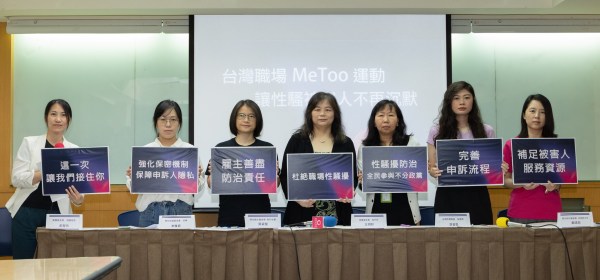
Written by Darice D. Chang, Caritta Lin, and Rita Jhang. The #MeToo movement blossomed in Taiwan in May 2023 partly due to a successful TV show, Wave Makers, which features sexual harassment in the political world and partly due to several high-profile sexual harassment cases brought to light in Taiwanese politics around the same time. While increased social awareness and scandal brought swift legislative action and increased support for victims in the form of both social support and legal aid, which we will delve into more detail, amendments to laws that have failed victims previously and increasing support are not a definitive solution to an entrenched social issue — instead, we should consider the various factors that have contributed to a society where power based gender violence could be an open secret.

#MeToo in Taiwan’s Music Industry: After Making Waves, Can We Forge a Better Workplace?

Written by Chen-yu Lin. In 2023, a watershed moment emerged in Taiwan’s #MeToo movement with the resounding success of the Netflix series “Wave Makers.” The show’s resonance was profound, shedding light on sexual harassment and abuse in the workplace. This spotlight inspired survivors from politics, education, arts, and entertainment to break their silence. The waves of #MeToo allegations have not spared Taiwan’s music industry.

#MeToo Movement in Taiwan: Reconfiguring the Intimate Life

Written by Mei-Hua Chen. #MeToo movement has been claimed as a global movement that connects women in the global North and the global South. Nonetheless, the MeToo movement must always confront various local social, economic, and cultural relations when it spreads across the globe. It also demands social, legal, and even material infrastructures to materialise. Global South countries that fail to deliver the MeToo movement might relate to the lack of efficient internet infrastructure and the taboo of talking about sex in public (e.g. Bangladesh), freedom of speech (e.g. China), or severe social stratification such as India in which the MeToo movement only circulated among the rich and well-educated elite women.

1 2 3 4