Taiwan-India University Cooperation: Emerging Corridors of Academic Exchange and Technological Diplomacy

Written by Neeraj Mehra. This article examines the growing educational partnership between Taiwan and India as a strategic soft power tool. Nearly 1,500 Indian students now study in Taiwan, primarily in engineering and technology fields, facilitated by a 2010 MOU and Taiwan’s New Southbound Policy. This collaboration offers complementary benefits: Taiwan’s semiconductor expertise paired with India’s demographic dividend and emerging tech sector. While recent high-level delegations signal strong governmental commitment, challenges remain in administrative barriers, visa processes, and funding stability. The author argues that with proper institutional mechanisms, this partnership could become a major Indo-Pacific academic alliance serving both knowledge diplomacy and technological self-reliance.
Reimagining Education: The Shift Towards Southeast Asian Students in Taiwan’s Universities

Written by Chia-Yuan Huang. This article reviews the shift of the origins of international students in higher education in Taiwan from mainland China to Southeast Asian nations such as Vietnam, Indonesia and Malaysia in the past few years. This could be attributed to the New Southbound Policy of the Tsai Ing-wen’s administration. This trend calls for more targeted admission policies and internships and job opportunities.

On the Road:  A Taiwan Literary Scholar’s Routes’ of Worlding Taiwan Literature 

Written by Wei-ting Liou. This article focuses on the author’s experiences in “worlding” Taiwan literature through their academic work. This includes engaging with translation, examining Taiwanese American literature, and teaching English-taught courses on Taiwan literature and culture. The author believes these approaches can help reshape the conventional understanding of Taiwan literary studies.

The Development of Taiwan Studies at Roma Tre University

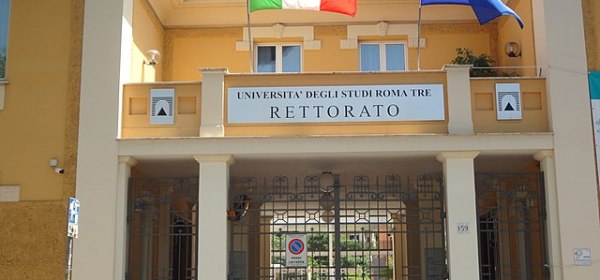
Written by Rosa Lombardi and Silvia Schiavi. Since 2012, Roma Tre University carried out a series of activities to promote the knowledge and dissemination of Taiwanese culture and literature, contributing to the development of Taiwan studies in Italy. Before that, there was very little or no space devoted to Taiwanese literature in Italian universities, and courses in modern and contemporary Chinese literature mainly still deal with Chinese mainland literary production. Given this scarcity of studies on Taiwan in Italy, Prof. Rosa Lombardi and Dr Silvia Schiavi have promoted and implemented a series of events to raise awareness about the island and foster a better understanding of the Sinophone world through the introduction of Taiwan’s rich culture, history and literature to the students and the general public.

Taiwan Government Scholarship Award: An Awarded Archaeologist’s Observation

Written by Jiun-Yu Liu. Taiwanese scholarship of government sponsorship for overseas study is considered the most prestigious scholarship issued by the government because of its long history, low award rate, and the amount of financial support. In addition, the applicant needs to pass the examinations to receive the award. The Qing government started the predecessor of this scholarship in imperial China, then sponsored by the Boxer Indemnity Scholarship Program, and finally became the current award that administrates the Ministry of Education (MOE) of Taiwan. Over the years, this Taiwanese scholarship has sponsored many talented researchers who contribute significantly to Taiwanese society. Still, we also see opinions on cancelling this award and adjusting the scholarship rules. As a former awardee and archaeologist, I share a few personal observations and thoughts.

Incubating Overseas Talents for the Future Policy? Uncertain Investment in the Taiwanese Scholarship

Written by Yu-Kai Liao. A doctoral scholarship is crucial for many PhD students to start their academic careers without financial worries. This article illustrates how the Taiwanese scholarship incubates overseas Taiwanese doctoral students for future policy. However, it is an uncertain investment for the Taiwanese government since there is a foreseeable gap between governmental visions and individual interests. In addition, even though doctoral students receiving the Taiwanese scholarship must return to serve in Taiwan, it is very flexible in practice to complete this obligation and contribute to Taiwanese society.

To Return or Not to Return? A Dilemma of a Taiwanese Scholarship Recipient

Written by Kalesekes Kaciljaan (Yu-Chi Huang). In 2019, I was awarded a Taiwanese scholarship of government sponsorship for overseas study from the Ministry of Education of Taiwan to support my pursuit of doctoral study in public health at the University of Hawai’i. The reason I did so was that the financial status of neither myself nor my family could provide me with the funds for studying overseas. Unfortunately, many other Indigenous scholars from Taiwan, like myself, also went through the same path I did, owing to our people’s averagely lower financial status. I am grateful that I could have the scholarship to support my dream to study abroad and be a researcher devoted to Indigenous health. Unfortunately, however, certain scholarship regulations are outdated and greatly hinder the path of students whose research interests relate to Taiwan. As a result, we are forced to choose between our ideals and our promised benefits. Therefore, I would like to elaborate on my own experience to provide a deeper insight into the problems we recipients face when returning to Taiwan to conduct our research.

Taiwan Indigenous Students Study Overseas—A Choice Between Food and Tuition Fees

Written by Nikal Kabala’an (Margaret Yun-Pu Tu) . The Ministry of Education (MoE) is the highest authority of the Republic of China (ROC) government in implementing educational policies in Taiwan, which includes governmental-led Indigenous education. This article focuses on the “Scholarships for Indigenous People to Study Overseas” (Hereinafter “the Scholarships”). Since the Indigenous Peoples’ Right to Education, multicultural, and equal opportunities are some of the current key concepts for MoE to plan the related policies, I suggest the authorities could consider more about the Scholarships following the starting point in supporting Indigenous students to study aboard.

A Further Response to Sinology’s Involvement in Taiwan Studies

Written by Hung-yi Chien. In short, I would argue that “being Sinitic” is not inconceivable. New students of Taiwan studies in overseas countries need elements of sinology to grow up. The lesson from the Taiwan studies programmes in Taiwanese universities suggests that a new discipline requires a fertile ground to nurture it. In countries where sinology is available, this “politically incorrect” discipline is inevitable to play an important role in recruiting new students to Taiwan studies.