Who Is Taiwanese: Rejection or Redefinition?

Written by Meng Kit Tang. This article explores the evolving debate over Taiwanese identity, contrasting two models: the rejectionist approach and the redefinition model. It examines the implications of each model for domestic cohesion, diplomacy, and national resilience, arguing that a redefinition approach provides Taiwan with a stronger foundation to navigate internal polarisation and external pressures.

The 114th Double-Tenth Day on NATO’s Eastern Flank: A Celebration of What Never Was

Written by Chien, Hung-yi. This article reflects on a National Day reception hosted by Taiwan’s representative office in a NATO member state on its eastern flank. Answering the question of what happened in Taiwan 114 years ago highlights two national-historical narratives of Taiwan. The author believes a Taiwan-centred view aligns more closely with lived reality and explains Taiwan’s complicated history to international friends.

Eighty Years After the Battle of Okinawa, Thousands of Taiwan’s World War II Dead are Still Missing

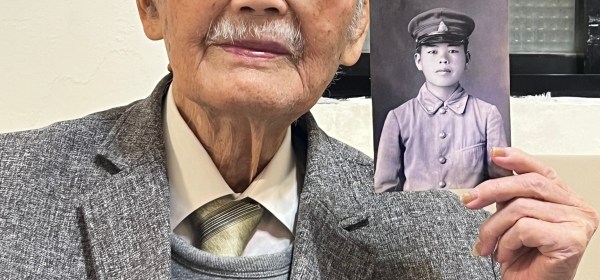
Written by Bryn Thomas. This article interviews one of the thousands of Taiwanese who fought for Japan in the Battle of Okinawa. With at least 1000 Taiwanese troops took part and suffered a casualty rate of over 90% during the battle, the Okinawa Peace Memorial only listed 34 names of Taiwan’s war dead. The postwar political situation in Taiwan made it complex to honour these fallen soldiers.

Taiwan’s Forgotten War: WWII Survivors Remember US Bombing Raid On Taipei

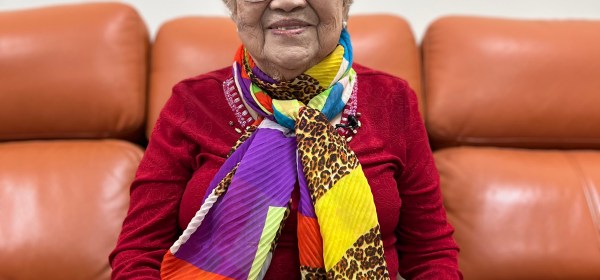
Written by Bryn Thomas. This article remembers the survivors of the US bombing of Taipei in May 1945. Although the day was one of the deadliest in Taipei’s history, there are no public memorials to the Taipei Air Raid. In the 80 years since the war, a combination of political realities and dominant narratives has left it largely forgotten, except by those who lived through it. 

“From Empire to Republic”: Taiwan, WWII, and Making a History Docuseries

Written by Bryn Thomas. This article takes us behind the scenes in the creation of the From Empire to Republic docuseries of TaiwanPlus News and this special issue. Taiwan’s World War II history made it to the headlines time and again in 2025, including President Lai Ching-te marking the 80th VE day in May to Lai drawing parallels between current Taiwan and the 1930s’ democracies when commemorating the VJ day.

The House of Chiang: Between Reverence and Reckoning

Written by Meng Kit Tang. This article explores Taiwan’s debate over the Chiang Kai-shek Memorial Hall — a site that embodies both national survival and authoritarian trauma. It calls for transforming the hall into a civic classroom that contextualises Chiang’s achievements and abuses, draws lessons from Germany and South Africa, and contrasts Taiwan’s openness with Beijing’s censorship.

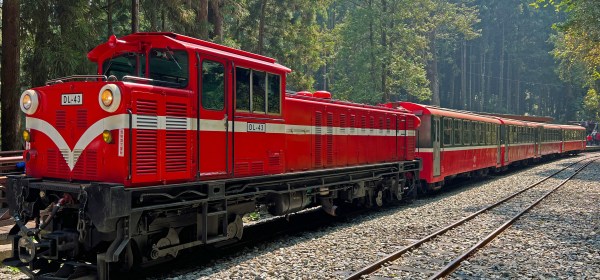
Diplomacy on Rails: Strengthening Taiwan-Japan Relations Through Railway Culture

Taiwan and Japan use railway diplomacy to strengthen cultural and technological ties through heritage preservation, tourism, and smart rail innovation. Unlike China’s debt-driven projects, their approach prioritises sustainability and soft power. Expanding collaborations into Southeast Asia and integrating AI-driven rail systems will enhance their influence in the Indo-Pacific region.

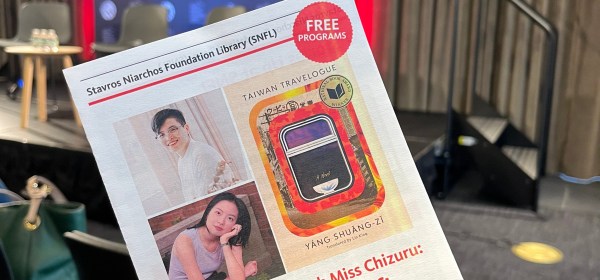
Food is politics, and so is travel. 

Written by Chee-Hann Wu. This article discusses Taiwan Travelogue and its US book tour earlier this year. It highlights the controversial marketing strategy, the extensive use of footnotes to enrich the historical context, and the categorisation of the novel as queer literature due to the evident, though subtle, romantic undertones between the two female protagonists.

Reflections on “Finding Meaning in Time and Space: Periodisation and Taiwanese-centric History” 

Written by Evan N. Dawley. The 2022 IJTS Open Access Award-winning paper, “Finding Meaning in Time and Space: Periodisation and Taiwanese-centric History,” challenges the conventional state-centric periodisation of Taiwan’s history by proposing a Taiwanese-centric framework that emphasises social transformation and identity formation. This article reflects on this broader trend in Taiwan-focused publications, its influence on the author’s future work, and the strength of this historical approach to understanding Taiwan on its own terms.

​Taiwan 22: History, Travel, and Talking to Locals: A 2024 Publication by Plum Rain Press

Written by Tyrel Cameron Eskelson. In “Taiwan 22: History, Travel, and Talking to Locals,” the author shares his three-month journey across Taiwan, exploring its history, culture, and the challenges it faces. Through diverse experiences and conversations with locals, he aims to inspire readers to visit the island, connect with its people, and support Taiwan’s pursuit of democracy and freedom in the face of ongoing threats to its sovereignty.

(Re)Writing Taiwan Studies History​

Written by Yu-Han Huang and Li-Ting Chang. This article is about the 30th NATSA Conference’s closing forum, which discussed the historical development of Taiwan Studies as a field, particularly emphasizing its interdisciplinary nature and growing significance in global scholarship. The forum featured four experts who presented their perspectives on Taiwan studies, exploring its evolution through various disciplines such as history, anthropology, ethnomusicology, and medical history. It highlighted the increasing importance of understanding Taiwan within a global context, emphasizing the need to connect its history and experiences with broader international dialogues and discussions.

1 2 3 9