Navigating Taiwanese Identity: Second-Generation Multiculturalism in Conversation with Dr Pei-Chia Lan

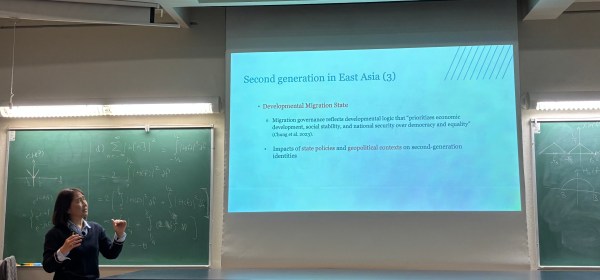
Written by Rose Kuo and Rachel Levine. The article is the first in this special issue in collaboration with the Center for Taiwan Studies (CTS) at the University of California, Santa Barbara. It recapitulates a talk by Dr. Pei-Chia Lan, hosted by CTS. Focusing on children of immigrant marriage migrants and their children, Dr. Lan examines identity struggles, social stigma, and geopolitical impacts. Her research highlights Taiwan’s evolving multicultural landscape and advocates for inclusive policies that support immigrant families and promote societal integration.
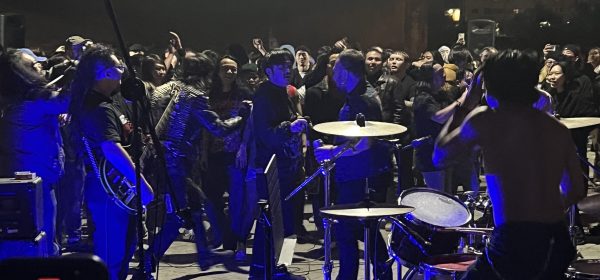
Toward Antiracist Taiwan: A Short Fieldnote in Studying Racism through Punk and Metal Musical Performances by Indonesian Migrant Workers 

Written by Mark Hsiang-Yu Feng. Drawing on field notes on punk and metal musical performances by Indonesian migrant workers in Taiwan, this article reveals racism and stereotypes in the music scene. The author calls for a critical examination of multiculturalism to address the structural inequality and racial hierarchy in Taiwanese society.

Challenging the Myth of Intercultural Competence: Encounters between the “New Second Generation” and a Philippine Studies Scholar in Taiwan 

Written by Yi-Yu Lai. In the name of promoting multiculturalism in Taiwan, the new second generation is anticipated to utilise their intercultural ability to serve as a bridge between Taiwan and Southeast Asia. This article highlights that the assumption has caused increased anxiety among the new second generation if they are unable to prove their competence. It has also erased the internal disparities and the actual daily experiences of the individuals, making the historical injustice and their own agendas invisible.

Is Integrating Possible? Towards weaving knowledges to transform care

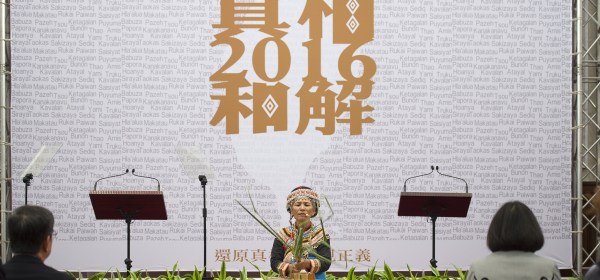
Written by Wasiq Silan. This article critiques the superficial integration of Indigenous perspectives within Taiwan’s multiculturalist policy framework, arguing for a transformative approach that prioritises Indigenous knowledge systems in long-term care policies. Highlighting the idea of “weaving knowledge,” it seeks to recentre Indigenous onto epistemologies and challenge the deep-rooted colonial present.

Decolonisation of Multicultural Taiwan

Written by Yulia Nesterova. Although Taiwan has made remarkable progress in transforming into a flourishing multicultural democracy over the past three decades, it still faces challenges in fully decolonising its multicultural vision. Focusing on education policies, this article highlights the need for further actions to address historical injustices and reconciliation.

Migrants’ Voice in Taiwanese Documentaries: Narrative, Language and Space

Written by Adina Zemanek and Lara Momesso. Since the early 2000s, immigrants from mainland China and Southeast Asia have been an increasingly visible component of Taiwan’s social and public landscape. As such, they have received growing recognition both in terms of legal provisions and in the public discourse. An example of this acknowledgement is the December 2019 issue of Taiwan Panorama, a promotional magazine issued by the Ministry of Foreign Affairs. Half of this issue is dedicated to highlighting migrants’ presence in Taiwan. One of the articles calls for listening to their unique life stories, which would have the transformative effect of understanding the world from a new perspective and dismantling preconceptions about Southeast Asian cultures.

Is Taiwan Covering over Contemporary Issues of Racism with a Veneer of Multiculturalism?

Written by Brian Hioe. Over the past four years, it has become a refrain of the Tsai administration to tout Taiwan’s increasing diversity. Namely, given increased immigration to Taiwan from Southeast Asia, one in ten children in Taiwan has a foreign parent. This is a fact that Tsai and members of her administration have taken to frequently citing, often during occasions in which Taiwan is visible on the international stage.