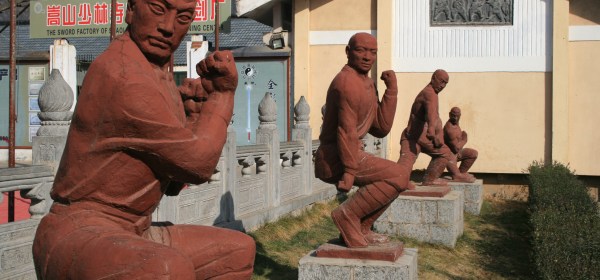
Fists of Identity: How Martial Arts Reflect the Complex Ties Between Taiwan and China

Written by Mark Gerard Murphy. This article reflects on the intersection of Chinese martial arts and nationalism in both Taiwan and Mainland China. It demonstrates how martial arts were closely tied to nationalist sentiments in different periods of history of both, but each followed distinct paths of development that reflected their respective cultural pride and national identity.

An Unseen Legacy: Cold War Liberalism and the Liberal Historiography of Taiwan

Written by Thomas Liang-Chung Wang. This article reviews the discourses of Cold War liberalism in Taiwan, which focuses on the individualistic nature of liberalism. Such a reflection prompts a reappraisal of the present-day concept of the liberal ideal in Taiwan. It questions whether the contemporary vision overlaps with those of refugee liberals, especially on perspectives such as nationalism.

“The Will of the Chinese People”: Beijing’s Narrative of Invading Taiwan

Written by Kuang-shun Yang. For decades, Taiwan has lived under Beijing’s constant military threat of “reunification.” However, Taiwan is often portrayed by Chinese propagandists as a “troublemaker” capable of destabilising the Indo-Pacific region or making China “upset about everything we [Taiwan] do, about our existence,” as Taiwan’s ex-ambassador to the United States Hsiao Bi-khim noted. Taiwan’s independence, be it a political appeal or an objective reality, is provocative to the Chinese Communist Party (CCP). The CCP’s mouthpieces have effectively convinced numerous international observers to discourage Taiwan’s quest for independence and characterised Taiwan’s autonomy as an affront to the Chinese people.

Who are the Allies of the Chinese Communist Party (CCP)? Neologisms, Netizens, and Nationalisms 

Written by Hsin-I Sydney Yueh. Recently, Taiwan’s Ministry of National Defense rejected a Japanese news report suggesting a widespread tendency among retired Taiwanese military officials to “sell out” their country. Wu Sz-Huai, a retired lieutenant general and incumbent opposition KMT party legislator, was among those who denounced this allegation.  

“Are we Chinese spies (共諜)?” Wu angrily asked this rhetorical question during a session of the National Defense Committee at Taiwan’s Legislative Yuan on March 2, 2023. While Wu denied being a Chinese spy, Taiwanese netizens teased him by sharing a photo of Wu and other retired Taiwanese military officials attending a CCP-hosted event, where they had sat attentively and listened respectfully to China’s leader Xi Jinping in 2016. Wu’s use of the term “Chinese spies” reminds us of another similar expression in Mandarin Chinese: “allies of the CCP” (中共同路人). This expression has recently gone viral in Taiwan’s online communities, used for self-mockery and as an attacking label.

Freedom Fighting: Taiwan’s Resistance against China’s Ethnonationalism   

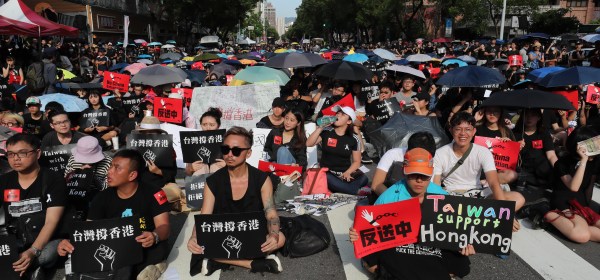
Written by Hsin-I Cheng. In the past decade, the world has heard the resisting voices of dissidents across Asia. From the 2014 Sunflower Movement to the Occupied Central Movement in Hong Kong later in the same year, citizens peacefully held their governments accountable. Since then, we have witnessed mass protests for freedom and transparency in nations. These challenges against authoritarianism generated transnational synergy, as demonstrated in the “#Milk Tea Alliance.” This movement started in 2020 when young Thai netizens fought cyberattacks against two Thai celebrities who expressed support for Taiwan and Hong Kong’s autonomy. Shockingly, two years later, the world witnessed Russia’s further invasion of Ukraine—it is a less militarily powerful neighbouring nation. Against these backdrops, we launched the book: Resistance in the Era of Nationalisms: Performing Identities in Taiwan and Hong Kong.

The 1992 Consensus and the Future of the Cross-Strait Relationship: Examining the Stakes for Taiwan’s Application for UN Membership

Written by Joshua Bernard B. Espeña and Chelsea Anne A. Uy Bomping. The 1992 Consensus has framed the status quo of the Cross-Strait relationship for decades. However, more recently, rising nationalisms and geopolitical developments have expedited the erosion of the consensus. Moreover, the United States’ (US) commitment to Taiwan is ambiguous, despite the Trump administration adopting a more hardline stance against China. These factors complicate Taiwan’s quest for membership in the United Nations (UN), and add to doubts as to whether the consensus is still a source of stability in the Cross-Strait relationship.

A clash or reconciliation of nationalisms across the Taiwan Strait?

Written by Zhidong Hao. In 2014, the Umbrella Movement in Hong Kong failed to persuade the Beijing government to grant them full universal suffrage for the election of the chief executive. Since then the so-called high degree of autonomy guaranteed by the Basic Law was eroded so much that Hong Kong was becoming more like Macau. Macau has been touted by the Central government as a perfect model of ‘one country, two systems’, but in reality, it is more like a model of ‘one country, one and a quarter systems’, i.e. an authoritarian system plus some press freedom.