The 2024 Taiwanese General Elections: Fierce Moderate Lai Prevails While Fluid Kingmaker Ko Rises

Written by Jasper Roctus. The polls have closed, and Lai Ching-te of the Democratic Progressive Party (DPP) has won the Taiwanese presidency, beating Hou Yu-ih of the Chinese Nationalist Party (KMT) and Ko Wen-je of the upstart Taiwan People’s Party (TPP). With Lai’s victory, 2024 became the first (post-democratisation) Taiwanese presidential election, where the same party’s nominee was elected three times in succession. Different from its triumphs of 2016 and 2020, the DPP did not emerge from the elections scot-free. Lai ‘only’ obtained forty per cent of the vote compared to Tsai Ing-wen’s two majority landslides, and the DPP lost the legislative majority it had enjoyed since 2016. Although this result aligned with earlier predictions, there is still a lot that merits further discussion.

Taiwan People’s Party as the Kingmaker: What future holds for the party?

Written by Brian Hioe. The TPP has proven that it is a force with staying power in Taiwanese politics, then–for at least the next four years. Questions about the long-term viability of the party still remain. This is particularly regarding the party’s relationship with its chair, Taipei mayor Ko Wen-je, and how the TPP will relate to the KMT as the larger party in the pan-Blue camp.

A Battle for Survival : The Crossroads of the New Power Party without Huang Kuo-chang

Written by Jonathan Leung. Throughout the years, there has been continuous withdrawal of significant party members. Most of them have joined the DPP or become its affiliates. Some core members quit the party for controversial reasons, like Kawlo Iyun Pacidal and Hsu Yung-ming. Most of the NPP’s notable social influencers, scholars, and intellectuals also withdrew from the party in the past few years. In a nutshell, the NPP is facing a serious problem of decomposition. Yet, the most updated and unexpected news is former leader Huang Kuo-chang, their most iconic and representable figure, defected to the Taiwan People’s Party (TPP) in November right before the legislative nomination. This article will examine the crossroads of the NPP without Huang to project the possible path of the party. 

As Two Go Blue, will Green be the Tertius Gaudens of Taiwan’s 2024 Elections?

Written by Jasper Roctus. What then transpired in November went completely beyond general expectations. While a desponded Gou could have been expected to go independent or join forces with Ko Wen-je, the former mayor of Taipei (2014–2022) and founder of the third force, “white” (白) Taiwan People’s Party, an outright electoral pact between Hou and Ko seemed out of the question. The idea that Ko, who in the past has been perceived as greener than even the DPP as he, for instance, mingled with student protestors during the 2014 Sunflower Movement and later stumped for deep Green rockstar Freddy Lim, would join forces with the KMT representative of the establishment he claimed to loathe, seemed a contradiction in terms.

Why are the 2024 elections seemingly less competitive than the 2020 elections?

Written by Brian Hioe. Compared to the 2020 elections, it has often been remarked that the 2024 elections have been decidedly less competitive. Certainly, this does seem to be true, in that for most of the election cycle, DPP presidential candidate Lai Ching-te has been ahead. Nevertheless, what are the structural factors at work here, which differentiate the 2024 elections from the 2020 elections? We might take a look.

Taiwan’s Presidential Elections in Full Swing

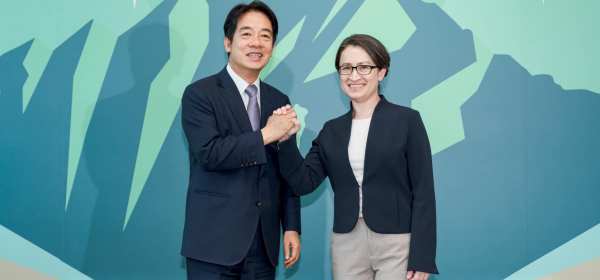
Written by Gerrit van der Wees. Mid-November has thus fundamentally changed the picture of the campaign. The addition of Hsiao Bi-khim as VP candidate has reinvigorated Lai Ching-te’s campaign, while on the Blue-White side, the move to attempt a merger of the tickets had backfired and set bad blood. With Hou Yu-ih and Ko Wen-je running separate campaigns, the differences are now becoming increasingly clear.

What have we learned from the still-unfolding #MeToo movement in Taiwan?

Written by Weiting Wu. The flames of Taiwan’s #MeToo movement have provided new opportunities to reflect on Confucian and patriarchal influences throughout society. To do so, however, Taiwan must act and work in solidarity to address the long-repressed suffering of #MeToo victims. Then, the transgender population, ethnic minorities, senior citizens, people with disabilities, and so on, may finally have the power to seek their justice.

Has the #MeToo Wave Passed in Taiwan?

Written by Brian Hioe. A short two months after a wave of #MeToo cases swept across the Taiwanese political landscape, it proves a question as to whether there have been genuine changes in social attitudes in the aftermath of these cases. Certainly, there has been no shortage of commentary on the matter, and the legislature responded by passing amendments to Taiwan’s “Three Gender Equality laws.” But whether there are lasting changes remains to be seen.

After #MeToo, where does Taiwan go?

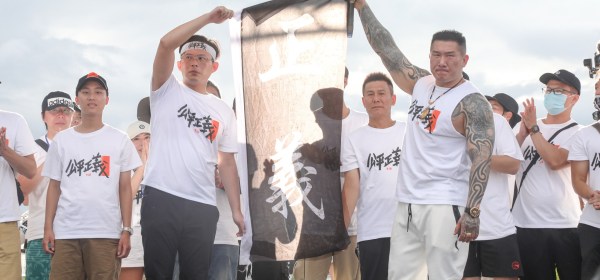
Written by Shan-Jan Sarah Liu. Five years after the global #MeToo movement began, Taiwan has finally started its own. It began with a wave of sexual assault claims against several members of Taiwan’s ruling Democratic Progressive Party (DPP). While those alleged in the DPP have resigned, these claims led to allegations against others beyond the political sphere. Since May, more than 100 politicians, activists, intellectuals, and celebrities have been called out for their misconduct. The #MeToo movement has garnered much media attention and has been discussed widely.

The Green Party Taiwan’s Achievements and Challenges in Promoting Gender Equality

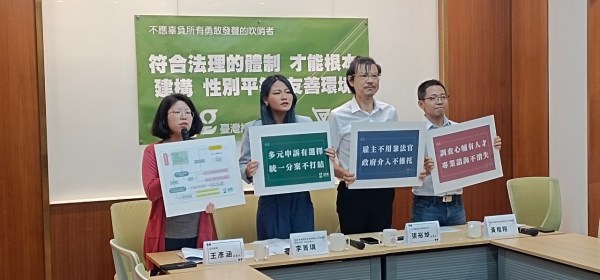
Written by Wang Yan-han, Dafydd Fell and Peng Yen-wen. Founded in January 1996, Green Party Taiwan (GPT) was the first Green Party to be established in Asia. It is one of the oldest movement parties in Taiwan, created through the efforts of student activists and several civil society groups, including activists from the eco-feminist Homemakers United Foundation. One of the main reasons Taiwan has made such impressive progress in the realm of gender equality has been due to civil society activism. Since Green Parties operate on the boundaries between civil and political society, an examination of the GPT’s case can bring a different perspective on Taiwan’s achievements and challenges in the realm of gender equality.

KMT’s Lost Opportunity to Reinvent Itself Again for Survival

Written by Chieh-Ting Yeh. If—and it’s a big if—the KMT could reinvent itself again, it could find a way to shed the old rifts between the ideological and the opportunistic camps. It could present a platform that is clear in its stance on major social issues. It could take the lead in reviewing its own past as a perpetrator of human rights abuses, even if just to get the issue off its back. It could convince Taiwan’s voters that its China policy is no longer motivated by the older generation’s national identity crisis but based on a pragmatic approach to protecting Taiwan’s sovereignty and security. It could be hopeful. But looking at how the KMT finally settles on its presidential candidate, the KMT still has a very long way to go—and not very much time.

1 2 3 4 5