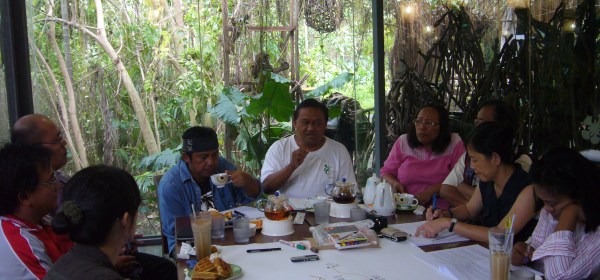
​​​NATSA 2025 Conference Note: ​​A Cross-Cultural Literary Dialogue Against the Mainstream

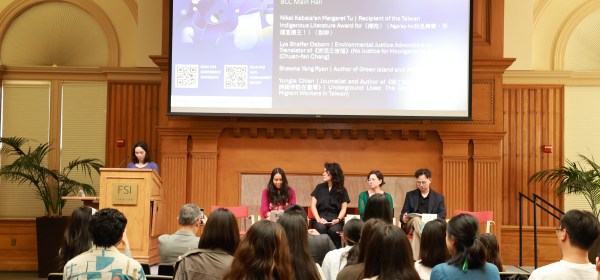
Written by Yun-Pu Tu. This article reflects on the “Otherwise Literature: Against the Mainstream” panel, a collaboration between NATSA and the National Museum of Taiwan Literature, which explored how storytelling bridges cultures and challenges dominant narratives. Featuring writers and translators including Shawna Yang Ryan, Lya Shaffer Osborn, and Yung-ta Chien, the event highlighted the power of words and storytelling to connect communities and imagine Taiwan otherwise.
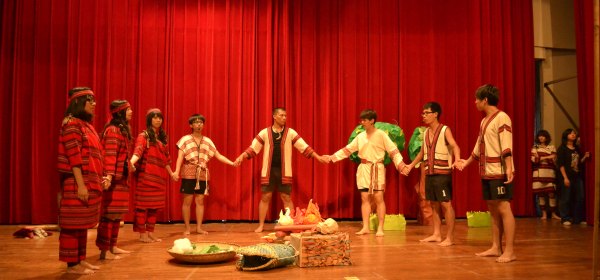
Indigenous Storytelling in and Beyond the Classroom

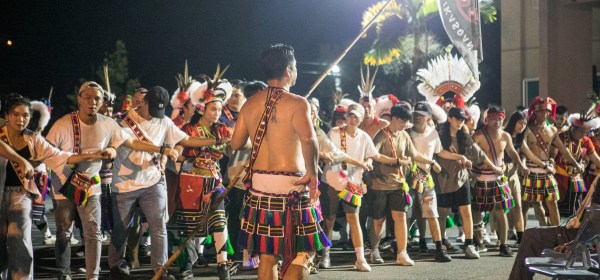
Written by Yi-Yu Lai. One afternoon in 2011, Hong-sui Lim visited a Kaxabu village due to his participation in an anthropological camp. This marked his first encounter with the Kaxabu people, one of the Plain Indigenous groups inhabiting the Puli Basins in central Taiwan. Lim was astonished by the small number of Kaxabu elders who still speak their mother tongue, as it is commonly believed that Plain Indigenous peoples have been assimilated by Han Chinese culture and have lost their own languages and traditions. As a result, Lim returned to the Kaxabu communities as an undergraduate student to learn more about their endangered cultural heritage and began collaborating with the Kaxabu people. 

Beyond Maps: Indigenous 3D Mapmaking as a Path to Indigenous Resurgence

Written by Sra Manpo Ciwidian. To assert Indigenous sovereignty over our land, especially the traditional territories, the Indigenous peoples of Taiwan have employed various approaches to demonstrate our rights. Making a three-dimensional map model of Indigenous communities is the most prevalent among these approaches. Since the late 1990s, when the Kucapungane community of Rukai people produced the first Indigenous 3D map model in Taiwan, contemporary Indigenous communities in Taiwan have been developing this community-based mapping method for over three decades. 

Indigenous Youth Actions in Taiwan: Connecting Our Voices to the Global Stage 

Written by Sra (Bo-Jun Chen). Taiwan’s Indigenous peoples are becoming increasingly concerned with various global issues that are also highly pertinent to our own situation in Taiwan, such as environmental, human rights, and cultural heritage issues. In recent years, for instance, Indigenous youth in Taiwan have realised the significance of language and identity revitalisation, which may assist us in combating oppression. Moreover, we have found that the insensitivity of our lands and ignorance of our history pose a far greater threat to us than the plundering of our resources and hazards to our lives. Some Indigenous youth are thus committed to overcoming obstacles influenced by colonialism and strive to bring our voices and agendas to the global stage. Through our participation on the international stage, we aspire to be heard and have more conversations about similar difficulties. 

The Mysterious Tsou Shaman: The Guardian of Traditional Culture

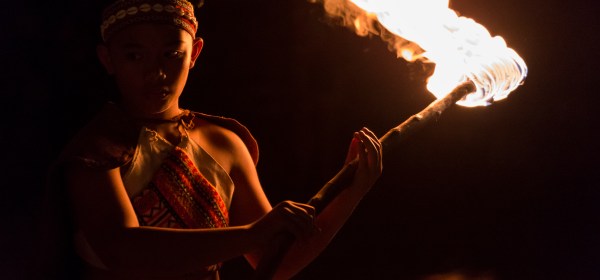
Written by tanivu yasiungu and Aaron Valdis Gauss. Living high up in quiet Ali Mountain, the Tsou shamans intimately connect with the earth and the ancestral spirits. But, of course, they are also connected with the most beloved god of the Tsou tribe––Hamo. Another important role of the Tsou shamans is to preserve, perpetuate and affirm Tsou myths, thereby maintaining a connection with the ancestors. Tsou shamans believe that working with nature is the most suitable way for everyone to live. We, the Tsou people, have always believed that being simple and pure in our beliefs is the only way to maintain the closest relationships with our god Hamo.