Trump’s Liberation Day Tariffs and Potential Impacts on Taiwan

Written by Dr Chieh-chi Hsieh. This article asks the question of whether Trump’s tariffs on Taiwan signal a potential divergence of his foreign policy on cross-Strait relations. It argues that although the country needs to remain cautious, the long-term impact might be less severe than one expects. Recent developments suggest that the Trump administration has not altered its foreign policy.

Will Trump’s Tariffs Hamper the Taiwan-US Trade Relationship

Written by Yun-Chieh Wang. This article analyses the potential impact of Trump’s reciprocal tariffs on the Taiwanese sectors with high value of export to the US, and the impact on the Taiwan-US trade relationship. With the strong economic ties between Taiwan and the United States, it is undeniable that the additional tariff imposed by the Trump administration would affect Taiwanese exports negatively.

The Impact of Trump’s Recent Tariffs on Taiwan’s Trade, Investment, and Economic Prospects

Written by Alexander C. Tan. This article argues that Taiwan finds itself in a uniquely vulnerable position in the shifting landscape of international trade. The Taiwanese economy is heavily reliant on international trade. Taiwan is also excluded from major regional trade agreements such as the RCEP and CPTPP, limiting its options for diversifying trade relationships and mitigating the impact of tariffs.

TSMC: The Enduring Silicon Shield of Taiwan’s Economy

Written by Min-Hua Chiang. This article argues that the TSMC will continue to be Taiwan’s silicon shield, despite its US$100 billion investment pledge in the US, as most of the more advanced chips will be fabricated in Taiwan. That is also why Taiwan faces challenges from the US tariff threat in the near term. TSMC remains Taiwan’s best chip in its negotiations with the US.

The Trump Tariffs, Semiconductors, and US-Taiwan Trade Relations

Written by Tom Meinderts. This article discusses the effects of Trump’s tariffs and the options available for Taiwan’s trade policies. Given the importance of the US market for Taiwan’s semiconductors, it is unsurprising that Taiwan has already started negotiations to lower the tariffs. As other options remain unattractive, these negotiations may become the most important in Taiwanese history.

Trump’s Tariffs 2.0: New Effects and Implications to Taiwan

Written by Guan-Yi Leu. This article analyses the effects of Trump’s tariffs on Taiwan economically and geopolitically. The main concern in Taiwan was the uncertainty and unpredictability caused by the policy. It also discusses Taiwan’s response to it, both in terms of government and businesses. Taiwan’s economy has shown resilience amidst geopolitical risks and has weathered previous conflicts.

How Will Taiwan Cope with Trump?

Written by Brian Hioe. This article discusses how can Taiwan responds to Trump’s election better than in 2016. Although the structural conditions remain the same, Taiwan may seek to reassure Trump on security, trade and industrial policy. Taiwan also needs a strategy to forge regional and international links to mitigate the uncertainty of a second Trump presidency.

US-Taiwan Trade Agreement: It is More of Politics than Economic

Written by Raian Hossain. Taiwan has severe military security concerns, and the island has over-trade and investment dependency towards the PRC, which raises the question of economic security. As of 2022, the PRC accounted for 25% of Taiwan’s exports and 20% of its imports, making Beijing still the largest trading partner of Taipei. However, Taiwan made significant progress in growing trade by 25% with the U.S. in 2021 and expanded its trade volume with New South Bound countries under President Tsai Ing-wen. After a year of negotiations aimed at diversifying trade and commerce, the U.S. and Taiwan signed the first part of the US-Taiwan Initiative on 21st Century Trade. Meanwhile, the second round of negotiations has already started.

What A 2nd Trump Term Would Mean to Taiwan (and the US)

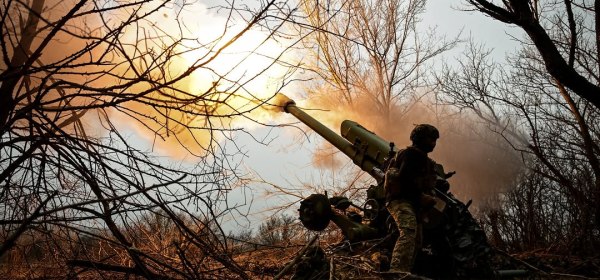
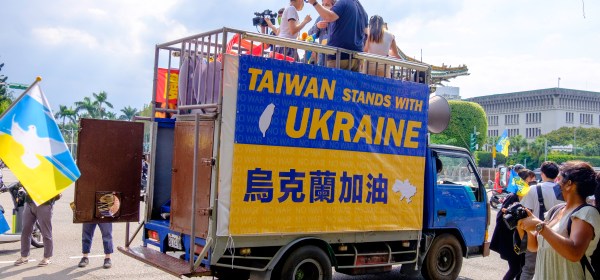
Written by Daniel Jia. Taiwan does not need and must avoid having a Taiwanese version of Donald Trump. However, Taiwan must be ready for a second Trump term unfavourable to Taiwan’s security. The new Trump administration would resume the economic-centred relationship with China as it did in the first term, likely at the cost of Taiwan’s international status and sovereignty. Taiwan cannot change Trump. But Taiwan can and must show the free world its resolve to defend itself like what Ukraine has been doing. With this unwavering resolution, Taiwan would have the chance to rally international support in the event of a China invasion. Then, and only with this determination, could Taiwan bring the US public and Congress to its side and mandate the lukewarm Trump to act as Biden in the current Ukraine-Russia war.

1 2 3