Taiwan in 2024: Geopolitical Uncertainties

Written by Dr Chieh-chi HSIEH. This article argues that the path dependencies of the Taiwanese, US, Japanese, and South Korean governments encountered a change of political leadership in 2024, which created some uncertainties for Taiwan in 2025. They are compounded by the conservative stance of President Lai Ching-te towards President Trump since the latter’s election.

Taiwan’s New President: Continuity, Priorities, Vision

Written by Chieh-Ting Yeh. As recent developments transition into a period of stability, the focus shifts towards what lies ahead. The incoming government faces pivotal questions: How will President Lai’s four-year term compare to President Tsai’s preceding eight years? What key challenges await immediate attention from President Lai? Additionally, it’s crucial to consider the direction in which Taiwan is heading to carve its unique identity in the global landscape.

Wave Makers on Netflix: A Vision of Taiwanese Politics Not ‘Amid Tensions’  

Written by Chieh-Ting Yeh. “Wave Makers” (2023; ​人選之人-造浪者​) is a new drama on Netflix about political staffers trying to win a presidential election in the last few months of the campaign. This may sound like the premise of many television shows in the political intrigue genre, but it is the first of its kind from Taiwan to be available to a worldwide audience. The drama addresses various political issues relevant to contemporary Taiwan, including environmental concerns, energy policies, and workplace sexual harassment, reflecting the ongoing public debates on these topics. But it is glaring in what it is missing: Taiwan-China relations.

Graduation Trip: From Bland Bureaucrat to Madame Liberty

Written by Chieh-Ting Yeh. In 2011, a relatively unknown politician in Taiwan named Tsai Ing-wen became the presidential candidate for the Democratic Progressive Party, which was at the time the opposition. She was a capable bureaucrat that was most notable for her blandness; she had close to zero personal charisma to speak of.  

Ironically, this was also her strength. The last DPP president, Chen Shui-bian, was seen by American policymakers as an unpredictable populist. He used his charisma to play to his base’s anti-China stance. As a result, when the US was trying to engage China, Chen and the DPP were seen as “troublemakers”, raising “tensions.”

Chinese Military Drills After Tsai-McCarthy Meeting Will Be Used for Political Ammo by Both Camps

Written by Brian Hioe. One of the striking effects of Pelosi’s visit to Taiwan last August was to what extent it highlighted the perception gap within Taiwan as compared to outside Taiwan.  

At the time, much international discourse acted as though the Pelosi visit could be a prelude to World War III. Drama ensued from the visit’s onset, with the flight that Pelosi took to Taiwan followed by over 700,000 users on flight tracking website FlightRadar24–setting new records. Op-eds in international media outlets such as the New York Times framed Pelosi’s visit as unnecessarily provoking China.

President Tsai Ing-wen’s successful travels, in spite of a Chinese headwind: Solidifying Central American and US relations

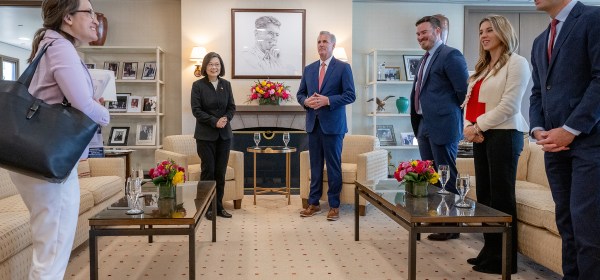
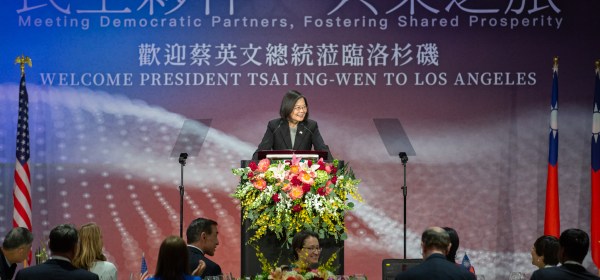
Written by Gerrit van der Wees. From late March through early April 2023, Taiwan’s President Tsai Ing-wen made her seventh foreign trip since becoming President in May 2016. The destinations were the Central American countries Guatemala and Belize, with stopovers in New York (on the way out) and Los Angeles (on the way back). The 10-day trip was her first foreign travel after Covid-19 made it sheer impossible to make such trips during the period 2020 – 2022. This trip became headline news because the CCP government in Beijing voiced major objections, particularly against a planned meeting with US House of Representatives Speaker Kevin McCarthy in Los Angeles. The objections are a continuation of the protests by Beijing against the August 2022 visit to Taiwan by McCarthy’s Democratic predecessor, Nancy Pelosi.

What A 2nd Trump Term Would Mean to Taiwan (and the US)

Written by Daniel Jia. Taiwan does not need and must avoid having a Taiwanese version of Donald Trump. However, Taiwan must be ready for a second Trump term unfavourable to Taiwan’s security. The new Trump administration would resume the economic-centred relationship with China as it did in the first term, likely at the cost of Taiwan’s international status and sovereignty. Taiwan cannot change Trump. But Taiwan can and must show the free world its resolve to defend itself like what Ukraine has been doing. With this unwavering resolution, Taiwan would have the chance to rally international support in the event of a China invasion. Then, and only with this determination, could Taiwan bring the US public and Congress to its side and mandate the lukewarm Trump to act as Biden in the current Ukraine-Russia war.

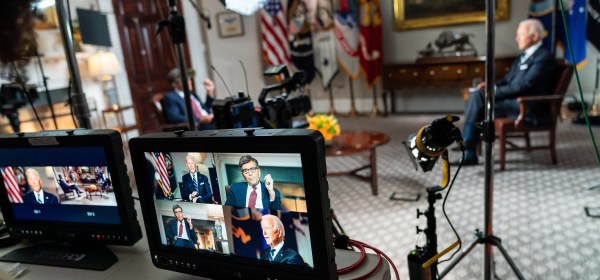
Biden Speaks Again: The End of Strategic Ambiguity?

Written by Gerrit van der Wees. The press and think tanks, on their part, need to reassess their understanding of “strategic ambiguity”: they need to come to a clearer understanding of its origins – as reiterated in the quotes from former NSC Director Robert Suettinger’s book – and arrive at the unavoidable conclusion that it does not equate policy. Rather, it is, at best, a mode of operation determining how to calibrate a response. As described above, the policy itself on how to (help) defend Taiwan is laid down clearly in the Taiwan Relations Act.

1 2