Addressing the Elephant in the Room: The California Shooting and the “Political Problem”

Written by His-Yao Lin and Yi-Lan Lin; translated by Yi-Yu Lai. It has been a while since the mass shooting at the Irvine Taiwanese Presbyterian Church in Southern California, United States, occurred last year. Many pieces of evidence are still ambiguous and cannot be determined. This shooting was not a unique case that sparked political tensions between the Chinese, Taiwanese, and Americans. In January 2023, a series of mass shootings also occurred in California, and two of them were emphasised since the suspects and victims seemed to be Asian. If we focus on the moment when the shooting happened, the “political” reaction in Taiwanese public opinion demonstrates the complexity and difficulties of Taiwan’s ethnic politics since 1949. 

Return to the Land and People: Contemporary Indigenous Knowledge System Project in Taiwan

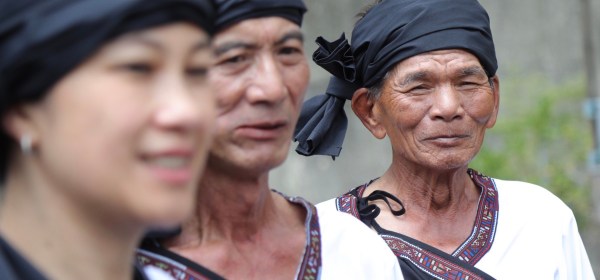
Written by Yi-tze Lee. Following the Construction of the Taiwanese Indigenous Knowledge System (hereafter IKS) Project initiated by the Council of Indigenous Affairs (原住民族委員會), the establishment of the regional Indigenous Knowledge System Center is booming in 2022. The commissioned project results from a long fight for the indigenous cultural right, an example of autonomy in indigenous studies, and efforts on identity awakening. This article will explain the background of the IKS project, discuss the expectation, and reveal some critiques of the project in general. 

Lessons from the Strike by Taiwan Railway Workers

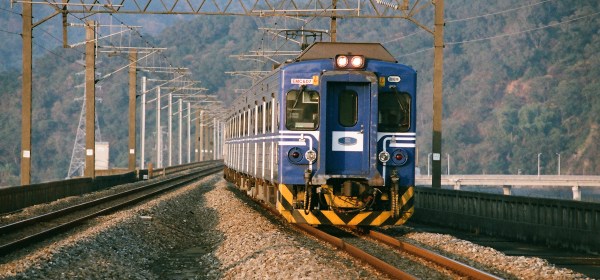
Written by Kuei-Chih Yang. In 2018, the Puyuma Ziqiang train derailed on Taiwan Railway, and then in 2021, the Taroko overturn accident occurred again on Taiwan Railway. Two major railway accidents happened one after another within three years. Many innocent lives were lost, and the safety management of Taiwan Railway was questioned. In March 2022, the Taiwan government proposed a draft of the “Act for Establishment of State-owned Taiwan Railway Co., Ltd.” to respond to the social demands of reforming Taiwan Railways since the accidents.

The Procrastinating Progress of Transnational Same-Sex Marriage Rights in Taiwan

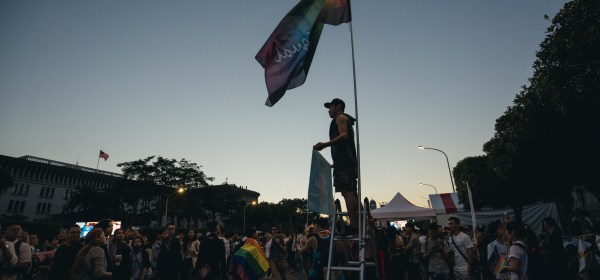
Written by Annie Huang. One historical human rights progress Taiwan made happened in 2019 when the government legalised same-sex marriage. It was a rainy morning, and hundreds of LGBTI groups and activists were standing outside the Legislative Yuan waiting for results. When the president of the Legislative Yuan announced the legalisation of same-sex marriage, the rain stopped, and a rainbow appeared in the sky. People hugged and wept with joy for this historical first in Asia. However, at the same time and in the same plaza, a group of Taiwanese same-sex people burst into tears not because of happiness but because of sadness and discrimination. Transnational same-sex couples are left out of the legalisation content in the same-sex marriage bill without much reasonable reason.

Tainan Police Murder: A Chance for Total Reform of Police Use of Force Training

Written by Wei-An Tsai. ​​In August 2022, the brutal murder of two police officers on duty in Tainan city sent shock waves through Taiwanese society. The two officers, Tu Ming-cheng (凃明誠) and Tsao Jui-chieh (曹瑞傑), were tipped about a stolen motorcycle and set out to investigate. However, they were later ambushed and killed by the suspect shortly after arriving at the scene, which was in an unpopulated area.​  
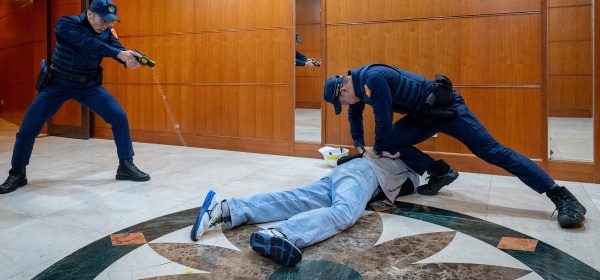
The two officers suffered fatal stab wounds, despite one carrying a gun. The issue of the timing to use firearms quickly became the centre of public debate. In apprehending the suspect on the run, the Interior Minister, Hsu Kuo-yung (徐國勇), instructed police officers “not to hesitate to open fire when faced with resistance.”

Police’s Right to Use Firearms? Lessons from the Murder of Two Police Officers in Taiwan

Written by Ting-Yi Bai. In August 2020, the murder of two police officers shocked Taiwanese society. The police officers, Tu Ming-Cheng, and Cao Ruei-Jie, investigated larceny after receiving a report that a stolen motor had been seen near Chikan Tower in Tainan. While searching for the suspect separately, Tu Ming-Cheng was suddenly attacked by the inmate Lin Xin-Wu, who had escaped from Mingde Minimum-Security Prison. Cao Ruei-Jie was also stabbed after failing to halt the culprit. Both died in the end.

The Long and Unfinished Fight: The Constitutional Court’s Decision on Pingpu Recognition in Taiwan

Written by Wei-Che Tsai; Translated by Yi-Yu Lai. The case of Indigenous status for Siraya people has challenged Indigenous peoples’ composition and boundaries. Currently, around 580,000 Indigenous peoples are legally recognised in Taiwan. It is estimated that the population of the Pingpu peoples will increase the total number of Indigenous peoples to as high as 980,000 if the Act is declared unconstitutional, although this number may be inflated for political purposes by Taiwan’s Indigenous authorities. As a result, the authorities are worried about this judgement.

Kuomintang Through the Ages

Written by Pradeek Krishna. The Kuomintang Party (KMT), established in 1912, ruled China from 1927 until 1948 before moving to Taiwan. The origins of the Kuomintang could be traced back to the decline of the Qing Empire. However, the party that held the mantle of the Chinese Revolution and ushered China into an era without Imperial rule had been forced to retreat outside of China. In recent years, the KMT failed to win the presidency in the 2016 and 2020 elections in Taiwan, raising questions over its legitimacy and relevance in a younger world.

Taiwan’s Relationship with its Last Remaining African Ally – Eswatini

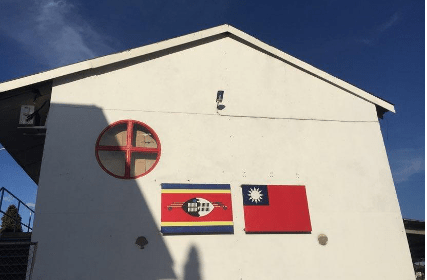
Written by Kristina Kironsk. Taiwan did not always have such a limited presence in Africa as it does now. Its official relations with the countries on the continent began in 1949, shortly after the Nationalists were driven out of China by the Communists during the Chinese Civil War. Altogether 30 African countries at one time or another maintained formal relations with Taiwan, but today the country is a politically marginalised actor with a minuscule presence mostly confined to the pursuit of economic interests.

After China’s 20th Party Congress, How Could Cross-Strait Relations Go?

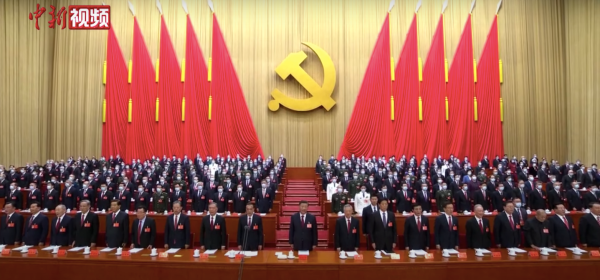
Written by Huynh Tam Sang and Shaoyun Lin. After the controversial visit of U.S. House Speaker Nancy Pelosi to Taipei in August, the relationship between Taiwan and China went downhill to a political deadlock. Dialogues and negotiations have been absent, and the possibility of breaking the ice in the stalemate is uncertain. Following the 20th National Congress of the Chinese Communist Party (CCP), which marked a milestone for Xi Jinping’s third term as China’s most powerful leader, the forthcoming trajectory of China-Taiwan relations should be read with a thorough assessment.

Cross-border Movement of Labour between Taiwan and the Philippines: A Taiwanese NGO Worker’s Perspective

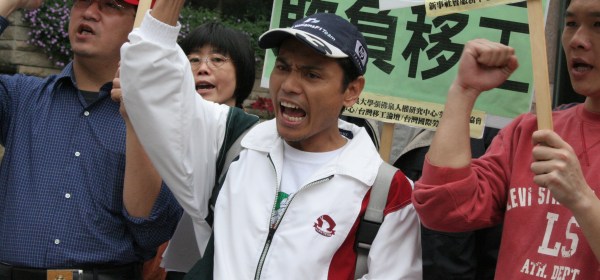
Written by Yi-Yu Lai. Lennon Wong is the director of a shelter for migrant workers in Taiwan. Before joining the shelter in the early 2010s, he was already a labour activist and worked in the Chinese Federation of Labour and the First Commercial Bank Union. Although his prior work was not directly relevant to migrant workers in Taiwan, his engagement with the labour movement may have started with the issue of migrant workers from Southeast Asia. As a result, we may thus understand the cross-border movement of migrant workers between Taiwan and the Philippines through some of his observations.

Sight and Sound: Conversations on Death Penalty between Taiwan and Southeast Asia

Written by Kar-Yen Leong. In an article by Franklin Zimring and David Johnson, we are reminded of the importance of studying the death penalty in Asia as it is the site of “…at least 85 per cent and as many as 95 per cent of the world’s execution.” The authors add that the region is a key battleground as to whether this practice will continue or become a remnant of a less civilised past. This struggle is no more intense than in East and Southeast Asian states, where the death penalty is not only an indelible part of only their legal systems but also their very societies. The decision to retain or abolish the death penalty has become a matter of intense soul-searching among states such as Taiwan, South Korea, Singapore, and Malaysia, navigating landscapes replete with ghosts of colonial and authoritarian pasts. For these countries, the state’s power over life and death is a direct extension of its sovereignty. Giving up this power is to lose that sovereignty, but it also means the loss of a weapon of last resort forged to keep the forces of chaos at bay.

1 17 18 19 20 21 40