Rosettating Between Minoritised Languages: How Taiwanese Readers Respond to Intermediated Translation

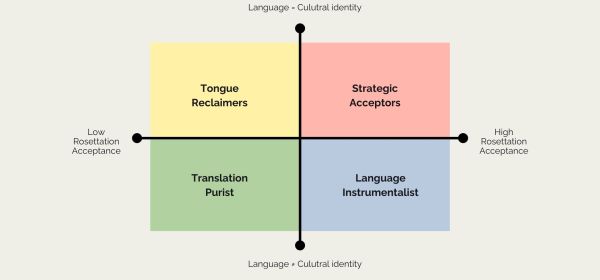
Written by Naomi Sím. The article introduces “rosettation,” a method of translating between minoritised languages like Tâigí and Gaelic via dominant ones. The Tâigael project explores linguistic solidarity, reader responses, and political tensions. Rosettation emerges as both a pragmatic strategy and a literary experiment, which enables new forms of intercultural dialogue despite inherent compromises.
Orchids in the Wild

Written by Lisa LacDonald. This article reflects on orchids in Scotland and Taiwan as metaphors for translation. While Scottish orchids evoke resilience, Taiwanese orchids embody richness and locality. The author highlights the difficulty of conveying cultural nuance across languages, framing translation as both interpretation and resistance, balancing fidelity, accessibility, and the preservation of linguistic diversity.

Grandmother Islands: Oral Memory, Mother Tongues, and Literary Kinship between Taiwan and Scotland

Written by Elissa Hunter-Dorans. This article reflects on how maternal and grandmaternal figures embody the preservation of Taiwanese and Gaelic. Through Tâigael, the author explores oral traditions, familial intimacy, and the “mother tongue” as both metaphor and surrogate caregiver, showing how literature sustains endangered languages and fosters cross-cultural kinship.

Tâigael: Orchids, Maternal Care, and a New Rosetta Stone

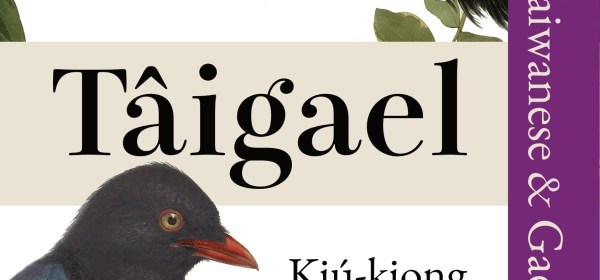
Written by Hannah Stevens and Will Buckingham. The article introduces Tâigael: Stories from Taiwanese & Gaelic, a translation project linking two minoritised languages through English and Mandarin as bridges. Writers reflect on linguistic solidarity, maternal legacies in “mother tongues,” risks of reinforcing hierarchies, and ecological fidelity in translation. Together, their essays highlight translation’s generative, resistant, and collaborative potential.

Food is politics, and so is travel. 

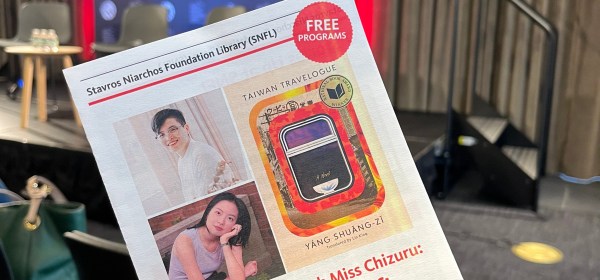
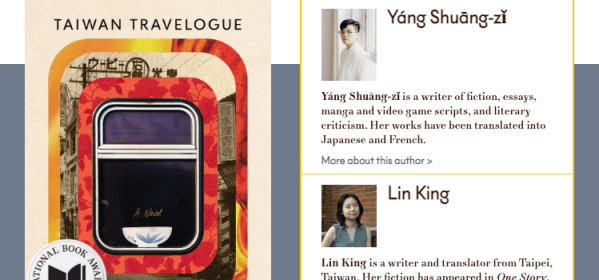
Written by Chee-Hann Wu. This article discusses Taiwan Travelogue and its US book tour earlier this year. It highlights the controversial marketing strategy, the extensive use of footnotes to enrich the historical context, and the categorisation of the novel as queer literature due to the evident, though subtle, romantic undertones between the two female protagonists.

On the Road:  A Taiwan Literary Scholar’s Routes’ of Worlding Taiwan Literature 

Written by Wei-ting Liou. This article focuses on the author’s experiences in “worlding” Taiwan literature through their academic work. This includes engaging with translation, examining Taiwanese American literature, and teaching English-taught courses on Taiwan literature and culture. The author believes these approaches can help reshape the conventional understanding of Taiwan literary studies.

Lolita Reimagined: Fang Si-Chi’s Voice in the Story of Sexual Violence

Written by Yixin Xu. This article argues that the novel Fang Si-Chi’s First Love Paradise can be considered a significant contribution to the #MeToo movement and a literary counterpoint to Vladimir Nabokov’s Lolita. It highlights the novel’s unique perspective by focusing on the victim’s experience of sexual abuse and the complexities of her emotional response. The author emphasises how the novel challenges the romanticized portrayal of the predator in Lolita and exposes the devastating reality of sexual violence.

Gay Jouissance: Queering the Representation of Same-sex Desire in 1990s Taiwan Literature

Written by Yahia Zhengtang Ma. The last decade of the twentieth century was an especially interesting time in the emergence of ‘tongzhi literature’. This genre consists of literary works that ‘deal with homosexuals and homosexuality’ in Taiwan when queer cinema was introduced to Taiwan via Hong Kong. The 1990s are widely considered the golden age of tongzhi literature, animated by such widely-celebrated literary works by Ta-wei Chi, Chu T’ien-wen, Qiu Miaojin, among many others. However, existing scholarship on this has primarily emphasised the complexity of the tongzhi identity, subjectivity, and discourse around tongzhi, tongxianglian and queer in solely its original Chinese texts through the lens of cultural studies and literary studies.

BRINGING BUDDHISM TO THE MASSES – LOOKING BACK AT SAN MIN BOOKS’ “NEW TRANSLATION” SERIES OF BUDDHIST CLASSICS

Written by Shang Haifeng.
This venerable and influential company began releasing publications on Buddhism as part of its “Series of Annotated Modern Translations of [Chinese] Classics” (古籍今注新譯叢書) as early as the 1960’s. This was at the same time that China’s heritage – and its religious heritage in particular – was suffering sustained attacks during the Cultural Revolution.