
When You Weave, You Are Planting Seeds on the Land: An Indigenous Weaving Practitioner’s Experience

Written by Ipiq Matay. My name is Ipiq, which means “tiny” in Truku, and I am an Indigenous person from the Truku community of Taiwan. Despite my lack of height, I have a big heart. As a weaver in my community, I’d like to share ‘mhuma’, a Truku weaving skill which translates to “be planting”. This weaving technique can be seen in diamond-shaped patterns on women’s traditional clothing. Learning how to weave and create this pattern began my journey of connecting to my family history and the people of my community.
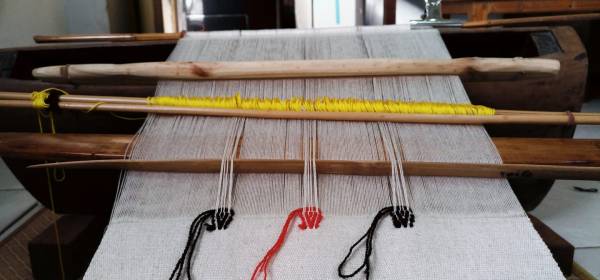
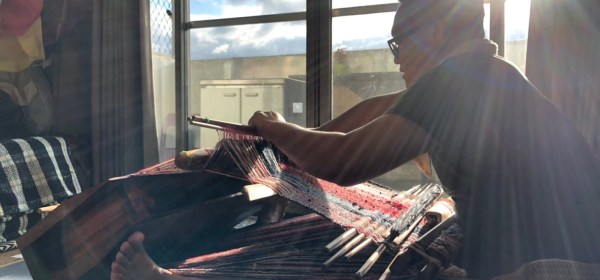
Tminun: Weaving from My Heart as an Indigenous Male

By Peydang Siyu (Chu, Hao-jie); translated by Huang, Hsing-hua. I am a member of the Truku people; the twelfth officially recognised Indigenous nation in Taiwan. We believe in our ancestors’ spirits (utux rudan) and adhere to their teachings (gaya) throughout our entire lives. Cloth weaving (tminun), similar to facial tattooing (ptasan), is a significant part of Truku culture, and many of our customs are related to it. For example, there is a strict gender division of labour in traditional Truku society, with men hunting and women weaving. Men were prohibited from learning how to weave or even touching the tools. As a male, it wasn’t until 2018 did I dare to learn it. But once I began, I never stopped. It was definitely a dream-come-true journey that I would forever remember.