How Tsai Ing-Wen’s fashion sense can provide explanations for gender inequality within Taiwanese politics

Written by Carlotta Rose Busetto. This article examines Tsai Ing-wen’s fashion in her two successful presidential campaigns and how posting certain outfits online increased her electability. It finds that clothes matter in Taiwan and Tsai was not free to wear what she wanted. Moreover, clothes matter more than gender because Tsai also utilised them to promote her own political agenda.

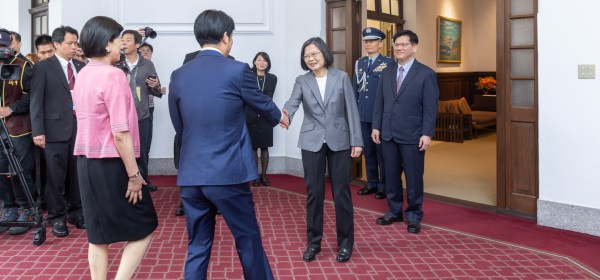
Deviation or Continuation of Tsai’s Approach to Cross-Strait Relations? A few hints from President Lai’s Inaugural Address

Written by Dr Chieh-chi HSIEH. Based on President Lai Ching-Te’s inaugural speech, this article argues that Lai is likely to adopt a ‘passive responsiveness’ approach when engaging with the Chinese government in the next four years. This is a continuation of President Tsai’s strategy on cross-strait relations, only responding firmly when the circumstances are pertinent.

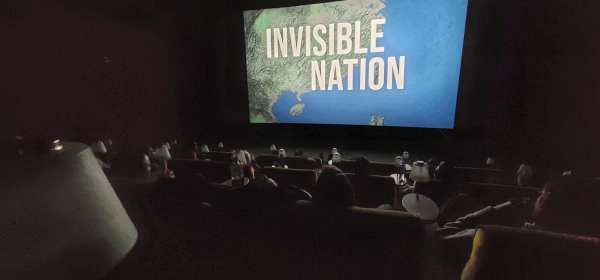
Invisible Nation Documentary is Making Taiwan More Visible

Written by Shawna Yang Ryan and Gerrit van der Wees. During the past weeks, a new documentary about Taiwan, Invisible Nation, has been making the rounds at various film festivals in the United States and Europe, including the International Documentary Film Festival Amsterdam on November 14-18, 2023.  Invisible Nation is the work of Vanessa Hope, who built up the film around the everyday life of President Tsai Ing-wen, in the process creating a fascinating picture of how the low-key President is ably leading Taiwan towards a better future.

Graduation Trip: From Bland Bureaucrat to Madame Liberty

Written by Chieh-Ting Yeh. In 2011, a relatively unknown politician in Taiwan named Tsai Ing-wen became the presidential candidate for the Democratic Progressive Party, which was at the time the opposition. She was a capable bureaucrat that was most notable for her blandness; she had close to zero personal charisma to speak of.  

Ironically, this was also her strength. The last DPP president, Chen Shui-bian, was seen by American policymakers as an unpredictable populist. He used his charisma to play to his base’s anti-China stance. As a result, when the US was trying to engage China, Chen and the DPP were seen as “troublemakers”, raising “tensions.”

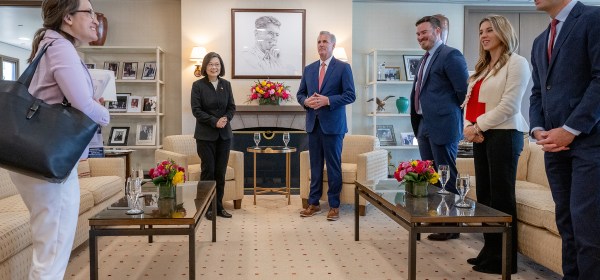
Chinese Military Drills After Tsai-McCarthy Meeting Will Be Used for Political Ammo by Both Camps

Written by Brian Hioe. One of the striking effects of Pelosi’s visit to Taiwan last August was to what extent it highlighted the perception gap within Taiwan as compared to outside Taiwan.  

At the time, much international discourse acted as though the Pelosi visit could be a prelude to World War III. Drama ensued from the visit’s onset, with the flight that Pelosi took to Taiwan followed by over 700,000 users on flight tracking website FlightRadar24–setting new records. Op-eds in international media outlets such as the New York Times framed Pelosi’s visit as unnecessarily provoking China.

President Tsai Ing-wen’s successful travels, in spite of a Chinese headwind: Solidifying Central American and US relations

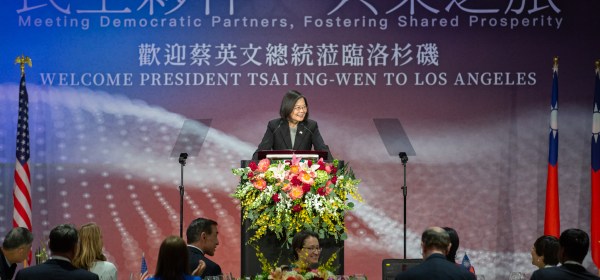
Written by Gerrit van der Wees. From late March through early April 2023, Taiwan’s President Tsai Ing-wen made her seventh foreign trip since becoming President in May 2016. The destinations were the Central American countries Guatemala and Belize, with stopovers in New York (on the way out) and Los Angeles (on the way back). The 10-day trip was her first foreign travel after Covid-19 made it sheer impossible to make such trips during the period 2020 – 2022. This trip became headline news because the CCP government in Beijing voiced major objections, particularly against a planned meeting with US House of Representatives Speaker Kevin McCarthy in Los Angeles. The objections are a continuation of the protests by Beijing against the August 2022 visit to Taiwan by McCarthy’s Democratic predecessor, Nancy Pelosi.

Taiwan Cabinet Reshuffle, DPP’s Fundamentalist Shift, and Faction Infighting Ahead of the 2024 Election Cycle

Written by Milo Hsieh. On January 30th, the Tsai administration finalised its cabinet reshuffle. With former vice-President Chen Chien-jen (陳建仁) taking the helm of Taiwan’s Executive Yuan as premier, Tsai brings back a former ally as the four-year tenure of former Premier Su Tseng-chang (蘇貞昌) concludes after a series of electoral fumbles by the DPP. Moreover, with Taiwan’s 2024 presidential and legislative election less than a year away, the party also shifts back closer to its founding principles with the election of Vice-president William Lai (賴清德) as chair.

Judicial Reform in Taiwan in the context of the Citizen Judges Act

Written by John Burn. In her inauguration speech in 2016, it was claimed that Tsai Ing-Wen received her most rapturous applause for her pledges to institute reform of the judiciary and criminal law proceedings. In a climate of widespread public mistrust in a perceived detachment of judges’ interpretations of the law and public morality, Tsai embarked upon her stage of the long and slow relay of reform. So far, her administration’s most significant stride in this direction has been the Citizen Judges Act, which came into effect on the 1st of January this year. Yet this measure is only the latest legislative development in the long, complicated course of Taiwanese judicial reform.

Cross-Strait Relations: De-coding What’s “New” for the New Year?

Written by Raian Hossain. Despite such heightened tension in cross-strait relations across 2022, President Xi Jinping and Tsai Ing-wen have delivered their English and Lunar new year speeches, showing signs of certain tolerance and a softer tone toward each other. The message from both sides of the Taiwan Strait is not random but rather driven by political objectives and motives likely to determine the cross-Strait relations in the upcoming years. Although speeches by President Xi Jinping and Tsai Ing-wen cover numerous angles, this article uses some specific lenses of the Politics of Security, the local and presidential election of Taiwan, and pandemic politics while de-coding the Cross-strait relations for the near future.

How might China’s new Taiwan policy pan out?

Written by Huynh Tam Sang. One year after the 2019 eruption of large-scale pro-democracy protests in Hong Kong, China enacted the “national security law” for the special administrative region, cracking down on freedom and democracy there. Under such a situation, Taiwan’s populace disapproved of China’s strategy of occupying and turning the self-governed island into a new colony in the vein of Hong Kong. In light of the widespread criticism of “one country, two systems,” the political framework that Chinese authorities have embraced to pursue peaceful reunification with Taiwan, the Chinese Communist Party’s leader Xi Jinping (習近平) has tasked Wang Huning (王滬寧), the party’s chief of ideology and his mastermind, with finding a replacement arrangement.

Taiwan-China relation: 2023 and beyond (Part II)

Written by Daniel Jia. The Taiwanese government, as the administrative body of a democratic state, is currently facing a formidable challenge from both external and internal sources. While China’s aggression towards Taiwan is widely acknowledged, many Taiwanese citizens are beginning to realise that the significant differences between Taiwan’s and China’s social structures outweigh any cultural similarities between the two nations. However, it is important to note that only a few people recognise that these differences could be easily erased if China imposed its rule upon Taiwan, as it did with Hong Kong.

1 2 3 7