
Written by Amélie Keyser-Verreault and Hsu Yu-Yin.
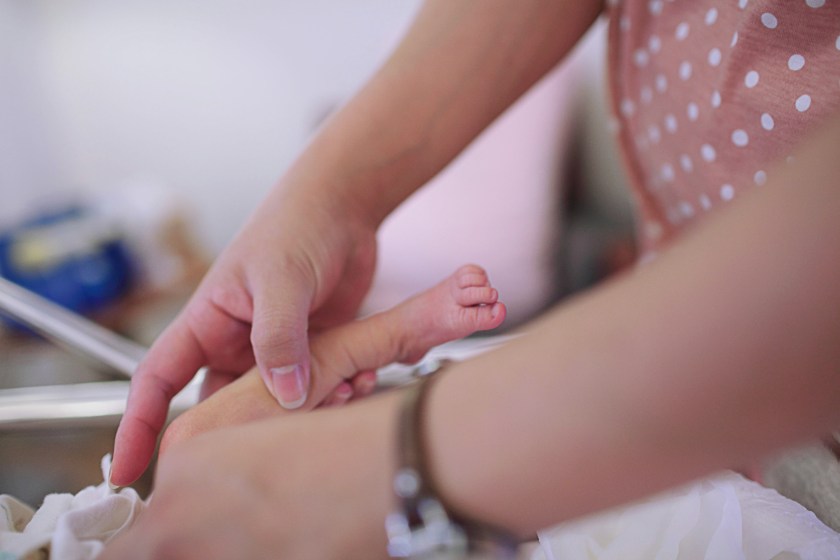
Image credit: IMG_9492 by Jerry Lai. / Flickr, license: CC BY-SA 2.0.
This work was supported by the Bundesministerium für Bildung und Forschung.
This article was built upon a previous piece published in Taiwan Insight on 3 July 2024. In the current piece, we added historical contextualisation elements and a discussion of the main characteristics of the yuezi centres in Taiwan. We also pointed out some challenges that the institutionalisation of postpartum care brings about.
In April 1907, Japanese officials set up a training centre at Taipei Hospital to train Taiwanese midwives in modern medical methods. At almost the same time, various observations collected by Japanese folklorists give us a rough idea of how mothers in colonial Taiwan practised postnatal care customs that the Japanese government did not ban. Since then, doubtlessly, the traditional practice of postnatal customs, known as ‘zuo yuezi’ (坐月子), has evolved significantly over the past 100 years. Since the achievement of an economic miracle in the 60s, while the modernisation of the country has caused huge changes in social arrangements, limited literature has shown and analysed how this yuezi tradition or doing the month is still followed and how many Taiwanese believe that adherence to this ritual is physically and psychologically appropriate for mothers after delivery. Broadly speaking, ‘zuo yuezi’ was gradually transformed from a traditional custom into an emerging industry in Taiwan in the 1980s.
In general, there are two main ways of doing the month in contemporary Taiwan: at home or at postpartum nursing centres. In the first case, doing the month at home is a conventional and budget-wise choice since women continue to live in their own homes. Traditionally, because of the predominant pattern of the patrilocal extended-family residence after marriage in Taiwan, the mother-in-law was the postpartum woman’s key helper. At the same time, in recent years, it is not unusual for a yuezi doula (月嫂) or a woman’s own mother to be the key helper.
With regard to postpartum nursing centres, they could be divided into two categories. There are more and more hospitals that provide their own yuezi centre. In such centres, the rooms are usually former hospital rooms, and thus, the design is basic and functionally oriented. Different from the former, private postpartum nursing centres function much like five-star hotel establishments, providing highly personalised services and various kinds of amenities such as spas or beauty salons.
The rise of these centres is due to complex social factors, but we will only mention the three most important ones here. First, a vast majority of births take place in hospitals, and Taiwan’s national health insurance only provides coverage for three days of hospital care after a vaginal birth and five days after a caesarean section. In nowadays Taiwan, new mothers spend little time in the hospital after childbirth, and many feel a strong need for relatively long-term support and guidance. Second, because of demographic changes, the care and guidance could rarely be met by women’s family members. Some demographic changes, especially late marriage, and the fact that the average age of women giving birth for the first time is constantly rising, resulting in an increasing number of women’s mothers (-in-laws) being too old to undertake the traditional postpartum practices which require a lot of energy. In addition, many older women still need to work and cannot spend a month at home with their daughters (-in-laws). Third, the reduction of family size and the advent of small nuclear families contributes to a more individualistic understanding of motherhood, and women tend to see postpartum practices as an issue within their own nuclear family rather than an extended family business. Moreover, shrinking family size leads to an increase in the resources available for each child and intensifies parents’ investment in their offspring. All these factors contribute to the increasing popularity of these centres.
In fact, Taiwan is a pioneer in the institutionalisation of yuezi practices. Postpartum nursing centres flourished in Taiwan from the 1980s and 1990s. At first, they were set up by non-government organisations, such as the Kaohsiung Women’s Association, which established a centre in 1984. Then, hospitals began to provide postnatal care services (see notes).
Taipei Medical College established Taiwan’s first legal postpartum nursing centre and the second one was in Taichung in 1996 (see notes). In September 2000, Taipei City formally adopted the Autonomous Regulation on the Counselling and Management of Postnatal Care Organisations (產後照護機構輔導管理自治條例 Chǎnhòu zhàohù jīgòu fǔdǎo guǎnlǐ zìzhì tiáolì), which are all registered and managed by the Department of Health (see notes). While there were only three centres in 1996 (Chmielowska and Shih 2015, 155), there were 275 centres in 2019, among which 55 centres were in Taipei City.
In Taiwan, this industry is still developing. According to advice from the Ministry of Health and Welfare, parents are invited to consider this way of doing the month if “there is no alternative family member who can help take care of the baby during the yuezi period (e.g., parents are old; husbands or other family members need to work); inexperienced mothers want professional help to improve their knowledge and ability in caring for their infants; mothers want to have more time to rest than the traditional stay-at-home approach to yuezi.”
According to the first author’s research based on interviews with staff of these centres (n=27, in the great Taipei area) in the summer of 2022, the findings reveal a high degree of homogeneity in the services provided. This homogeneity comprises eight features.
First, a hypervigilance concerning the risk of ailments. The cleanness of the living space is highly controlled and a program of disinfection runs in permanence. Thus, the level of cleanliness that these facilities can achieve is beyond the reach of any individual who chooses to do their month at home.
Second, an emphasis on medical expertise. These centres place great emphasis on their professional medical teams, and all provide weekly rounds by obstetricians and paediatricians, daily rounds by nurse practitioners, and 24-hour telephone consultations.
Third, the process of institutionalising and professionalising yuezi results in intensely technologising, digitalising, and quantifying care work.
Fourth, the importance of postpartum meals. All of these centres underline that postpartum meals are based on Western nutrition science, combined with the concept of Eastern dietary supplements.
Fifth, a still-robust presence of Chinese medicine.
Sixth, prioritisation of the mother’s rest and physical recovery. In fact, mothers’ rest and recovery are presented as the most important goals in doing the month in a postpartum centre. In each of these centres, mothers can leave their newborns in the nursery at any time and for an unlimited time.
Seventh, the importance of “getting your body back into shape.” Not only are yuezi meals very calorie-conscious, but all centres provide certain courses designed to help lose weight and regain their pre-pregnancy figure.
Finally, extension of the concept of yuezi caregiving. Although the staff in these centres generally advises a stay of three or four weeks, the duration of the services provided is longer than one month, often from the time of the pregnancy to the post-yuezi period.
While the existing literature acknowledges that attending a postpartum nursing centre contributes to improving mothers’ general well-being or the prevention of postpartum depression, we wish to point out some challenges that the institutionalisation of postpartum care brings about.
First, Kuan (2013) points out that the use of intensive technological intervention characterises childbirth in Taiwan, and in this field, technocratic values are widespread. Many staff statements imply criticism of traditional ways of doing the month and directly or indirectly underline that while there are different approaches to caregiving, the best way is practised in their centre and based on the so-called “newest scientific findings.”
Second, mothers in these centres are partly or completely cut off from the wisdom and experience of previous generations or other family members since, in these institutions, women’s intangible wisdom and experience around motherhood are largely replaced by digitalised and quantified data and numbers. Moreover, building ties with the newborns is lessened and based on the rationale, and new mothers are supposed to rest as much as possible. Therefore, little emphasis is placed on mother-child bonding.
Finally, we underline that the institutionalisation of yuezi means the commercialisation of such rituals and these centres belong to a market-driven and profit-driven care industry. Those managing the postpartum-care industry know, mobilise and benefit from these parents’ anxiety and expectations for their precious children. Staying in these highly medicalised and specialised institutions is very expensive, and the professionalisation of postnatal care showcases a deep implication of social class concerning maternity and childhood in contemporary Taiwan.
Notes:
“Three mothers stay on the first day of the opening of the postpartum nursing centre in Kaohsiung”「高市坐月子中心開幕 首日有三位媽媽進住」。民生報,1984.03.08,第10版。
Yang, Hexiong 楊和雄. “The Second Legal Postpartum Nursing Centre in Taiwan”「全臺第二家合法坐月子中心 」。台灣新聞報,1996.10.31,第12版。
Dong, Zhisen 董智森. “Postpartum nursing centres in Taiwan will be regulated by law”「 坐月子中心將有法可管」。 聯合報,2000.09.14,第20版。
Dr Amélie Keyser-Verreault (she/her) is a postdoc fellow at the Institute of Asian and Oriental Studies at the University of Tübingen. She is an anthropologist conducting research on gender and body politics with a focus on families, demographic crisis, neoliberalism, compressed modernity and resistance in East Asia. She has a deep interest in qualitative art-based, decolonial and intersectional methodologies.
Dr Hsu Yu-yin (徐郁縈) received her Ph.D. in Buddhist Studies from the National University of Singapore with a FASS Scholarship. She specialises in modern Chinese Buddhism, with particular emphasis on its ritual practices, transnational networks, and print communication.
This article was published as part of a special issue on ‘In the Name of Birth: Technology, Care and Circumstances‘.
 Taiwan Insight