

Written by Yi-Yen Lim, Jui-Jan Chan and Chan-Yuan Wong.
Image credit: 03.08 副總統出席「2023年第五屆世界棒球經典賽A組預賽」by 總統府 / Flickr, license: CC BY 2.0.
The professionalisation of the sports industry has deep roots, starting with the formation of leagues such as Major League Baseball (MLB) in the 1870s, the English Football League (EFL) in 1888, the National Football League (NFL) in the 1920s, and the National Basketball Association (NBA) in the late 1940s. These leagues were among the first to commercialise and profit from sports. In the late 19th century, sports professionalism began to capitalise on the modern market economy, accelerating the commercialisation and commodification of sports, including recreational activities (Hansen et al., 2023). In Western contexts, attention primarily focuses on major leagues like MLB, NFL, and the Premier League. These leagues spawn professional sports teams, which are often founded and owned by wealthy enthusiasts or private enterprises, with franchisors overseeing the business operations.
In Asia, a few nations began developing professional sports in the 20th century. For instance, Japan’s first baseball league, Nippon Professional Baseball, was established in the 1930s and reorganised in the 1950s, with 12 teams by the end of that decade. Taiwan launched its first baseball league, the Chinese Professional Baseball League, in 1989, which expanded to 11 teams by 1997. Similar to Western contexts, the market ecosystem in Asia includes sponsorship from conglomerates, as well as licensing and merchandising ventures that provide hospitality and broadcasting services. However, unlike in many Western nations, professional sports in Asia are often jointly governed by government agencies and private businesses.
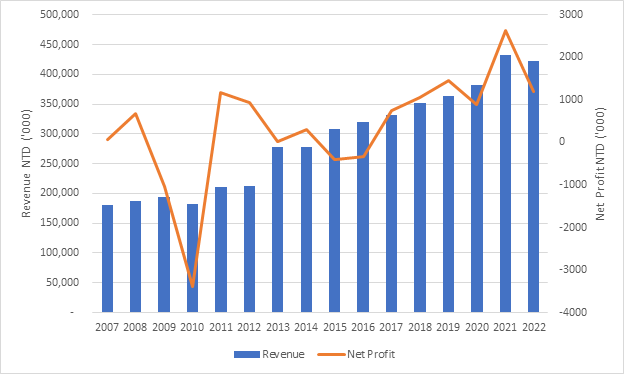
Professional sports in Taiwan are gaining momentum and steadily growing in popularity, with athletes working hard to become more competitive on the international stage. A prime example of this progress is Taiwan’s national baseball team, which clinched the Premier12 baseball championship on 24 November 2024. In Taiwan, professional sports activities fall under the jurisdiction of the Ministry of Education (MOE). The MOE’s mission is to enhance national education, promote sports and youth development, and improve education quality to boost the country’s competitiveness. Generally, sports are framed as public goods delivered through educational programs and services. Professional sports in Taiwan are positioned differently than in the Western context, which presents various challenges in sustaining the sports industry from both a business and non-rivalrous goods perspective. To explore these issues, we conducted fieldwork in Taiwan and spoke with industry professionals, including marketing directors of baseball professional teams, coaches from professional sports organisations, and ICT company owners. In this article, we discuss some of our interactions with baseball professionals from the Uni-Lions team, a subsidiary of the Uni-President conglomerate. The team is arguably one of the most successful baseball organisations in Taiwan, known for its ability to maintain a profitable business (Figure 1).
Source: Various company’s annual reports
Mismatch in Tech Push and Demand Pull
The Taiwanese government sees the potential of sports technologies to enhance the competitiveness of Taiwan’s professional sports sector. It is making efforts to deploy and promote these technologies among various sports stakeholders. It recognises that the demand for sports technology is currently lacking and has mobilised multiple government ministries to support its promotion and commercialisation, aiming to accelerate adoption. On the other hand, the professional sports industry in Taiwan feels challenged in integrating technology into its business model. Industry leaders view the disconnect between the government and professional sports teams as a key issue, with the government often pursuing ambitious policy initiatives while sports organisations are not yet positioned to fully benefit from them.
A professional sports team manager informed us that there is significant potential for technology to enhance movement and performance across various sports, with data stored in the cloud and accessible through communication apps. However, the need for professionals to interpret this data remains critical. While these technologies could improve professional sports training, coaches often feel disconnected from their use. Furthermore, there are instances where the government has introduced these technologies prematurely, without the budget necessary for effective implementation. The foundation for technology in sports is still weak, and simply adding new devices does not guarantee increased participation.
Additionally, there is a coordination issue among the Ministry of Education, sports technology enterprises, and professional sports teams, hindering sports innovation in Taiwan. One expert we spoke with for our fieldwork maintained that “..there are significant growth opportunities in sports technology, with numerous market niches yet to be explored. Unfortunately, the government currently lacks a solid plan for sports development and has been hesitant to collaborate with the medical industry, citing the prevalence of National Health Insurance as a barrier”. Some view that government resources have often been allocated for building-related technologies (e.g., stadium cam for live broadcast) and renovation of stadiums instead of investing in sports technologies. There are times when the eventual renovation and new stadium buildings fail to meet the needs of professional teams. The issues in different buildings tend to look alike, indicating that the government has not learned how to fix the problems. The struggle of the government to identify specific technologies and the failure to understand the value propositions of certain technologies within professional sports organisations resulted in Taiwanese athletes lacking the professionalism observed in their Western counterparts.
Business Structure and Sustainability
In Taiwan, professional sports are financially supported by large corporations, which may have different business objectives. While professional sports teams in the Western world typically focus on maximising profits, many professional sports teams in Taiwan operate as subsidiaries of major corporations. Moreover, they are expected to endure financial losses from the parent companies. These teams are often sponsored by conglomerates that cover the costs of hiring managers, coaches, and athletes. The conglomerates view their sponsored teams as complementary assets, instrumental in demonstrating their genuine commitment to sports to the public rather than merely operating as profit-driven entities. This commitment helps them connect their brands to the positive reputation of the teams they support, whether through championships or the dedication of their athletes. The revenue sources of a sports team include ticket sales, broadcasting rights, merchandise, and advertising.
To survive and secure consistent revenue, professional sports teams are pressured to hold matches every two weeks while trying to enhance fan engagement and overall experience. However, it is believed that frequent major events may dilute the excitement surrounding them. In baseball, many feel that Taiwan’s teams lack prominent baseball celebrities, a situation often linked to poor team performance. This, in turn, may stem from limited collaboration with technology-integrated training centres. The high cost of implementing technological devices and the shortage of professionals skilled in analysing sports data present significant challenges. Moreover, the high turnover rate of coaches further complicates the situation, hindering the effective training needed to interpret and utilise this data.
In conclusion, the sports landscape in Taiwan appears to be at an impasse, as teams find themselves needing to align closely with their sponsors and government support. It is difficult to ascertain whether it would be advantageous to separate professional sports from their sponsors and governmental influence, especially given the long-standing co-evolutionary relationship that has contributed to the development of the industry. A potential path forward could involve the government and sponsoring business conglomerates granting more autonomy and decision-making power to professional sports teams and their fans, particularly in choosing the technologies to adopt for upgrades. This could pave the way for a transformative future in Taiwanese professional sports, fostering a more independent and vibrant sporting culture.
Lim Yi-Yen is a graduate of the International Master of Business Administration (IMBA) program at National Tsing Hua University. Her research interests include complementary assets in the development of the sports industry within small economies, technology-integrated business models, and crisis management.
Jui-Jan Chan is a senior researcher at the Industry, Science and Technology International Strategy Center (ISTI) of the Industrial Technology Research Institute (ITRI) in Taiwan. Her research focuses on cross-disciplinary innovation analysis, as well as industrial ecosystems and clusters. She has also written several articles on sports technology in Taiwan.
Chan-Yuan, Wong is a Professor at the Institute of Technology Management, National Tsing Hua University in Taiwan and a Visiting Professor at SARChI, University of Johannesburg in South Africa. He has studied and worked across Asia, including Malaysia, Thailand, and Korea. Chan-Yuan has published extensively on topics such as technology catch-up in the semiconductor industry, regional innovation systems, analysis of the high-tech industry, and governance issues in middle-income economies.
 Taiwan Insight