
Written by Yi-Ping Wu.
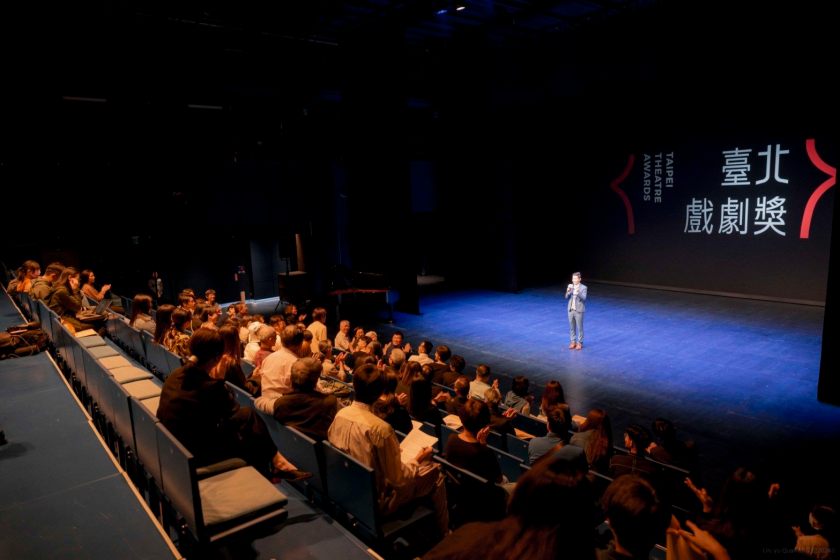
Image credit: Taipei Theatre Awards by Taipei City Government.
Dickens’ famous lines from A Tale of Two Cities – “It was the season of Light, it was the season of Darkness, it was the spring of hope, it was the winter of despair” – aptly capture Taiwan’s theatre landscape in 2024. While the arts have rebounded since COVID’s decline in 2022, this recovery brings both opportunities and challenges.
A General Trend: Thriving Musicals and the Increasing Ticket Prices of Performances versus High Portion of Performances Tickets Unsold
We can see how musicals became the most popular among theatre genres in Taiwan in 2023. According to the 2023 yearly data report of NTCH (National Theatre & Concert Hall), the number of theatre performances decreased from 2599 in 2019 to 2122 in 2023. Musical performances increased by 87%, from 362 in 2019 to 676 in 2023. Additionally, ticket prices for musicals saw significant growth compared to the gradual increase for theatre. Moreover, ticket prices of grand theatre performances decreased slightly from NTD 967 in 2019 to NTD799 in 2023. In contrast, ticket prices of grand musical performances increased by about 33%, from NTD788 in 2019 to NTD1053 in 2023 (p.25). This is an apparent phenomenon we must acknowledge: Musicals will be the trending performing art in Taiwan in 2024, and the vibe will remain so for the foreseeable future.
Notwithstanding – owing to the increasingly expensive ticket prices – audiences have become increasingly conservative and picky about their entertainment choices, and in the 2023 yearly data report of NTCH, its author, professor Chu-Lan Kao, revealed the cruel fact that both before and after the pandemic, a considerable proportion of performances have had ticket sales rates that did not reach 50% (40% in 2019; 47% in 2022, 40% in 2023, p.12). This situation implies how small theatre troupes compete to get attention from the audience to guarantee their ticket boxes to survive.
Although the 2024 data report has not yet been released, the trend is likely to continue for the next few years.
The Gradual Growth of Comedy versus the Trend of Superficial Entertainment
An unexpected phenomenon in 2024 Taiwan is the comedy that is mixed with Manzai (漫才/まんざい), stand-up comedy, which went viral. Manzai is a traditional style of comedy in Japanese culture that usually involves two performers – a straight man (tsukkomi) and a funny man, also the punchline deliverer (boke) – trading jokes at great speed. Most jokes revolve around mutual misunderstandings, double-talk, puns, and other verbal gags. Manzai was first seen in Taiwan in the late 2000s and has been trending in the past few years.
The Japanese-style comedy series Act Life (職男人生) by Funny No Problem (面白大丈夫), combining Manzai and sketch comedy, secured four spots in Taiwan’s top 10 grand theatre performances of 2023 (p.16). In 2024, their shows ran for 28 weeks across Taiwan, spanning more than half the year. The influence of Manzai extended to medium venues as well, with veteran troupe Dacon.com (達康.com) placing two of their D.C. Night Live shows in the top ten medium-sized theatre performances. The rapid development of two comedy theatrical troupes implies a social atmosphere that embraces fast, relaxing, simple, and exciting entertainment. The two troupes also create content on respective YouTube channels and run podcasts. Their short videos on different platforms have been extremely popular.
We may be unable to confirm the exact reasons for the Taiwanese public’s shifting preference toward light-hearted content and away from “traditional” theatre. It may be attributed to shortened attention spans or the more commonly seen phenomenon of societal brain rot, as exemplified in the Oxford Word of the Year 2024. Still, the direct impact of the phenomenon may explain the growth of comedy, which frees adults from their dull, ordinary lives by making them laugh.
Encouragement to Support Theatre Development versus #MeToo Movement in the Theatre Field
A positive strategy showing how the government is encouraging theatre development in 2024 is the establishment of the first Taipei Theatre Awards, which was announced by the Commissioner of Taipei City’s Department of Cultural Affairs, Shi-Ping Tsai. Tsai said this award is the Taiwanese version of the Tony Awards, whose goal is “to show how theatre reflects social values and to recognise individuals or organisations that have made special contributions and achievements to contemporary theatre in Taiwan.” The total prize amount is 2.7 million New Taiwan Dollars. Nevertheless, beneath the light of these new awards, a dark shadow still haunts the theatre field in Taiwan.
While the #MeToo movement gained prominence in the US after the 2017 Weinstein revelations, it didn’t take hold in Taiwan until June 2023. At that point, victims from Taiwan’s political, entertainment, cultural, and media sectors began speaking out about sexual harassment and assault, demanding justice for their experiences.
The same situation exists in the field of theatre. In 2022, the famous theatre director Jun-Cheng Liao was convicted of sexual harassment and sentenced to three months in prison, with the possibility of paying a fine of 90,000 NTD instead. Moreover, in June 2023, actress Mia accused a well-known actor, Jian-Wei Huang, of opportunistic sexual conduct after she took Stenos pills seventeen years ago. Meanwhile, another noted senior actor and director, Jie-Hui Xu, was accused by a netizen of asking students to practice “sex dubbing” during his performance classes collectively. Xu was also charged by actress Yun-Xin Huang and a member of the Chinatrust Brothers cheerleading team, Xin-Yi Hu, of sexually harassing them in a stage play he directed in 2013, Dancing Diva.
The wave of these allegations shows that victims are regaining their voice through the #MeToo movement, setting an example for others, and embedding these lessons in professional culture. It also calls on the government to review its funding mechanism to prevent resources going to predators. Reflecting this, Taipei Art Creator Trade Union published a survey in October 2024 on Gender Equality and Labor Conditions, highlighting the urgent need to enhance gender and sexuality education and improve labour conditions to ensure general wellness and sustainability in the field.
2024 presents contrasting trends in Taiwan’s performing arts: while both musicals and theatre maintain creative momentum, many shows struggle to fill even half their seats. Moreover, the rise of comedy is extraordinary. It hints that fast-paced and sensual forms of entertainment are dominating the market. In addition, the delight of the first Taiwanese Theatre Awards, accompanied by the #MeToo Movement, is all the rage.
Now, it’s time to recognise the current trend: people prefer a relaxing, lighter form of entertainment. This is perhaps because people need to escape their dull, complicated, stressful, and monotonous lives. Let’s forget about inflation, bread and butter, the Russian-Ukrainian war, the Israeli-Palestinian conflict and China’s threat of infiltration so we can have some fun. Brain rot or not, 2025, here we come!
Yi-Ping Wu is an Assistant Professor in the Department of Radio and Television at Ming Chuan University. Her research interests focus on Taiwan studies, theatre and performance studies, and women, gender, and sexuality studies. She recently worked on research on Taiwan cabaret history from 1950s~1970s.
This article was published as part of a special issue on ‘Farewell 2024, Fresh start 2025?’.
 Taiwan Insight