
Written by Tzu-Ming Liu.
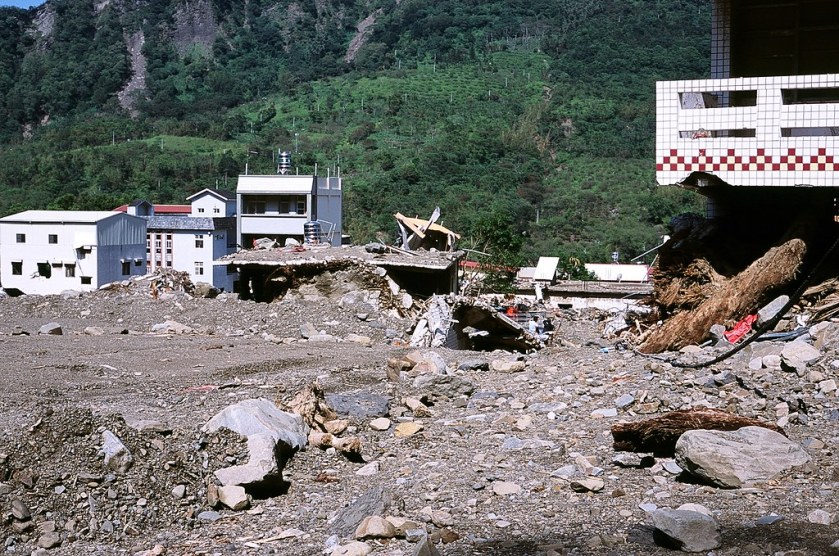
Image credit: 2009.08-莫拉克颱風之後-高雄那瑪夏鄉34 by 柯金源/ Flickr, license: CC BY-NC 2.0.
The Rukai tribe, one of Taiwan’s Indigenous peoples, possesses unique agricultural techniques and culture, with millet cultivation being a central traditional activity. This agricultural method is not only the foundation of their livelihood but also an effective strategy to cope with extreme climate challenges. Particularly in the context of climate change, the Rukai tribe’s traditional farming model provides an inspiring case, demonstrating the resilience and wisdom embedded in Indigenous knowledge when facing environmental challenges.
Indigenous Knowledge and Climate Change Adaptation
Traditional knowledge, particularly agricultural knowledge, is often a result of accumulated wisdom passed down through generations. These insights are gained from long-term observations of environmental changes. In the Rukai tribe’s farming practices, the millet cultivation method exemplifies the application of this knowledge. The mixed cropping system of millet not only ensures food security but also effectively mitigates risks brought by climate extremes.
Climate change adaptation refers to the strategies employed to respond to and adjust to environmental changes. The Rukai tribe’s millet intercropping model exemplifies such adaptation, particularly through crop diversity, which helps reduce the impacts of natural disasters. For example, the diversity of crops in the mixed farming system helps complement each other, preventing severe soil erosion and disasters caused by heavy rainfall and typhoons. Furthermore, millet itself holds significant cultural value for the Rukai tribe, serving not only as a reliable food source but also as a cultural symbol of the community.
Millet Intercropping and Climate Change Adaptation
The millet intercropping system is a central feature of Rukai agriculture. This system includes up to ten different crops, such as millet, Taiwanese amaranth, corn, sorghum, and mung beans, with crops interacting and growing together to enhance land efficiency and stable production. For instance, the crops complement each other at different growth stages, preventing excessive consumption of soil nutrients by any single crop. More importantly, this diversified cropping system helps to spread disaster risks, ensuring a stable food supply for the community during extreme weather events.
During the 2009 Typhoon Morakot disaster, the Rukai tribe’s Wutai village demonstrated the resilience of this system. When roads were blocked and bridges destroyed, Wutai village and other tribal communities were cut off from the outside world and unable to access food supplies. However, the traditional millet fields, which incorporated mixed cropping systems, still yielded crops. The presence of sweet potatoes and other crops, which were planted alongside millet, provided an important food source during the initial stages of the disaster. This ability to sustain food supply during a crisis is a direct result of the wisdom embedded in the Rukai tribe’s traditional knowledge.
In addition, Rukai farming activities go beyond millet cultivation, including crop rotation and intercropping with sweet potatoes, pumpkins, and other crops. The combination and rotation of these crops help prevent soil degradation, and the crops provide adequate ground cover before heavy rainfall, effectively reducing soil erosion.
Government Interference and Maladaptation: From Resilience to Vulnerability
However, the Rukai tribe’s traditional farming system has been significantly altered by modern government interventions, which have not always had a positive impact on the community’s ecology and society. Under both Japanese and Republic of China rule, the Rukai tribe’s traditional farming methods gradually gave way to modern agricultural techniques. For instance, the introduction of rice and other economic crops has not adapted well to the local environment, resulting in increased soil degradation and the loss of biodiversity.
Moreover, government policies promoting “modern agriculture” shifted the Rukai tribe’s land use from communal land management to private ownership, undermining the traditional land-sharing practices. This shift exacerbated internal land resource imbalances and led to a loss of agricultural labour, as many young people left the village for work or education. As a result, agricultural productivity declined, and the community increasingly relied on external food sources, further weakening the traditional self-sufficiency model.
These policies resulted in maladaptation to climate change, making the community more vulnerable when facing extreme weather events. Furthermore, as the government continued to push for modernization and economic development, the broader society began to perceive that the village’s location was no longer viable, suggesting that the tribe should relocate. This type of forced displacement due to government interference is a form of environmental injustice. Instead of addressing the root causes of the community’s vulnerability, such as inadequate infrastructure or inappropriate policy, the solution proposed by the government was to remove the Rukai people from their ancestral land, disregarding the tribe’s traditional farming knowledge and their ability to adapt to climate change. This action not only violated the tribe’s rights but also failed to address the long-term environmental and cultural harm caused by disrupting their self-sustaining agricultural system.
The Cultural Value of Millet and Contemporary Challenges
Millet holds great cultural significance for the Rukai tribe. It is an essential part of various ceremonies and rituals, and it also carries social value. Families who produce large quantities of millet are respected within the community. The ability to cultivate abundant millet is also a way to gain prestige, as those who produce more millet are qualified to wear millet jewellery, a symbol of respect within the tribe. This millet-centred culture also enables the community to come together during disasters and share resources, ensuring that everyone has enough food during challenging times.
However, with the rise of tourism in the Hayu Creek area, some tribe members have shifted their focus towards the tourism industry and have gradually abandoned traditional farming. This presents a new challenge: even though tourism is seen as a potential solution for economic development, it does not guarantee long-term food security for the community and may further weaken agricultural productivity. To ensure the tribe’s resilience to climate change, it is necessary to reassess the impact of past policies on traditional farming and to evaluate how emerging industries affect agricultural labour.
Conclusion: Comprehensive Planning and Sustainable Development
The Rukai tribe’s traditional farming system offers an effective response to climate change challenges. However, modern policies and emerging industries that neglect adaptive cultural and agricultural practices have created new obstacles. To restore the community’s resilience to climate change, comprehensive planning and the promotion of sustainable economic development models are necessary. Encouraging tribe members to return to traditional farming methods while integrating modern agricultural techniques can ensure food security and preserve cultural heritage. Only by doing so can the Rukai tribe continue to face environmental challenges with the wisdom of their ancestors and achieve sustainable development in the face of global climate change.
Moreover, addressing the environmental injustice caused by forced displacement requires a shift in policy that respects Indigenous knowledge, supports self-sustaining agriculture, and ensures that the Rukai tribe’s cultural and ecological heritage is preserved. The solution is not to relocate the tribe but rather to empower them with the tools and resources needed to adapt to a changing climate while maintaining their traditional agricultural practices. Only through this approach can true climate change justice be achieved.
This article was published as part of a special issue on ‘Navigating Climate Adaptation Challenges in Taiwan’.
 Taiwan Insight