
Written by Scott E. Simon.
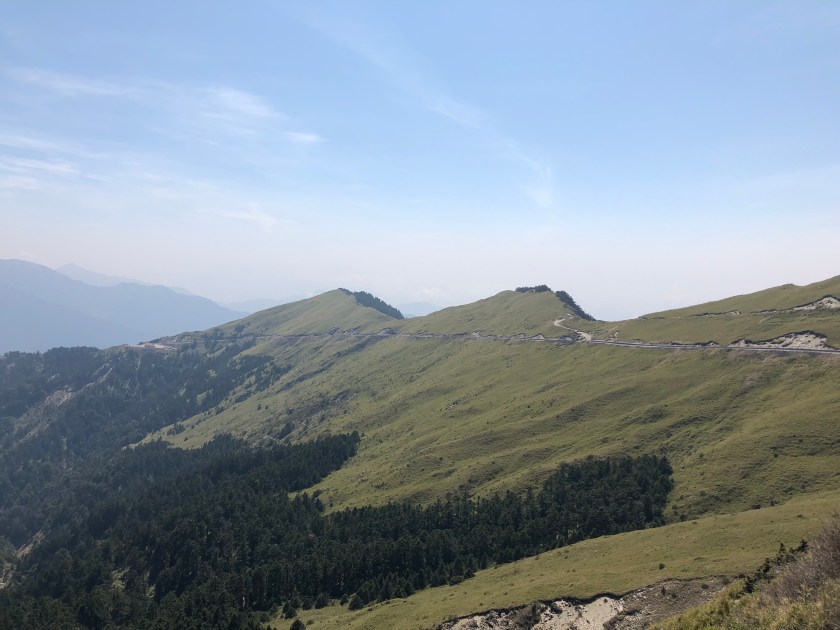
Image credit: taiwan mountain by Raven Chang/ Flickr, license: CC BY-NC 2.0.
Taiwan Studies is based on a fundamental ontological conviction – ontology being the philosophy of what exists. Taiwan specialists (Formosanists?) are convinced that something called Taiwan exists as an entity that we can explore, describe, measure, photograph, analyze, and interpret. Social scientists know that nations are “imagined” and that even states are to some degree “believed.” Taiwan is not an object in phenomenological reality, as would be any particular coral reef, island, tree, muntjac – or human. In ways that echo Foucault’s Les mots et les choses (The Order of Things), we conjure Taiwan and its people when we write about them, speak about them, and insist that, yes, there is such a thing as Taiwan Studies.
Neither Taiwan nor its Indigenous peoples are “things.” Rather, they are bundles of ever-changing relations between humans. In modern society, governmentality shapes the possibilities for forming these relations. Recognizing that Taiwan, as of January 2025, had 612,669 Indigenous people belonging to 16 different Indigenous peoples (or nations) is a standard state-centric technique of measurement or “legibility.” States label and count people, just like they measure and register land, so that people(s), lands, and resources can be mobilized for larger state projects, from elections to national parks and mines. When Indigenous territories are labelled with polygons on maps, as in those produced by the Council of Indigenous Peoples, boundaries are drawn around people’s lives in a modular conception of being associated with modernity. But, in liberal societies, there is still great room for individual and community agency. The Indigenous can enact a politics of refusal, which may be why the population of 8,587 “not yet declared” Indigenous individuals exceeds that of eight recognized peoples.
Taiwan’s Struggle to Gain Visibility
Internationally, attempts by both Taiwan and Taiwanese Indigenous peoples to claim visibility encounter opposition. Scholars initially encountered friction when they raised the idea that Taiwan has an autonomous existence distinct from China. Anthropologists spent decades “looking through Taiwan to see China” because of the difficulties of conducting unfettered ethnographic research in the People’s Republic of China and their desire to find somewhere remnants of relatively unadulterated Chinese culture. In the philological tradition of sinology, where literacy is of utmost importance, it has long remained difficult to argue that Taiwan is anything but an avatar of Chinese cultural heritage. Political scientists avoided “sensitive” topics like Taiwan out of a desire to maintain access to the People’s Republic of China. Yet important changes began in the 1990s.
Here is a personal example. Shortly after getting my PhD in 1998, when I had done two years of fieldwork in Tainan and been taught by research partners to perceive Taiwanese people as not Chinese, I joined the annual general meeting of the Society for East Asian Anthropology (SEAA, a section of the American Anthropology Association) with a proposal. I argued that Taiwan be listed on the same conceptual level as Korea and Japan rather than subsumed into Greater China with Hong Kong and Macau. My suggestion provoked strong reactions. Some people immediately opposed my proposal on the grounds that all SEAA members could be denied visas to China. Someone said if we do that for Taiwan, we have to do the same for Tibet. Well-meaning colleagues warned me immediately afterwards against being “too political.” One said, “No matter what you think about the politics, you must admit that Taiwan is culturally Chinese.”
These reactions constitute friction. But friction is different from resistance. As Anna Tsing reminded anthropologists, “Hegemony is made as well as unmade with friction.” Out of this friction emerged the North American Taiwanese Studies Association (NATSA) in 1994 and the European Association of Taiwan Studies (EATS) in 2004. It is no coincidence that the first president of NATSA, Lin Chia-lung, is now Taiwan’s Foreign Minister. Nor is it merely fortuitous that the Council of Indigenous Peoples was created in 1996, and Indigenous peoples (with the final ~s) entered the Additional Articles of the ROC Constitution in 1997. A seismic political change was underway. These events, including my proposal to the SEAA, were effects of Taiwan’s democratization that enabled hesitant steps away from the Chinese identity that had been imposed on the archipelago’s peoples since 1945. It would be generous to interpret the opposing members of the SEAA as simply behind the curve. Some of them, consciously or not, were invested in relations with another potential hegemony over Formosa (the island) and its inhabitants. Discussion of Taiwan as an autonomous entity challenged their vested interests.
Shortly afterwards, I started to explore parts of Taiwan that are clearly distinct from Chinese culture. While teaching at National Dong Hwa University, I met Truku political activist Igeung Shiban. She convinced me to do field research with her on the politics of development. For two decades, which included two multi-year projects funded by Canada’s Social Science and Humanities Research Council, I dedicated myself entirely to the study of Taiwan’s Indigenous peoples. My publications include one book about Indigenous-state relations and one about indigeneity and Indigenous resurgence among the peoples who follow the ancestral law of Gaya. From these reflections arose two award-winning articles in the International Journal of Taiwan Studies (IJTS). I try to avoid the notion that Indigenous peoples are just part of Taiwan’s multicultural mosaic. Instead, I explore them as tiny emergent nations in their own right.
Two Articles in the IJTS
My contribution to Taiwan Studies has been attention to how indigeneity integrates Indigenous peoples into the state project that is post-martial law Taiwan. The journal’s first issue was a special issue on the state of the field, edited by Michael Hsin-Huang Hsiao. Influenced by Stéphane Corcuff’s reflections on ontology, Linda Tuhiwai Smith’s decolonization, and my reading of the United Nations Declaration on the Rights of Indigenous Peoples, I reviewed writings on Indigenous peoples in Chinese, English, and French. This article was innovative in that it covered not only the works of Taiwanese and international anthropologists but also those of local Indigenous scholars. I cited Eduardo Viveiros de Castro for having identified the cardinal value of anthropology as ‘working to create the conceptual, I mean ontological, self-determination of people[s].’ I concluded that, just as anthropologists once looked through Taiwan to see China, we risk looking through the Seediq, the Truku, and other peoples to see Taiwan. They have deep-rooted ontological existences of their own ways of making relations with others, including foreign settlers and occupiers. This article was my first serious engagement with the Chinese-language literature of Indigenous resurgence that became Truly Human, published in 2023.
The second article emerged from a panel entitled “Speculative anthropologies on the Futures of Indigeneity in Asia and Beyond” at the 2015 American Anthropology Association meetings. The panel brought me into dialogue with scholars working in Southeast Asia who remained sceptical about the liberatory potential of indigeneity. Taiwan provides rich examples for this debate because of the difficult co-existence of an Indigenous social movement that promotes a new set of legal institutions in contrast with the vast majority of Indigenous people who align themselves with the developmentalist Chinese Nationalist Party (KMT). Yet, I literally followed in the footsteps of the most marginal members of some communities, older men who hunt as a means of subsistence. I explored how they make sovereignty claims through their hunting practices and understand the world through the ancestral law of Gaya, with its basic political unit being the clan-based community or band (alang). They experience a double bind because they yearn for recognition, but neither activists nor politicians prioritize the kind of rights they seek. Moreover, the lack of international recognition excludes them from Indigenous rights mechanisms at the United Nations. Liberal indigeneity may have limits, but at least it provides the affordances in which Indigenous nations can emerge and claim ontological parity with the state.
Moving Forward
In today’s treacherous geopolitical climate, ontological commitments to Taiwan seem very precarious. When I visit Indigenous communities these days, I meet township politicians and their supporters who have travelled to China and are impressed by that country’s ethnic autonomous zones, apparently unknowing that such arrangements require subjugation to the rule of a Han-dominated Chinese Communist Party. They seem unconcerned about the fact that the PRC does not recognize the existence of Indigenous peoples at all, instead classifying Indigenous people as belonging to China’s 55th ethnic group of “Taiwan Mountain Peoples.” They do not care that “national minorities” cannot claim the same panoply of rights as Indigenous peoples in domestic or international law. In this context, those scholars who remained ontologically committed to Taiwan’s Indigenous peoples now must attend to the issue of self-determination for Taiwan as a whole. This message needs to be shared, not only in academic circles but directly with people in those communities. Otherwise, integration into China offers none less than the annihilation of indigeneity. A future of self-termination could quickly replace the current yearnings for self-determination.
This article was published as part of a special issue on ‘IJTS Open Access Awards‘.
 Taiwan Insight