
Written by Gita T.
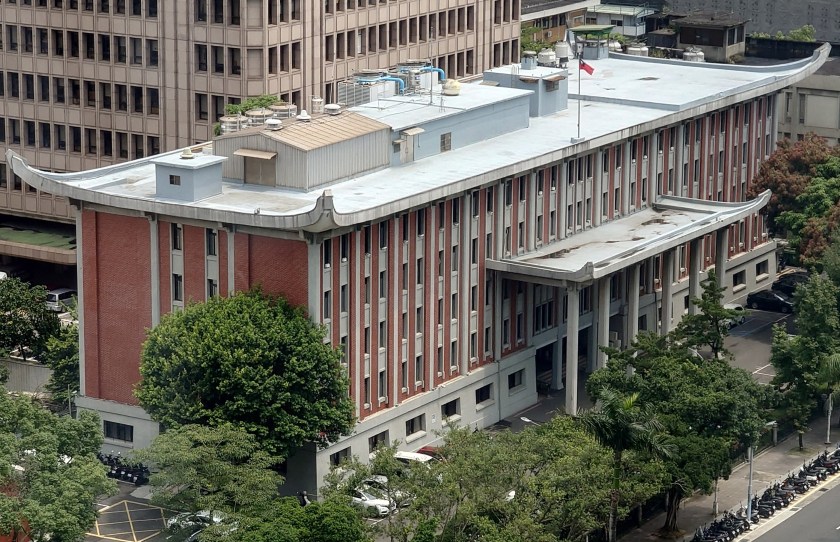
Image credit: Ministry of Education Building Taiwan 20240626 by Yu tptw/ Wikimedia Commons, license: CC BY-SA 4.0.
According to the OECD’s PISA assessments, Taiwanese students are consistently ranked among the best in the world – a testament to the quality of its education system. In 2024, the Ministry of Education proposed increasing the education budget to a record NT$362 billion.
Ever since 2014, Taiwan’s government has implemented a 12-year Basic Education programme to give students more opportunities. This programme includes mandatory courses in Taigi, Hakka, Taiwan’s Indigenous languages, and migrant languages in recognition of the nation’s multicultural nature.
However, despite these efforts, dissatisfaction with the current education programmes is rising, with more than 54 per cent of respondents reporting being dissatisfied. Parents increasingly question whether long classroom hours are compromising their children’s social and cognitive development.
These problems might not be purely Taiwan alone; across East Asia, long study hours remain a cultural constant. In China, Korea, Japan and Singapore, students often spend 12–16 hours a day in school and private study — a modern echo of the imperial examination ethos, where diligence promised stability and family honour.
East Asian cultures have been prizing extensive study times ever since ancient times. This can be traced back to the ancient Chinese examination system, where an examinee spends a massive amount of time studying to be accepted into being a court officer. This tradition then continues and influenced by Confucian ideology, evolves into the understanding of extensive study times being equated with job stability, honour of family and success.
While there is a positive correlation between test scores and the duration of schooling, it is worth remembering that not all intelligence is quantifiable. The amount of mismatch in skill mismatch may conceal a deeper displacement. When ability is channelled too early into predictable careers, nations lose the very minds that could have reinvented them.
The so-called mismatch may not stem from a lack of skill or demand at all, but from an earlier displacement—when young people were trained to meet expectations rather than to explore aptitude. When early education channels diverse forms of intelligence into a narrow set of ‘respectable’ careers, the result is not inefficiency so much as displacement—talent showing up in the wrong sectors, and often too late. They might have been extraordinary designers, linguists, or inventors who were steered—out of duty or fear—into ‘safe’ professions.
Across the region, countries have quietly entered a new kind of soft-power competition — one measured not in technology or trade, but in the ability to attract and retain exceptional minds. Many have begun investing heavily in programmes to identify “gifted” children early, hoping to cultivate them into national pride. Yet, these programmes often prioritised those whose abilities are already visible — the obvious prodigies whose parents can choose whichever system offers the best soil.
Taiwan does not need to chase that race. By discovering and nurturing its hidden geniuses early — the children whose gifts are quieter, more diverse, and not yet recognised — it can offer something rarer: a model of a society that values intelligence in all its forms, not only in its most visible ones.
Taiwan could demonstrate that nurturing hidden genius is not a luxury but a form of national foresight. The island already has the infrastructure for it: a dense network of universities, cultural institutes, and research bodies that many neighbours envy. What it needs now is not more resources, but a sharper vision — the ability to recognise intelligence that does not announce itself with medals or math scores.
Quiet talents are often the ones that keep a society coherent: the empath who becomes a diplomat or mediator, the patient observer who becomes a psychologist or teacher, the linguistic mimic who preserves a dying language or bridges cultures in translation. These are the builders of the invisible scaffolding that holds a plural society together. In a country as linguistically and culturally layered as Taiwan, recognising such gifts is not merely an act of kindness — it is a form of national maintenance.
The question is no longer whether Taiwan has the resources to nurture such breadth of talent, but whether its social system can learn to integrate it. After all, this is already a country that calls itself a land of design thinkers and tinkerers — home to both TSMC’s precision and the island’s creative pulse. The challenge is not capacity but perspective.
If Taiwan can build chips measured in nanometres, surely it can also build an education model sensitive enough to recognise genius in all its forms. The visible prodigy and the hidden empath, the engineer and the storyteller, are not opposites but two sides of the same coin: one designs the machine, the other designs the meaning.
Translating that balance into policy does not require a national overhaul — only a few carefully designed pilot programmes that test how curiosity can be protected rather than pressured. A phased approach could unfold in three layers, divided by age.
The age phase reflects how children’s identities evolve. By around age five, most already have a sense of self — a basic awareness of what they like and how they differ from others. Yet it is also when they begin to internalise approval, shaping curiosity around what earns praise or acceptance. Catching them before curiosity becomes performance allows educators to see genuine modes of thinking, not the early masks they learn to wear.
Research shows that peer influence and self-worth become most intense between ages nine and fifteen. By then, many have learned which kinds of talent draw praise and which invite silence. Identifying a gift earlier — while a sense of self is still forming — lets talent grow as part of identity rather than as something to defend or hide. When difference is normalised, curiosity feels natural, not exceptional.
Building on that logic, the first layer, early discovery, would focus on ages four to eight — the years before children learn to mirror adult expectations. The aim is to notice forms of giftedness that appear not in test results but in play, storytelling, or patterns of curiosity. Partnering with universities such as Academia Sinica or NCCU, pilot “curiosity labs” could be embedded in kindergartens and lower primary schools to build a richer vocabulary for recognising linguistic, empathic, spatial, and systems-thinking strengths before they are flattened into grades.
The second layer, midstream nurturing, could target ages nine to twelve, when curiosity often collides with pressure. Schools could adapt enrichment hours or clubs to match different cognitive styles — the empath through group projects, the linguistic child in narrative design, the pattern-thinker in puzzles or data games. This stage keeps curiosity alive within the mainstream, preventing burnout before adolescence.
The third layer, adolescent recalibration, would support students already weary of test-heavy learning. Small “recalibration labs” could run as electives or summer programmes using collaborative projects — filmmaking, robotics, community mapping — to reconnect learning with purpose. Teachers and mentors would help translate those sparks into vocational or academic pathways.
The final layer, Curiosity Day, would serve as a national event where students meet adults whose work mirrors their cognitive style. Unlike traditional career fairs, the focus is on how people think, not what they earn. A materials scientist might talk about “listening to metals,” a journalist about “chasing patterns in chaos.” The event could begin as an annual national festival — a rhythm gentle enough to sustain excitement without exhausting schools — and, once established, evolve into smaller bi-annual iterations within local communities.
For children, meeting adults who think like them builds belonging. They learn that curiosity is not a quirk to outgrow but a foundation to build upon. For educators, these encounters reaffirm that the skills they nurture have visible value beyond exams. Parents see that uniqueness is a future asset, not a flaw. And for policymakers and investors, “Curiosity Day” becomes a living demonstration of community-based learning with measurable social and environmental outcomes.
Together, these tiers would form a national map of curiosity — a system gentle enough to catch hidden genius early and flexible enough to keep it breathing through adolescence. Such pilots would be modest in cost but rich in data: revealing where Taiwan’s children thrive, where they disengage, and how small policy adjustments could keep them aligned with their natural aptitudes.
Though its purpose is educational, the programme naturally aligns with the wider ESG framework that increasingly guides both public and private investment. Its environmental value lies in reusing existing infrastructure and promoting circular design—city labs and studios that teach sustainability by example.
Socially, it builds inclusion and wellbeing into its architecture: smaller learning communities, teacher-support systems, and intergenerational dialogue make mental health a metric of success, not an afterthought.
And its governance strength comes from transparent collaboration between ministries, universities, and industry partners, demonstrating that innovation in education can emerge through shared stewardship rather than top-down reform. In that sense, curiosity itself becomes Taiwan’s most renewable resource—sustainable, distributable, and humane.
In the end, the true measure of education is not how many answers a system can produce, but how many questions it can keep alive. In that sense, Taiwan’s next great export could be curiosity itself.
Gita T. is a Taipei-based writer and researcher exploring how identity, culture, and policy intersect in East Asia.
 Taiwan Insight
