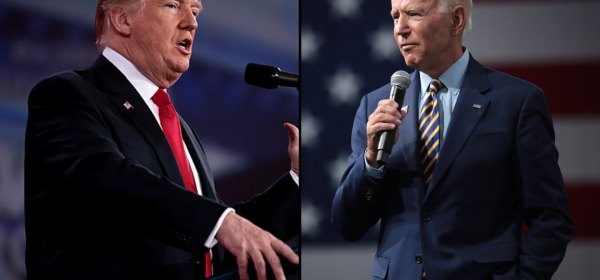
US Presidential Election 2020: The Taiwan Factor

Insights from Elizabeth Freund Larus by Mercy A. Kuo. Trans-Pacific View author Mercy Kuo regularly engages subject-matter experts, policy practitioners, and strategic thinkers across the globe for their diverse insights into U.S. Asia policy. This conversation with Elizabeth Freund Larus – chairman of the Department of Political Science and International Relations at the University of Mary Washington and author of “US President Obama’s China Policy: A Critical Assessment” – is the 241st in “The Trans-Pacific View Insight Series.”
In the Wake of Taiwan’s January 2020 Election, how are Cross-Strait Relations?

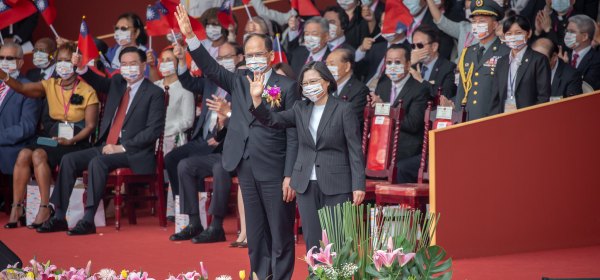
Written by John F. Copper. In January this year, Taiwan held a key national election. The Democratic Progressive Party’s (DPP) president, Tsai Ing-wen, won reelection while the DPP kept its majority in the national legislature. It was an across-the-board victory for the pro-independence party. Fast forward to autumn, nine months later. How does Taiwan look politically? Not much different! Reassessing campaign policies and reality-checking that usually follow a big election have been mostly missing.

The implication of U.S. Strategic Ambiguity and China’s growing military capabilities for Taiwan

Written by Joseph Bosco. Tsai Ing-wen, Taiwan’s brave and calmly inspirational president recently addressed the rising military threat from Communist China. She noted that Beijing’s crackdown on Hong Kong now puts Taiwan “on the front lines of freedom and democracy.” Recognizing that what is at stake is not only Taiwan’s own political independence and security, but a major front in China’s existential challenge to the rules-based, Western values-oriented international order, Tsai pledged that Taiwan would carry its share of the democratic burden.

The Implication of Tsai’s Diplomatic Breakthrough for Cross-Strait Relations

Written by Chieh-chi Hsieh. Since the outbreak of COVID-19, President Tsai Ing-wen has been able to obtain and continue to sustain high supporting rates mainly due to the many successful policy measures put forward to contain the negative impacts of the pandemic. The first opinion poll conducted after Tsai commenced her second-term of presidency in May showed her reaching a record-high of 71.2 per cent of supporting rate. Although there have been changes to Tsai’s support rate in following months, including a 10.5 per cent drop to 61 per cent in June, she is still able to sustain a high popularity rate of 65.8 per cent according to an August survey.

The Professional Predicament of Taiwanese Physical Therapists’ in dealing with the World’s Most Restrictive Referral Model

Written by Wei-hong Chen. According to the 2019 survey from the World Confederation of Physical Therapy, in 79% of its member countries, (as Australia and Canada, and the UK,) PTs can provide services without supervision from a doctor. Taiwan falls into the minority of countries in which PTs can only operate under a Doctor’s orders. This restricted referral model is enforced in legal and medical systems, and as a result, the quality of physical therapy in Taiwan has been seriously hindered.

Sustaining Taiwan’s High-Performing National Health Insurance: A Call to Invest in Health

Written By Tsung-Mei Cheng. As recent as the end of 2019, Taiwan’s public gave the NHI a 90% satisfaction rating. The questions at hand are: how will Taiwan’s public and their representatives in parliament respond to the urgent need to balance NHI’s budget in the near-immediate term? Moreover, how will they help build a health system of greater efficiency and quality in the longer term by agreeing to pay more for the health care they have come to expect?

From “Silent Teacher” to “Virtual Teacher”: Medical Imaging Technology and the Future of Anatomy Classes in Taiwan

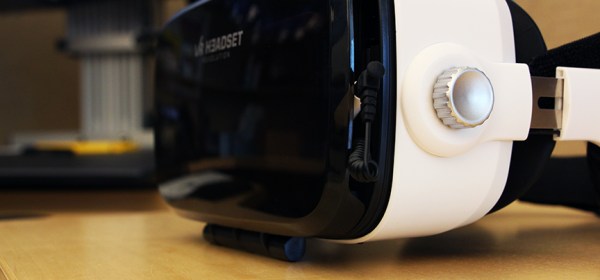
Written by Elsa Sichrovsky. A mixed-reality approach to anatomy courses may be an ideal approach to combining the efficiency of VR technology–and its enhancement of the acquisition of knowledge–with the psychological enrichment and tactile experience of learning from the Silent Teacher. A former medical student brought up an intriguing idea on an online discussion forum: perhaps students could practice anatomy with VR technology before dissecting the Silent Teacher. By doing this, students would approach cadaver dissection already possessing a higher level of anatomical knowledge, and thus fewer unnecessary cuts would be made.

The Long History of Taiwan’s Medical Emigration “Problem”: Part II

Written by Hsu Hung Bin.The history of doctor outflow in Taiwan tells us that doctors of all eras are continually reflecting on what it means to be in the medical profession and what the “good life” of a doctor is. The unique history of Taiwan’s medical system is an essential resource as we come to reflect on the issues of today. This history reminds about the diverse sets of values (not all of which have been good) that have existed within the system. It also provides clues of what a new system might look like.

The Long history of Taiwan’s Medical Emigration “problem”: Part I.

Written by Hsu Hung Bin. The phrase “五大皆空” (all the key fields are lacking) has become common, referring to the lack of doctors in internal medicine, surgery, gynaecology, paediatrics and emergency care. There has also been discussion of the net outflow of doctors from Taiwan. All of this brought doubts to the once hopeful students as they began their medical education. I often hear students asking questions like “is the medical system here really going to collapse?” “Do we have to leave Taiwan and start a new life abroad?” “Did I make the right choice for my career”?

Taiwan’s Competition for Diplomatic Recognition with Mainland China

Written by Xiaoxue Martin. The Tsai administration’s steadfast diplomacy exhibits more continuities with its predecessors’ foreign policy than it cares to admit. Especially the large sums of development aid and assistance to diplomatic partners are a costly and unsustainable method to protect its alliances. The global downturn caused by the COVID-19 pandemic will only make its allies more vulnerable to economic persuasion. With only 15 diplomatic allies left, and the mainland Chinese pressure to switch recognition only rising, the stakes are higher than ever before. With these bleak prospects, Taiwan’s unofficial partners are increasingly more important than the dwindling number of official diplomatic allies.

Taiwan, UN Membership and Human Rights Accountability: More than a Diplomatic Win

Written by Bonny Ling. Taiwan continues to be dogged by cases of extrajudicial killing, violating the fundamental human right to life, liberty, and security of person. A recent prominent case is the killing of a young Vietnamese migrant worker, Nguyen Quoc Phi, in August 2017 by a novice police officer in Hsinchu. The killing of Nguyen, immortalised in the two Taiwanese documentaries of the same name “Nine Shots” by Su Che-hsien and Tsai Tsung-lung, was marked by police brutality. The title is a reference to the number of bullets fired by the police officer in mere 12 seconds, killing an unarmed and unclothed Nguyen.

The New Japanese Prime Minister’s Policy on China and its Implication for Taiwan

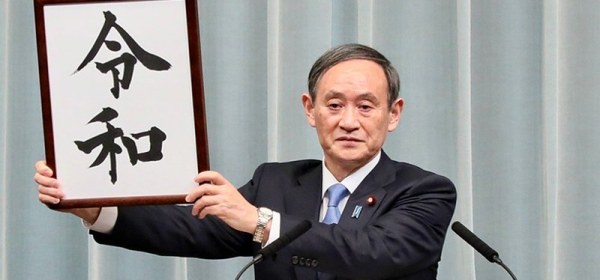
Written by Fumiko Sasaki. After almost eight years, Yoshihide Suga became the Japanese prime minister after Shinzo Abe stepped down. This change happened amid a pandemic and a geopolitical crisis. While states have been preoccupied with Covid-19, China has become more aggressive globally. In light of the US presidential election, the Trump administration has toughened its attitude toward China. In Japan, Taro Kono – the Defence Minister until mid-September – called China a ‘security threat,’ the first time China was officially labelled as such. Suga is reported to be ready to talk to the President of Taiwan. Will Suga be tougher on China?

1 22 23 24 25 26 58