New Curriculum, Same Problems? Can the New 2019 High-School Curriculum Help Tackle Inequality?

Written by Yi-hui Lee and Kai-chieh Yang. As a result of geographic and economic factors, educational recourses have long been distributed unevenly in Taiwan. This has long caused some disquiet. The effect of this recourse inequality worsens at every stage of the education system and severely hampers class mobility. The new “school-determined curriculum,” which is so central to the 2019 curricula reforms, will change many of the compulsory class requirements for high-schoolers in Taiwan. With inequality being such a clear issue, it is essential to ask: what affect will this have on the uneven recourse distribution across schools?

More Channels, More Inequality? the Debate around University Admissions Reforms

Written by Jen-Chen Chao. Up until the 1990s, all university applicants in Taiwan were allotted university places based solely on their test scores on a standardised exam. This was generally seen as leading to a high-pressure environment in which students had to prepare endlessly for a high-stake test. Recent attempts by the Government have tried to alleviate some of this pressure whilst also promote the learning and developments of students.

Crossing Paths: How Should Taiwan Approach India?

Written by Wei Azim Hung. The series of border skirmishes between India and China that began in early May this year have prompted a wave of anti-China sentiment across the subcontinent. India’s Prime Minister Narendra Modi has struck a particularly aggressive tone by saying “the age of expansionism is over” and “peace is not won by weakness” , while being mindful of the need to save his Chinese counterpart face by not indulging in overly bellicose or provocative rhetoric. Interestingly, this is not the first time India and China have engaged in border hostilities, nor is it the most bloody conflict.

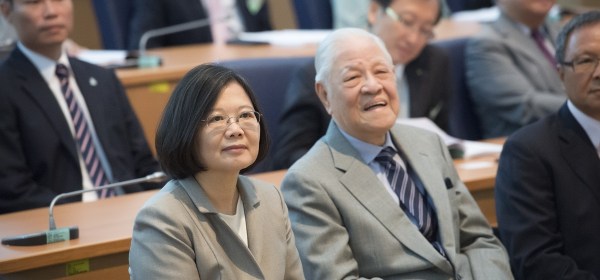
Lee Teng-hui— a Leader of Shifting Principles, Wonderful Vision, Skill and Legacy

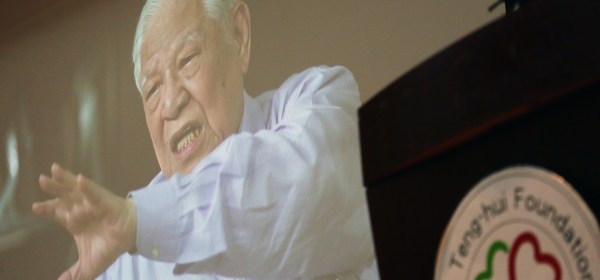
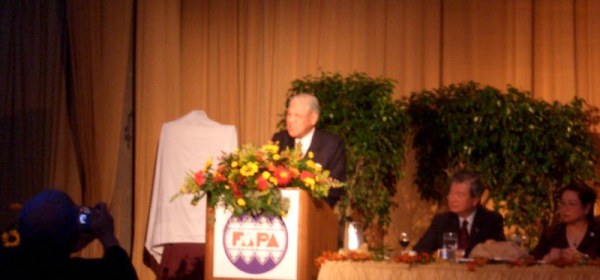
Written by Mark Wenyi Lai. Former President of Taiwan, Lee Teng-hui passed away this summer. The Beijing/Unification faction hated Lee, and the Independent faction/Mike Pompeo praised him as the Father of Taiwan Democracy, if not the Father of Taiwan. How do we evaluate Lee? What is Lee’s vision of where and how Taiwan is heading in the next century? How do our perspectives of him reflect our Taiwanese identity?

Remembering President Lee Teng-hui

Written by John F. Copper. In 1963 I journeyed to Taiwan to further my study of Chinese, sponsored by the East West Center at the University of Hawaii. I heard of Lee Teng-hui at this time. He was one of the experts that designed and operationalized Taiwan’s well-known and eminently successful land reform program. Little did I know that Lee would become one of modern Taiwan’s foremost leaders and someone I would meet and learn much more about in coming years. 

The legacy of Taiwan’s “Mr. Democracy”

Written by Frédéric Krumbein. President Lee Teng-hui’s most enduring legacy is his crucial role in the process of Taiwan’s democratisation. His predecessor, Chiang Ching-kuo, had already started the process of liberalisation. Yet despite his having lifted martial law in July 1987, Chiang died a few months later with the KMT dictatorship still intact. Lee Teng-hui then gradually implemented democratic reforms during his presidency (1988-2000).

In Memoriam, Lee Teng-hui

Written by Jerome F. Keating. Lee Teng-hui, the first president of Taiwan to be elected by the people, passed away on July 30, 2020. He was a statesman among statesmen and perhaps the greatest statesman Taiwan, aka the Republic of China (ROC), has ever known. Presidents and leaders are often judged not by the totality of their lives but by how, at a critical and crucial time, they did the right thing.

“Always in my Heart”: Lee Teng-hui’s Life in 10 Quotes

Written by Denis Li, translated by Corey Lee Bell. Lee Teng-hui, Taiwan’s first democratically elected president, played a key role in the country’s journey from authoritarianism to democracy. In 12 years as president, he made six amendments to the constitution, earning him an indelible place in the history of Taiwan. The News Lens has compiled 10 of Lee’s quotes from lectures and interviews, which reflect his perspective on Taiwanese politics and cross-strait relations, as well as the expectations he harbored for himself as a political figure.

How Taiwan Wins the Hearts of Southeast Asian States

Written by Ratih Kabinawa and Jie Chen. President Lee Teng-hui transformed ROC Taiwan’s foreign policy from a rigid “man and bandits don’t co-exist” mindset, a dictum which defined the Chiangs’ era, to one focusing on pragmatic diplomacy. This stance emphasised flexible ways to promote Taiwan’s international standing as its own legitimate sovereign state. President Lee used Taiwan’s achievement as a new democracy with impressive economic and technological prowess to win fresh international sympathy and support.

In Memoriam: Lee Teng-hui and the Democracy that he built

Written by J. Michael Cole. On July 30, former president Lee Teng-hui, whom many regard as the father of Taiwan’s democracy, passed away at the age of 97. Lee leaves behind a nation that is markedly different from what it was when he entered politics decades ago. No figure—none—has had as major an impact on Taiwan than Lee, whose decisions in the crucial period between the late 1980s and early 1990s determined the future course of the nation and propelled into the “third wave” of democratisation.

In Memoriam Lee Teng-hui, 1923 – 2020

Written by Gerrit van der Wees. On July 30 2020, Taiwan’s “Father of Democracy,” former President Lee Teng-hui passed away in Taipei at the ripe old age of 97. He served as the country’s President from 1988 until 2000 and guided its transformation from a repressive authoritarian dictatorship that had been imposed on the island by the Chinese Nationalists of Chiang Kai-shek after World War II, to the vibrant democracy that is Taiwan today.

Taiwan’s Post-Election Economic Woes

Written by John F. Copper. Had the economic numbers not been in their favour, would they have lost the election? Hardly. The fact the U.S. supported President Tsai and her party was an overwhelming advantage, as was China alienating Taiwan’s voters with its harsh statements and actions, which were further exacerbated with anti-China protests in Hong Kong. Both were critical factors. Finally, the KMT was very divided with its top leaders fighting among themselves.

1 25 26 27 28 29 58