Time To Bring Taiwan In From The Cold: Start Working Towards A Normalization Of Relations

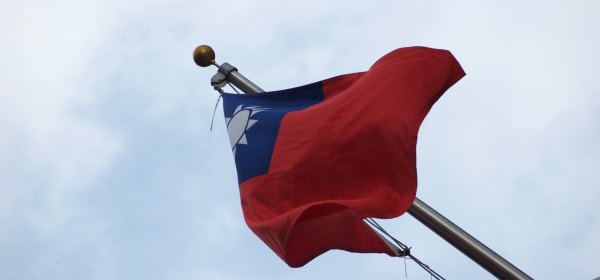
Written by Gerrit van der Wees. A recent episode in Prague illustrates in two important ways that China’s relations with the West are changing fast. It shows the need for the US and Western Europe to reimagine relations with Taiwan, bring Taiwan in from the cold of political isolation, start working towards a normalization of relations, and find a rightful place for that democratic country in the international family of nations.
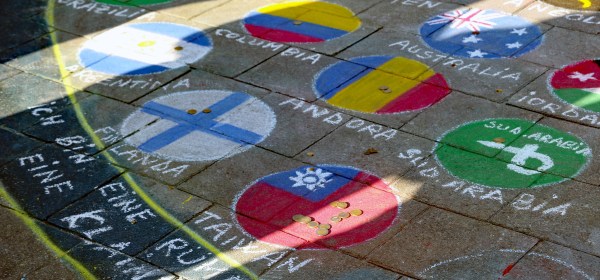
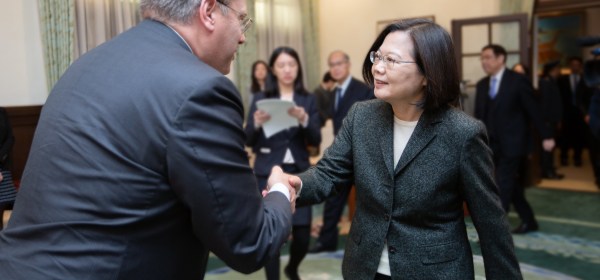
The DPP’s Electoral Victory as a Political Regression?

Written by Ian Inkster. The conclusion is that the DPP should take the risk of dropping the rhetoric of China whilst seeking ways of beginning more positive diplomatic exchanges. And this should be undertaken on a broad basis. DPP negotiations that are not within a reasonably broad-based consensus at home are unlikely to progress far, for domestic quarrels do not make for confident diplomacy on either side of a table.

THE MOUNTAIN GOD AND THE MONASTERY – THE PECULIAR CASE OF THE SHANSHEN SHRINE

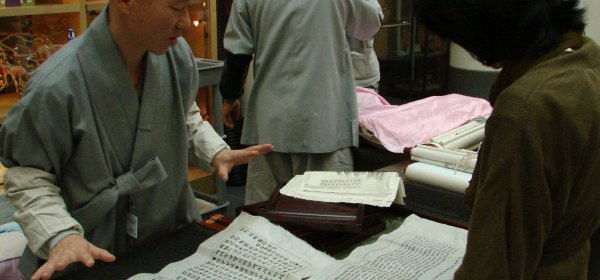
Written by Wen-Ren Liu. When travelling around Taiwan one will inevitably encounter small temples whose religious affiliation is not immediately evident. The prevalence of such temples reflects an area where Chinese religiosity generally differs from the monotheism prevalent in many other societies – while many Chinese believe in the existence of a realm of invisible, non-material existence, they are less inclined to confine their belief to a specific God. In line with this, many religious sites in Taiwan demonstrate an interesting juxtaposition of spiritual beings and symbols pertaining to different religious/spiritual traditions, the main ones being Buddhism, Taoism (and Folk Taoism), and Confucianism…

BRINGING BUDDHISM TO THE MASSES – LOOKING BACK AT SAN MIN BOOKS’ “NEW TRANSLATION” SERIES OF BUDDHIST CLASSICS

Written by Shang Haifeng.
This venerable and influential company began releasing publications on Buddhism as part of its “Series of Annotated Modern Translations of [Chinese] Classics” (古籍今注新譯叢書) as early as the 1960’s. This was at the same time that China’s heritage – and its religious heritage in particular – was suffering sustained attacks during the Cultural Revolution.

Dispelling the monolith: The geopolitics of language in Taiwan and Hong Kong

Written by Justin Kwan. In an attempt to reach audiences in Taiwan and Hong Kong, China has attempted to use both Hokkien and Cantonese in its messaging through media and popular culture, eliciting mixed responses from locals in both places. In the case of Taiwan, Beijing resorted to a strategy of direct coercion in 2018, when it released a dubbed propaganda video in Hokkien titled ‘God of War’. The video featured bomber aircrafts flying around Taiwan, a warning from Beijing for the islands Taiwanese-speaking activists to curb their so-called ‘pro-independence’ activities.

A clash or reconciliation of nationalisms across the Taiwan Strait?

Written by Zhidong Hao. In 2014, the Umbrella Movement in Hong Kong failed to persuade the Beijing government to grant them full universal suffrage for the election of the chief executive. Since then the so-called high degree of autonomy guaranteed by the Basic Law was eroded so much that Hong Kong was becoming more like Macau. Macau has been touted by the Central government as a perfect model of ‘one country, two systems’, but in reality, it is more like a model of ‘one country, one and a quarter systems’, i.e. an authoritarian system plus some press freedom.

The Repositioning of Taiwan in the Global Supply Chain Network

Written by Min-Hua Chiang. The relocation of Taiwanese outward direct investment (ODI) away from China is a clear sign of the shifting global business landscape. The cross-strait division of labour in manufacturing production has started to fade after China’s wage hike, industrial upgrading as well as stricter rules on the environment and labour protection. Taiwan’s ODI in China has declined visibly after 2012.

Can Taiwan decouple from the Chinese economy?

Written by Michael Reilly. In the medium to long-term, the coronavirus outbreak may turn out to be the high-water mark of foreign investment in China. Even before this, foreign companies were growing increasingly frustrated as the government increased minimum wage levels in provinces such as Guangdong and Fujian, and they also became frustrated with a growing burden of regulations and a bias in favour of domestic companies.

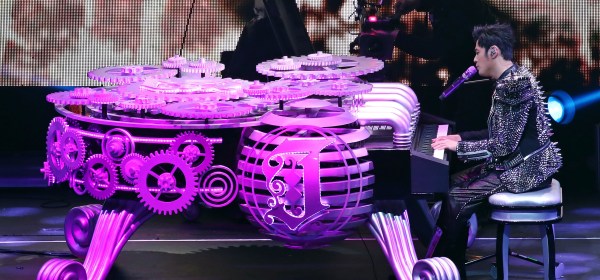
Jay Chou’s China Wind Pop Made in Taiwan and Its Transnational Audiences

Written by Chen-yu Lin. It is evident that “being Chinese” today can influence both music production and perceptions. The chapter argues that the construction and perception of Chineseness through popular music is multidimensional, whether the investigation concerns a China Wind song or a person’s experience of it. It also further explores other dimensions to be considered alongside the sonic journey music provides.

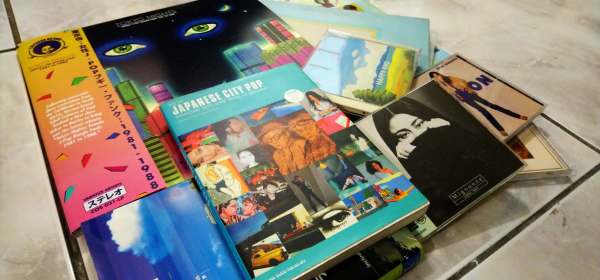
City Pop in Taiwan: old mainstreams becoming new indies

Written by Yan-Shouh Chen. As City Pop become more known to Taiwanese indie music lovers, unveiling J-pop history might not be enough. Some fans turned their eyes toward Taiwanese artists that are good at creating groovy melodies. These artists might consider themselves as R&B and Hip Hop rather than City Pop, but the boom did them a favour, and now the spotlight is on them.

1 33 34 35 36 37 58