Breakthrough the thinking of “indigenous music” as a style of music

Written by Kuing, GuoTing Lin. Music is in full blossom in Taiwan, as evidenced by the vibrant contemporary Taiwanese music being produced by its indigenous musicians, which has spurred a rich cultural dialogue surrounding their production. Thus, in 2019 a diverse indigenous subjectivity has begun to enter the Taiwanese pop music market through new albums. Hence, it is worth exploring how this phenomenon differed from previous eras when albums were dominated by indigenous languages, and what this new phenomenon offers regarding a reflection of indigenous cultural consciousness.


Unpacking ‘Indie Music As Cool Ambassadors’ – Reflections on Taiwan’s Cultural Export Policies 2010-Present

Written by Jocelle Koh. During my time as a university student, what I would have given to have a copy of Routledge’s latest edition to their ‘Made in…’ series, ‘Made in Taiwan’. It would have been handy! As a student doing my thesis on the Taiwanese music industry in a university about as far removed from the topic as you can get, procuring the Taiwanese instalment of this academic series – completely in English and geared towards advanced understandings of Taiwanese popular music – would have saved me a lot of trouble.

Taiwanese Popular Music as World History

Written by Eva Tsai. Sure, I had an agenda: First, I wanted to create at the time—with popular culture details—a sense of the social and cultural space. Second, I wanted to suggest that any entry point is a good entry point into Taiwanese popular music, so long as it is put into a historical and geopolitical context, along with developing a curiosity and mindfulness about what else was going on when it was made and circulated. Such was the spirit we carried into Made in Taiwan: Taiwanese popular music as world history.

The public’s view on same-sex marriage legalisation

Written by Timothy Rich, Isabel Eliassen, Andi Dahmer and Carolyn Brueggemann. We ask to what extent has the public’s view on same-sex marriage changed in recent years and to what extent this influenced the 2020 election? The 2018 local elections clearly indicated a shift in the political saliency of the issue of same-sex marriage legislation over the past several years, while Tsai’s re-election with a continued Democratic Progressive Party (DPP) legislative majority would suggest that opposition to the issue has declined in salience.

THE SIGNIFICANCE OF TAIWAN AS THE FIRST AND ONLY CHINESE DEMOCRACY

Written by Frédéric Krumbein. As the only Chinese democracy that has ever existed, Taiwan shows that Chinese culture, authentic democracy and respect for human rights can coexist. It is thus pertinent to ask – to what extent is Taiwan a bastion of democracy and human rights? How has Taiwan gone about promoting these values in the region, and how will it continue to do so moving forward?

Taiwanese perceptions of diplomatic recognition

Written by Timothy S. Rich. Taiwan must find new strategies in order to strengthen formal and informal ties. However, it should not over rely on expanding unofficial relations with the US or overlook the inconsistencies of Trump’s foreign policy that could impact Taiwan. For example, the Trump Administration’s decision to cut hundreds of millions of dollars in aid to El Salvador, Guatemala, and Honduras for two consecutive years provides a greater opportunity for Chinese influence in the region and greater pressure on Taiwan’s remaining diplomatic partners.

Writing History Within/Outside of Taiwan: A Postcolonial Perspective on Shawna Yang Ryan’s Green Island (2016) and Wu Ming-yi’s The Stolen Bicycle (2015) – Part 1

Written by Ti-Han Chang. From a global perspective, today’s Taiwan is known for its cultural and ethnic diversity, its complex political relationship with China, and its recent achievements in socio-political democratisation (for instance, the Sunflower student movement and the legalisation of same-sex marriage). Yet, not many people have come to know contemporary Taiwan through its postcolonial literature, which, for me, is an important field that foregrounds Taiwan’s significance in the geographical context of the Asia Pacific in modern time.

IMAGINARY REALITY IN WUHE’S ‘THE LIFE THAT REMAINS’

Written by Julian Chih-Wei yang. Chen Kuo-Cheng (陳國城) – better known by his nom de plume Wuhe (舞鶴, literally ‘Dancing Crane’) – is a Taiwanese novelist renowned for his experimental, modernist style. His magnus opus, ‘The Life That Remains’ (餘生/Yusheng – officially translated as the ‘Remains of Life’), comprises only one single paragraph that is over two hundred pages long.

Wu Zhuoliu’s Orphan of Asia and the Madness of the Colonial Reality

Written by Makiko Mori. Wu Zhuoliu’s (1900–1976) Orphan of Asia is a renowned work of colonial Taiwanese literature. Surreptitiously written towards the end of Japan’s colonial rule in Taiwan (1895-1945), this semi-autobiographical novel bears a powerful witness to Taiwan’s deeply troubled, albeit legitimately modern, claim for the right to self-determination and self-representation.

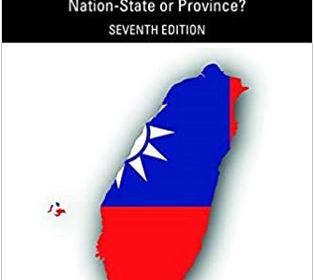
Why I Wrote Taiwan: Nation-State or Province? 7th Edition 

Written by John F. Copper. In 1990 when I published the first edition of Taiwan: Nation-State or Province?, friends and colleagues asked me why I wrote this book and the reason I chose such a title. I replied that a publisher, Westview Press, asked me if I could pen a book on Taiwan that assessed its unusual status in the world community, it being a possible trigger to an East-West conflict, and also a work that might serve professors looking for a reliable source on Taiwan they could teach from. The book sold well and five years later the publisher asked for an updated edition, to which I obliged.

What will the re-elected Tsai-DPP government’s foreign and defence policies look like?

Written by Yu-Hua Chen.
On January 11th 2020, the incumbent president of Taiwan, Tsai Ing-Wen, was re-elected to serve a second term as President of Taiwan by a land-slide majority. Tsai’s 8.17 million votes (57.1%) was a record high for Taiwan (well surpassing the record set by Ma Ying-jeou in 2008), and occurred in the backdrop of an unprecedented high turn out (19 million votes at 74.9% of the voting population). Yet the performance in the legislative election of Tsai’s party, the Democratic Progressive Party (DPP), was far less impressive.

1 34 35 36 37 38 58