
Richard Haass, president of the Council of Foreign Relations, recently published an article entitled “The looming crisis over Taiwan.” It is surprisingly unbalanced in analyzing the cause of the crisis he fears.
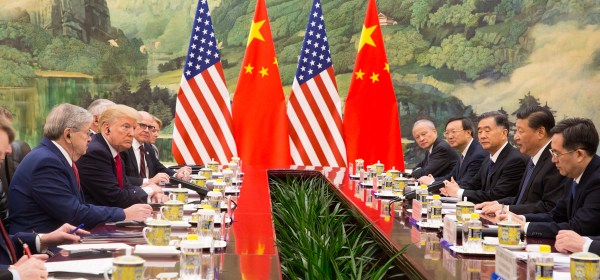
Richard Haass, president of the Council of Foreign Relations, recently published an article entitled “The looming crisis over Taiwan.” It is surprisingly unbalanced in analyzing the cause of the crisis he fears.

Written by Yuan-kang Wang. The most important geostrategic event of this century is the rivalry between the United States and China. International competition between these

Written by Yi-Cheng Wu and Harry Yi-Jui Wu. In December 2017 an outbreak of amoeba dysentery in Long Fa Tang (龍發堂) in southern Taiwan saw

Written by Yin-zu Chen. To address the low fertility rate problem in Taiwan, the government implemented childcare policies that aim to alleviate the responsibilities of
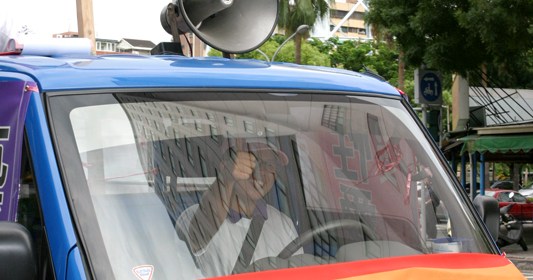
Written by Ya-chen Chen. Although there are many English-language academic books about Taiwan, those exclusively focusing on Taiwanese gender issues could probably be counted on the fingers of one’s hand. This is most likely due to the tendency for many feminists or gender scholars to frequently place Taiwanese gender issues under the huge umbrella of Mainland Chinese, Communist Chinese or PRC women’s and gender studies.

Written by Paris Shih. The gay history of Jolin Tsai was not only a gay thing. It was also a generational thing. For every Taiwanese gay man growing up in the late 90s and the early 2000s, there was a Jolin Tsai. It was both personal and political, individual and communal.
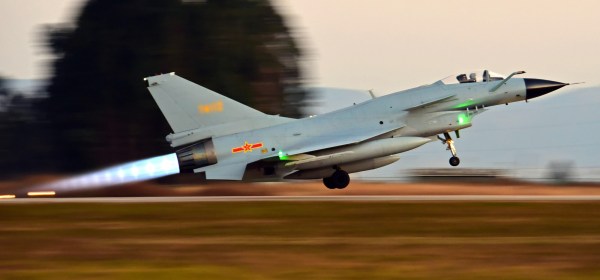
Written by Robert S. Wang. On 5 February 2019, Hong Kong’s South China Morning Post (SCMP) published an article entitled “PLA bombers, jet fighters in
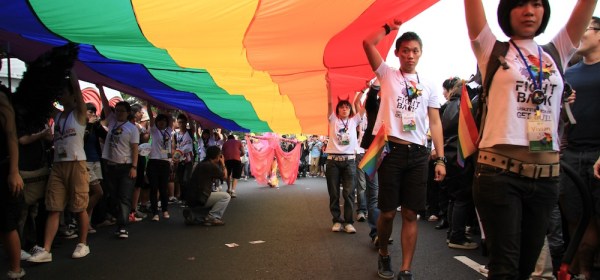
Written by Tim Rich, Isabel Eliassen and Andi Dahmer. Despite signs of LGBT support in Taiwan, many analysts and commentators ignored the number of Taiwanese who had no set opinion on same-sex marriage and LGBT rights and overlooked the role that issue-framing plays in political contests.
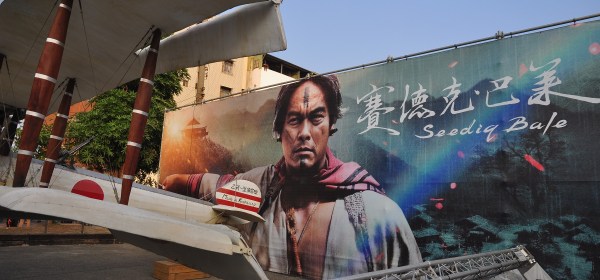
Written By Chin-ju Lin. A Seediq perspective on the uprising and genocide might still be forthcoming and would be welcome as Wei’s movie reopened the historical trauma without the Seediq being ready to see themselves represented in such a compromising way.

Written by Shao-yi Chan. In this respect, the personal, private struggle seems to give way to a social, public conflict that resituates the family as the overarching element in Taiwan’s queer politics.

Written by Amy Brainer. Family life in Taiwan changes rapidly—as, for example, families grow smaller, the cost of living rises, and new ideas about child development are popularized—so too do the tools available to families to make sense of gender and sexual diversity.
Thus, although Buddhism in Taiwan does not confer complete equality on women, their position is greatly improved over that of the past. Moreover, it has provided opportunities for women to greatly enlarge their social lives through volunteering and participation in Buddhist groups as well as opportunities to develop and utilize their social, organizational, administrative and leadership abilities.
 Taiwan Insight