A History of Taiwan’s Apple Farmers

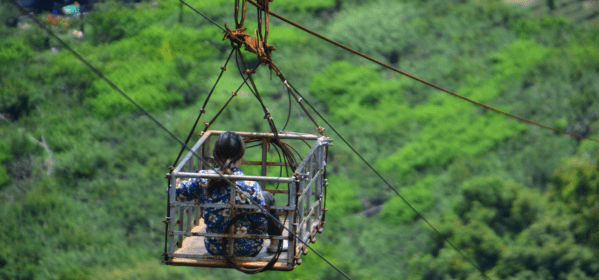
Written by Hui-Tsen Hsiao (蕭慧岑)Translated by Sam Robbins. “They write up a sloppy official document that doesn’t even say anything meaningful, and now everything we’ve worked so hard to have has to go like that. You want us to demolish our own house, we cried and hugged as it happened. You’re a government agency, and you’re willing to let people go through this?” “And after we were forced to demolish our house, the debris from the house was even been set on fire” Ron added. 
The “Fruits” of Open Source: The Story of Open Hack Farm 

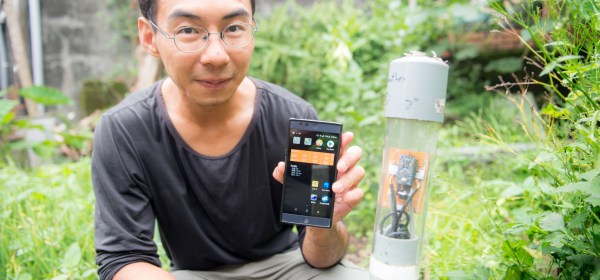
Written by Sam Robbins. As alternative food movements continue to develop and food politics has risen higher on the political agenda in Taiwan, there is perhaps still more opportunities for growth and collaboration between those concerned with the future of how food is produced in Taiwan. For Chen, the primary concern is still sustainability and environmentally sensitive agriculture. Open data and open technology is just a means to the broader end of preparing Taiwan for an increasingly unstable climate future. 

Food, Politics and Solidarity Economies in Taiwan

Written by I-Liang Wahn. Food plays a central role in Taiwanese culture, with the evolution of Taiwanese cuisine mixing multiple historical influences and constituting unique identities. But food is also increasingly a political topic and a field for solidarity economies. The politics of food was especially brought to the fore in three developments last year: a series of political events around food, the celebration of a milestone by two independent food media, and an academic conference devoted to food activism.

Taiwan with a Side of New Public Diplomacy

Written by Martin Mandl. At about the same time as Bubble Tea made its first appearance in Vienna, President Ma Ying-jeou proclaimed “taking Taiwan’s food to the world a policy priority”. What followed was an economic stimulus plan, sometimes referred to by commentators as “All in Good Taste – Savour the Flavours of Taiwan”.

Gastrodiplomacy in Contemporary International Relations of Asia and Its Relationship to Everyday Nationalism: A Reflection on the Gastronomic Campaigns of Taiwan, Thailand, and South Korea

Written by Fatimaah J Menefee. Culinary diplomacy, food diplomacy, gastronationalism, and gastrodiplomacy are applied liberally to describe food and diplomacy in contemporary international relations. Culinary Arts as a medium in diplomacy dates to the genesis of humankind. Consider Peaches of Immortality, protected by the Queen Mother in Ancient China, that served as a reward to all faithful mortals and immortals.

The Collaborative Potential of Alternative Food Movements Between Taiwan and the Philippines

Written By Shun-nan Chiang. Taiwan and the Philippines have various points of connections regarding agricultural development. When I conducted my dissertation research on agriculture-nutrition linkages in the Philippines, I frequently encountered references to Taiwan in the Philippine agriculture sector. I was told by a Filipino geographer researching the Philippine agritourism policy that the government’s primary model was Taiwan’s farm tourism. Indeed, I soon discovered that a farm owner I met in a conference toured around Taiwan with a group of business owners to survey Taiwan’s farm tourism. The day I finished my fieldwork in the Philippines, I also met some governmental officers from Taiwan’s Council of Agriculture and other agencies. They have been collaborating on a project with the International Rice Research Institute (IRRI) since 2015.

1 2