After #MeToo, where does Taiwan go?

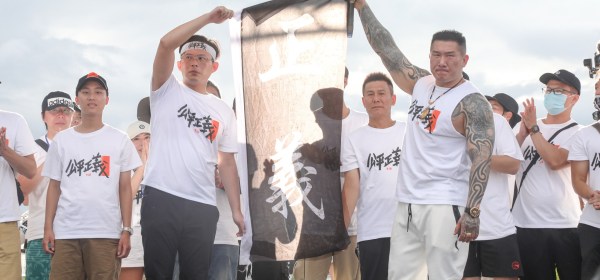
Written by Shan-Jan Sarah Liu. Five years after the global #MeToo movement began, Taiwan has finally started its own. It began with a wave of sexual assault claims against several members of Taiwan’s ruling Democratic Progressive Party (DPP). While those alleged in the DPP have resigned, these claims led to allegations against others beyond the political sphere. Since May, more than 100 politicians, activists, intellectuals, and celebrities have been called out for their misconduct. The #MeToo movement has garnered much media attention and has been discussed widely.

The Green Party Taiwan’s Achievements and Challenges in Promoting Gender Equality

Written by Wang Yan-han, Dafydd Fell and Peng Yen-wen. Founded in January 1996, Green Party Taiwan (GPT) was the first Green Party to be established in Asia. It is one of the oldest movement parties in Taiwan, created through the efforts of student activists and several civil society groups, including activists from the eco-feminist Homemakers United Foundation. One of the main reasons Taiwan has made such impressive progress in the realm of gender equality has been due to civil society activism. Since Green Parties operate on the boundaries between civil and political society, an examination of the GPT’s case can bring a different perspective on Taiwan’s achievements and challenges in the realm of gender equality.

From Tradition to Institutionalisation: The Development of the Postnatal Care Centres Industry in Taiwan

Written by Amélie Keyser-Verreault. In Chinese culture, the tradition of yuezi (月子) or the practice of postpartum care for the mother, is a longtime established practice. In Taiwan, this practice underwent and continues to undergo the vicissitudes of social and interpersonal relationship changes. Before the 1970s, the birth rate in Taiwan was extremely high, and the idea of “more children, more grandchildren, more good fortune” (多子多孫多福氣) was widely accepted. The large family size also meant sufficient human resources for agricultural-related field labour. The practices of yuezi were already crucial at that time. Mothers in the postpartum period had some privileges like a long rest and special food, particularly meals containing meat like chicken, a precious food at that time. 

Queering the Intergenerational Remembrance of the White Terror

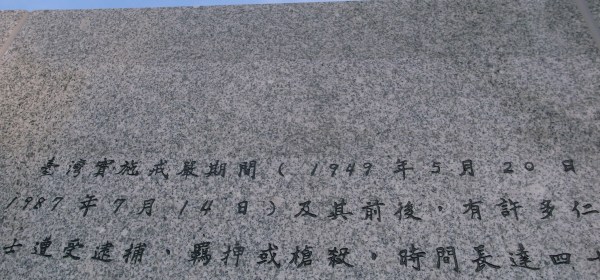
Written by Linshan Jiang. In 2020 and 2021, the National Human Rights Museum and Spring Hill Publishing released two literary collections on the White Terror in Taiwan (1947–1987): a four-volume novel collection entitled Making the Past in the Moment (2020) and a five-volume essay collection, entitled Soul and Ash (2021), co-edited by two Taiwanese writers, Hu Shuwen (1970– ) and Tong Weiger (1977– ). “White Terror” refers to the 50-year oppressive rule by the Chinese Nationalist Party (Kuomintang, KMT) in Taiwan after the Republic of China took over Taiwan from Japan in 1945. Then the KMT lost the Chinese Civil War (1945–1949) and was exiled to Taiwan in 1949. As a result, it is officially known as the martial law period. Although it should be admitted that the concept of “white terror” may not encompass every aspect of the martial law period, my focus is on the continuing oppression of the people due to KMT’s authoritarian rule, and I will mainly use White Terror to refer to this period in this article.  

Transformation of Women’s Status in Taiwan, 1920-2020

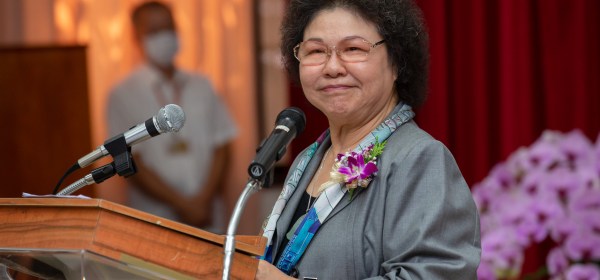
Written by Doris T. Chang. Among all the gains made by Taiwanese women in the past century, achieving leadership roles in the political arena is perhaps Taiwanese women’s greatest achievement. During the Japanese colonial era, women had no right to vote. However, after lifting martial law in 1987, Taiwan emerged as a vibrant democracy. Due to political parties’ commitment to nominating more qualified women candidates for elections in the late 1990s and after that, the percentage of women elected to Taiwan’s Legislative Yuan reached 42 per cent in 2020 — the highest in Asia. This is equivalent to the percentage of women legislators in most Scandinavian countries. But Taiwanese women’s achievement in the political arena would not have been possible without making significant progress in their educational attainment throughout the twentieth century.

Tminun: Weaving from My Heart as an Indigenous Male

By Peydang Siyu (Chu, Hao-jie); translated by Huang, Hsing-hua. I am a member of the Truku people; the twelfth officially recognised Indigenous nation in Taiwan. We believe in our ancestors’ spirits (utux rudan) and adhere to their teachings (gaya) throughout our entire lives. Cloth weaving (tminun), similar to facial tattooing (ptasan), is a significant part of Truku culture, and many of our customs are related to it. For example, there is a strict gender division of labour in traditional Truku society, with men hunting and women weaving. Men were prohibited from learning how to weave or even touching the tools. As a male, it wasn’t until 2018 did I dare to learn it. But once I began, I never stopped. It was definitely a dream-come-true journey that I would forever remember.

The Procrastinating Progress of Transnational Same-Sex Marriage Rights in Taiwan

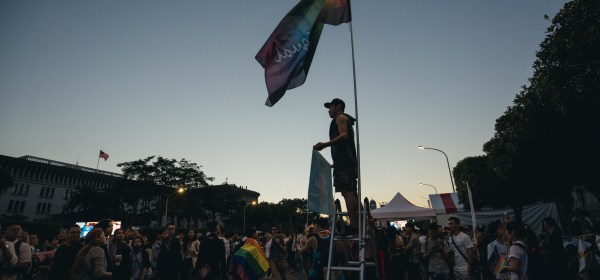
Written by Annie Huang. One historical human rights progress Taiwan made happened in 2019 when the government legalised same-sex marriage. It was a rainy morning, and hundreds of LGBTI groups and activists were standing outside the Legislative Yuan waiting for results. When the president of the Legislative Yuan announced the legalisation of same-sex marriage, the rain stopped, and a rainbow appeared in the sky. People hugged and wept with joy for this historical first in Asia. However, at the same time and in the same plaza, a group of Taiwanese same-sex people burst into tears not because of happiness but because of sadness and discrimination. Transnational same-sex couples are left out of the legalisation content in the same-sex marriage bill without much reasonable reason.

Taiwan Decriminalized Adultery, But Does the Public Support The Change?

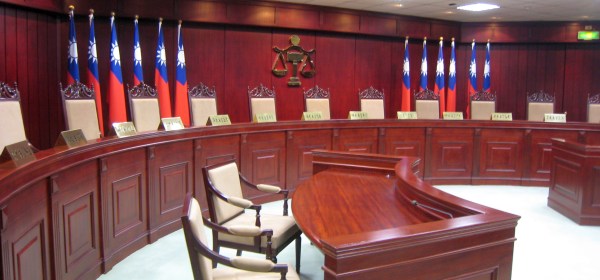
Written by Madelynn Einhorn, Josie Coyle, and Timothy S. Rich. In June 2021, the Taiwanese legislature removed a nearly 90-year law criminalizing adultery, punishable with up to 12-months in prison and fines averaging 90,000 NTD (roughly USD 3000). In May 2020, the Constitutional Court overruled Article 239 of Taiwan’s criminal code, which criminalized adultery, because it violated the Constitution. The legislature removed the article from the legal code approximately a year later. South Korea removed a similar law in 2015 and India in 2018. Taiwan was one of the last liberal democracies to keep adultery illegal and the last East Asian country aside from the Philippines.

Fat-Shaming and Beauty Related Tensions in Contemporary Taiwanese Families

Written by Amélie Keyser-Verreault. One of the most important criterion determining whether a woman is considered beautiful is thinness in Taiwan and elsewhere. Under the influence of an increasing cult of beauty, my field works reveal the existence of various forms and causes of multiplying and exacerbating fat-shaming and beauty-related conflicts within the contemporary Taiwanese family. Although the idea that a close linkage between physical appearance and womanhood is certainly not new, recent research on women’s experiences of body transformation underscores that the degree of beauty pressure is unprecedented in contemporary societies. 

Care work in Singapore and Taiwan: Beyond ‘Migrant Maids’ and Female Employers

Written by Lynn Ng Yu Ling. From the domestic caregivers in both locations, I gather that although there are important differences in the hiring criteria for employers, the root problem of employers having the upper hand in an asymmetrical working relationship remains unresolved. On the whole, it is harder for Taiwanese families to hire a ‘migrant maid’ (wai yong) than in Singapore, and several differences in the hiring process seem to indicate that Taiwan treats home care more seriously.

LGBTQ+ Groups Celebrate Ruling Against Surgery Requirement For Legal Gender Change

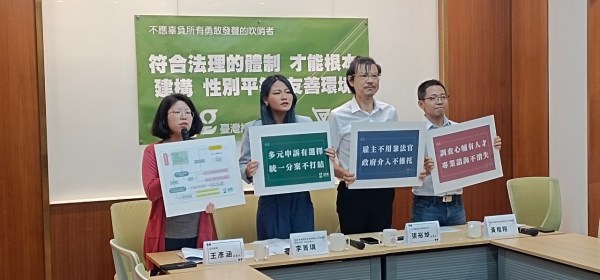
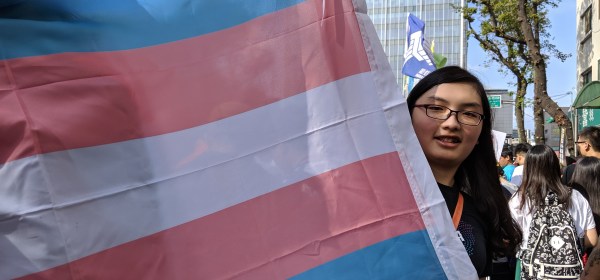
Written by Daniel Yo-Ling. The historic ruling in favour of plaintiff Xiao E found existing legal gender change regulations to be unconstitutional. Assuming that this ruling does not get appealed, Xiao E will be able to change her legal gender and become Taiwan’s first transgender woman to do so without submitting proof of surgery. TAPCPR’s press conference featured commentary on the decision from representatives of the Taiwan Adolescent Association on Sexualities, Taiwan Tongzhi Hotline Association, Taiwan Non-binary Queer Sluts, and Taiwan Gender Equity Education Association, as well as a written statement from Xiao E herself and comments by other transgender community members. 

Gender Politics: Public Views of Women in Politics

Written by Timothy S. Rich, Madelynn Einhorn, and Isabel Eliassen. Taiwan’s efforts at gender parity for electoral offices have resulted in a legislature where women currently hold 41.6% of seats. This leaves Taiwan ranked 12th globally, with only one Asian country (Timor-Leste) with similar rates. However, despite the success of President Tsai Ing-wen, the vast majority of executive offices (mayors and magistrates) are still held by men. Gender equality and the rise of women in national politics are common narratives when discussing Taiwanese politics.

1 2 3 4 5 6