Taiwanese Gay Bear Culture in a Grizzly Area of Taipei 

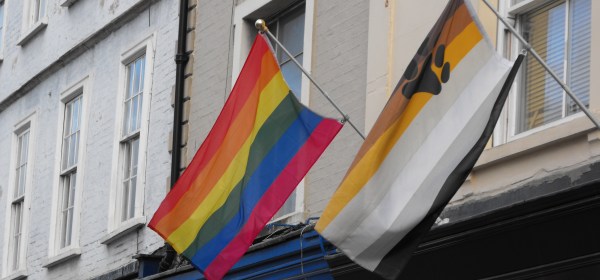
Written by Yu Dung Shiu. Once, I spoke with a man who looked like a bear; he was shocked that I called a man sitting about two meters away from a “bear.” That man was bigger than anyone else in the café and was eating a lot of food (a large size dinner box, two loaves of bread and a whole bunch of grapes) for his dinner. “I think you’re too naïve to recognise who is a bear and who is …it may be harsh but…a pig,” said the bear-man smoking with me. So, I asked him if he could teach me how to recognise who is a bear and who’s not.  

Sexual Minorities Excluded by other Sexual Minorities: Bisexuality in Taiwan

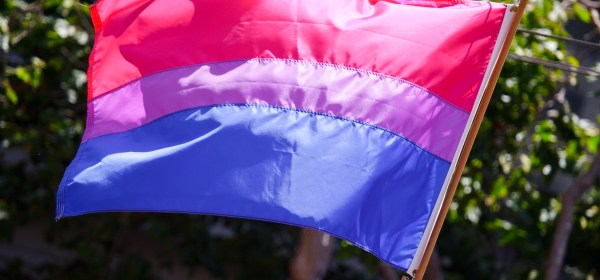
Written by Yen-Ting Kuo, Translated by George Bobyk. Just as most homosexual people do not take coming out to heterosexual people lightly, many bisexual people feel afraid to come out to either heterosexual or homosexual people for the above reasons. Today, due to the lack of “bisexual groups” in Taiwan, for many bisexual people, the only way to survive in gay circles and avoid stigma and discrimination is to hide their true identity and chose to identify as gay instead. 

Breaking Down the Wall: Generational Gaps, Generational Prejudice and HIV Treatment in Taiwan 

Written by Geng-Hui Lin. Compared to HIV risk, which is assessed through responses to a CDC survey, age is a relatively inflexible criterion for MSM’s who want to obtain PrEP through Taiwan’s PrEP program. There are ways to be categorised as an elevated risk for HIV infection depending on your answers to the CDC’s HIV risk assessment. As a result of these criteria, although some MSM’s over thirty-five have been enrolled in the program, access and availability remain mostly limited to those under this age. This leaves older MSM’s as outsiders to the program, unable to enter. 

Almost-Marriage Equality in Taiwan

Written by JhuCin Rita Jhang. There are major legal rights not covered by the Act for Implementation of J. Y. Interpretation No. 748. First, it does not allow same-sex couples to co-adopt a child unrelated to either parent by blood. Once a same-sex couple gets married, they lose the right to adopt whatsoever, and they would have to obtain a divorce to be able to adopt as a single person. Even if someone adopts first as a single and then gets married to a same-sex person, the spouse still cannot cross-adopt this child. This bizarre and counterintuitive legal conundrum sends many same-sex couples wishing to co-adopt on a long, winding legal fight. Even though one married same-sex couple had won the lawsuit and became the first-ever same-sex couple to co-adopt a genetically unrelated child in January 2022, this was ruled on a case-by-case basis.

What’s Exactly Wrong with Taiwanese Media?

Written by Ti Wei. To solve the Taiwanese media problem, the first step is to recognise that the problem is unique and not like any other case in the world. Moreover, this problem could not be explained by any Western theories. Therefore, we need to carefully clarify and re-examine the nature of the problem and study society and the audiences thoroughly. Then, based on the re-acquainted knowledge, we may draw a new and reflective plan for rebuilding the media system. The only thing for sure is that it is neither commercial nor public in the Western sense. In addition, the latest development of media platformatisation and the new audience generation should be considered. The task is tough, but any endeavour to pay should be worthy when we think of how much hardship Taiwanese media have been through.

Taiwan’s Enduring Controversy on Absentee Voting and the Role of Media

Written by Julia Marinaccio and Jens Damm. However, Taiwanese journalism also did its share. Like the political party system, Taiwan’s existing media landscape is ideologically divided over the question of how to fashion cross-Strait relations. Through their ideological orientation paired with a lack of investigative journalism, they act as mouthpieces of political parties. In doing so, they reinforce existing political cleavages rather than exercising their role as informants and watchdogs.

OTT in Taiwan: How Global Platforms Meet Local Productions and Politics

Written by Yu-peng Lin and Chang-de Liu. The development of over-the-top (OTT) media services is currently the main concern of Taiwan’s audiovisual industries. An OTT media service is an audiovisual streaming service provided directly to the audience by the Internet. The Taiwanese government wishes to strengthen this industry while also seeking balanced growth for international and local operators. For the latter, how to accelerate the production of their content in the face of global competition is the biggest concern. Furthermore, given the recent success of the Asian market, international operators are interested in co-producing content with Taiwanese companies.

A Sketch of Taiwan’s Digital News Media Landscape in the Twenty-first Century

Written by Ming-yeh T. Rawnsley; Yuan-hui Hu; Victoria Y. Chen; and Lihyun Lin. Crowdfunded journalism is no longer unfamiliar to Taiwanese people who care about the media ecosystem. Although journalism in Taiwan has been challenged by the powerful influences of political and business alliances in the news industry and the constant impact of ever-changing technological advances, crowdfunded journalism has provided a fresh possibility and lent financial assistance to independent media organisations and citizen journalism. All these undoubtedly positively affect the reconstruction of Taiwan’s news and media industry.

A Storm in a Coffee Cup: Indigenous Coffee Production, Typhoon Marokat and the long way home.

Written by Chang Yu-Hsin, Translated by Sam Robbins. After the typhoon, indigenous communities moved into new villages constructed in the lowlands through government and non-profit organisations’ funds. The new village for the people of the Taiwu township was roughly 17 kilometres from their original home, and the journey between the two locations took about 40 minutes by motorbike. The number of resources needed to take care of and manage the coffee farms increased as transport and oil costs went up. Especially for community elders who needed to go up the mountains to take care of the coffee farms, the time and energy now required to make the journey was no small burden.

A plant out of water: Taiwanese greens in Thailand

Written by Angel Chao (趙于萱), translated by Sam Robbins. In supermarkets in Thailand, you can find Thai hydroponic vegetables labelled as ‘Taiwanese greens.’ Why? Because these plants are grown in Thailand by Taiwanese businesspeople who brought Taiwanese hydroponic technology to Thailand, using Taiwanese equipment to grow crops in Thailand.

Fighting from the Grassroots: Indigenous Health Justice is All About Life

Written by Yunaw Sili and Besu Piyas. The story began in 2006. That year, the Council of Indigenous Peoples in Taiwan issued a guideline stating that if Indigenous students need preferential treatment for college admission, they must pass the national Indigenous language certification test. As a result, many parents were worried that their children’s access to higher education would become more difficult. Because of this issue, we started our grassroots organising work in Hanxi Village, Datong Township of Yilan County. That was the first time we engaged and coordinated with the community people on local concerns. On April 19th, 2006, we demonstrated in front of the Council of Indigenous Peoples, fighting for our youth’s college rights. 

Why Do We Have Poor Health? How Colonialism Continues to Marginalise Indigenous Peoples

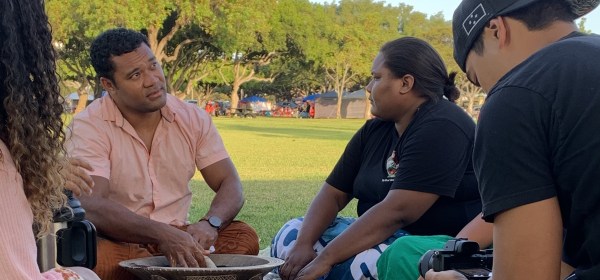
Written by Wasiq Silan. Despite the varying colonial histories with Indigenous peoples in other parts of the world, Indigenous people in Taiwan have one disturbing issue in common: poor health. Among other indicators (such as maternal mortality, birthweight, malnutrition, obesity and so on), Indigenous peoples in Taiwan die almost a decade sooner than the general population. Why this disparity? We are taught to believe the argument that blames Indigenous peoples for their own high-risk behavioural choice, lack of awareness, low educational attainment, and dysfunctional families; closer examination shows that we need to look beyond the individual level.

1 25 26 27 28 29 55