Food, Politics and Solidarity Economies in Taiwan

Written by I-Liang Wahn. Food plays a central role in Taiwanese culture, with the evolution of Taiwanese cuisine mixing multiple historical influences and constituting unique identities. But food is also increasingly a political topic and a field for solidarity economies. The politics of food was especially brought to the fore in three developments last year: a series of political events around food, the celebration of a milestone by two independent food media, and an academic conference devoted to food activism.

Two Young Indigenous Scholars are Promoting Indigenous artists – in Taiwan and Beyond.

Written by Fanny Caron. Lin and Ismahasan’s academic disciplines and the career path they have chosen to highlight a change in Taiwan Indigenous studies on an international level. These choices enable them to play a part in shifting the discourse on Indigenous Peoples from “objects” of study to active “subjects” of their own (counter-) narrative, supporting their affirmation of Indigeneity and tribal sovereignty.

Praising Taiwan’s LGBTQ+ Movement in 2021

Written by Phan Van Tim. It has been nearly three years since the Legislative Yuan passed the same-sex marriage bill in 2019, making Taiwan the first and only nation to do so in Asia. So far, over 5,000 same-sex couples have registered for marriage in Taiwan, fulfiling their love of being protected by law. At the same time, the public’s view on the LGBTQ+ community has rapidly changed, with more than 60% of people expressing support for same-sex marriage, compared with the percentage of only 37.4 before same-sex marriage legalization.

Memes and Milk Tea Alliances: Ludic activism in Taiwan in 2021

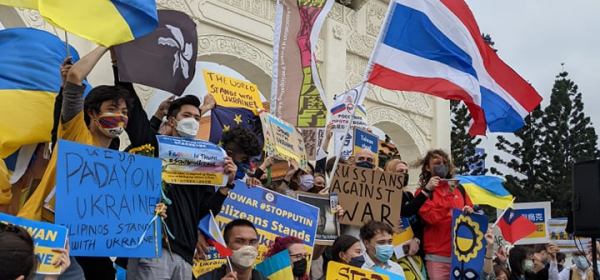
Written by Genevieve Leung. The Milk Tea Alliance was formed when Mainland Chinese social media users attacked two Thai celebrities to support pro-democracy protesters in Hong Kong and Taiwan independence activists. Thai social media users deployed humour to combat the attacks, and Taiwan and Hong Kong users joined in, using the shared custom of drinking milk tea, along with various minoritized statuses, as the cohesive forces that “naturally” drew them together.

A Pursuit of Housing Justice?

Written by Chieh-chi Hsieh. If anything is troubling the incumbent government led by the Democratic Progressive Party (DPP), it would not be the external threats imposed by China. On the contrary, China’s continuous assertive actions toward Taiwan have become the DPP government’s greatest asset, enabling the mobilisation of domestic support observed after President Tsai’s National Day speech, which gathered 67.9% of residents’ approval based on a public survey.

Unpacking the Colonialist Undertones of the Indigenous People’s Basic Law: Law as a Tool of Oppression in Taiwan

Written by Aaron Chen. In May 2021, Taiwan’s Constitutional Court considered a high-profile case concerning indigenous hunting rights. First opened in 2013, the Bunun man, Tama Talum, had been convicted for violating the Wildlife Conservation Act, which limited indigenous poaching to solely ceremonial activities. He was also prosecuted under the Controlling Guns, Ammunition and Knives Act, legislation that only allowed indigenous peoples to hunt using homemade weapons, whilst Tama Talum did otherwise.

Unrecognised Indigenous Groups of Taiwan and their Struggle for Language Revival

Written by Barnaby Yeh. Nearly all Plains Indigenous language advocates emphasize the importance of recognition from the national government. As summarized by Kaisanan Ahuan, a Taokas activist from Puli, lack of government recognition is the primary obstacle to a full-fledged revival. “Because Plains Indigenous are not nationally recognized as Indigenous people, their languages are not national languages. Therefore, we cannot teach our mother tongues under the national education framework.

A Bilingual Nation? What are the Efforts from Southern Taiwan Stakeholders?

Written by Brian Doce. In 2018, Taiwan President Tsai Ing-wen announced the government’s objective to transform Taiwanese society into a bilingual nation to elevate the English fluency of the Taiwanese people and upgrade the country’s national competitiveness. Looking at the current blueprint published by the National Development Council, the plan’s enumerated key performance indicators (KPI) show a government-centric outlook by emphasising the simultaneous use of Mandarin and English by government agencies for respective services.

The Global, the Local and Intercultural Communicative Competence in Taiwan

Written by Jenna Lynn Cody. Since its inception, the “Bilingual by 2030” initiative has drawn widespread criticism, primarily focused on a single titular keyword: bilingual. Social media posts citing “Mandarin” and “English” as the target languages of “Bilingual by 2030” by Vice President William Ching-te Lai certainly didn’t help. An initial focus on the possibility of making English a “second official language” in Taiwan and a failure to assuage worries that everyone would be forced to learn English made matters worse.

The Problem of Naming the Most Popular Non-Mandarin Language Used in Taiwan

Written by Hung-yi Chien. There seems to be no problem with saying “Taiwanese” or “Taigi” in English. People know Taiwanese is the most spoken non-Mandarin language in Taiwan, and Taigi (Tai[wan] language) is how the language calls itself. However, these names give a false impression that Taiwanese is the only language that genuinely belongs to Taiwan and neglects the existence of Hakka and indigenous languages in this culturally and ethnically diverse country. Hakka activists have complained about the name Taigi for decades. They urge to use other names to call this language and reserve Taiwanese/Taigi for all languages spoken in Taiwan. The Taiwanese/Taigi fellows do not welcome this proposal because there is no agreement on how to call this language if Taiwanese/Taigi is not an option. Up until today, the name of the most spoken non-Mandarin language in Taiwan is still in dispute.

The Dangers of a One-dimensional View of life and nation

Written by David Pendery. Nigerian Chimamanda Ngozi Adichie has spoken of “the danger of a single story” and how such one-dimensional narratives can preclude us from understanding other peoples and nations, leading to misunderstanding and misrepresentation. These stories can stereotype others, and, Adichie argues, single stories often stem from confusion and a lack of familiarity with other peoples. At worst, these stories often have a malicious intent to suppress other groups, but they are also simply misconceptions and misjudgments. She says that our lives and cultures are composed of many overlapping stories.

Celebrity and Spokes-character Endorsement in Taiwan

Written by En-Chi Chang. ‘I started my day by putting on my Uniqlo LifeWear coat endorsed by Vivian Hsu. Then I headed out and stopped by 7-Eleven to buy a cup of City Coffee endorsed by Gui, Lun-Mei (桂綸鎂) for breakfast. Then, rushing to the MRT station, I used Open-chan(Open將) iCash card to take the MRT train to work. Though I do not have an ASUS ROG 5 designed by Nyjah Huston, my ACER endorsed by GBOYSWAG (鼓鼓) was just fine for work. After work, I decided to treat myself to a nice dinner at Eatogether endorsed by Accusefive (五告人). Then I went home and treated myself with a round of massage on my Fuji Massage chair endorsed by Ariel Lin (林依晨) while playing the game ‘Lineage II’ (天堂II) endorsed by Takeshi Kaneshiro (金城武).’

1 28 29 30 31 32 55