Which Nation’s National Music? – A Critical Introduction of Contemporary Chinese Orchestra in Taiwan

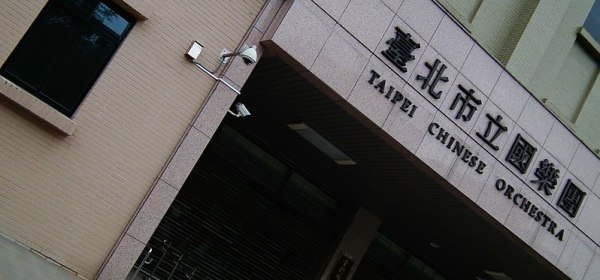
Written by Min-erh Wang. From the late nineteenth century onwards, Chinese musical culture has been significantly impacted by the importation of Western music. Chinese musicians and intellectuals, therefore, began to organise an orchestra with Chinese instruments as a way for pursuing musical modernisation. The establishment of the music section at the Central Broadcast Station in Chongqing in 1935 was the most prominent example of this trend. By presenting this new ensemble at international occasions, the modern Chinese orchestra was further promoted as ‘Gou Yue (國樂),’ meaning ‘national music,’ in the first half of the twentieth century.

Confessions from a Former Fan Girl

Written by Ellie Koepplinger. I remember being thirteen with vivid clarity. You are at once gangly, disproportionate, and uncomfortable with yourself, confused and delighted in equal measure by your budding independence. You are constantly trying to untangle a knotted web of hormones, education, and friendships, convinced that one poor decision would permanently impact the chasm of life that stretched before you. At that tender inflexion point, falling in love with fictionalized Taiwanese pop idols was the one thing that kept me grounded.

Landlords, Subsidies, and Policy Failures: Renting in Taipei and New Taipei City

Written by Natalie Dai(戴淨妍), Jessica Hsu(徐卉馨), Sophia Lee(李昕儒), Dennis He(何正生); Translated by Sam Robbins. In August 2020, Lin Nuo-ning signed a half-year contract with her landlord and planned to stay in this apartment during her career move. However, when Nuo-ning applied for the subsidy for a second time, she received a call from her landlord whilst at work, criticising her for applying for the subsidy without telling her landlord first. As a result, her landlord asked her to move immediately. In applying for the subsidy, Nuo-ning had unintentionally caused the national tax bureau to contact her landlord to expect her tax records.

Location, Location, Location: Renting in Taipei and New Taipei City

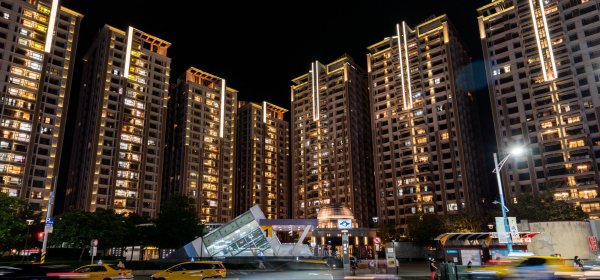
Written by Natalie Dai(戴淨妍), Jessica Hsu(徐卉馨), Sophia Lee(李昕儒), Dennis He(何正生); Translated by Sam Robbins. For recent graduates like Yi-ting, mostly all renters, rent typically takes up between one quarter and one-third of their monthly income. According to the Ministry of Labour, the average monthly salary for recent graduates in 2019 was 28,231NTD (£724; $1021). Judging by mean rental prices per region, if they are willing to move out to the suburbs of New Taipei City, they can expect to pay around 8,000NTD (£205; $289) a month for an eight ping (26 square meters; 285 square feet) apartment.

Taiwan’s Real Estate Development from the Cross-Strait Perspective

Written by Wei-Che Fu and Yu-Chih Tseng. global economic and political geolocation, the challenges of its local industry development and social inequality were still ahead during the Sino-American conflicts. The mass capital escape from China is generally regarded as another chance for attracting investment. Taiwan experienced a new wave of housing inflation since the global financial crisis in 2008.

A Tale of Two Cities: Taiwan’s Social Housing Policy Practice in Taipei and Taoyuan City, 2014-2018

Written by Chris Chih-Hua Tseng. Taipei has spawned some policy innovations. Meanwhile, in Taoyuan, an adjacent developing city that has built massive amounts of social housing, none of the above happened. Instead, the city government proudly announced it had built social housing the fastest. Why has social housing developped much more sluggishly in the capital than it has in Taoyuan? To answer the differences between these two cities, we need to expand our scope to broader urban politics and urban developmental processes.

Taiwan with a Side of New Public Diplomacy

Written by Martin Mandl. At about the same time as Bubble Tea made its first appearance in Vienna, President Ma Ying-jeou proclaimed “taking Taiwan’s food to the world a policy priority”. What followed was an economic stimulus plan, sometimes referred to by commentators as “All in Good Taste – Savour the Flavours of Taiwan”.

Is Taiwanese society ready to face a belligerent China?

Written by Gunter Schubert. Over the last decade, the world has seen a geopolitical shift whereby China has gained power and influence in the international arena, showing an increasing willingness to safeguard “national interests” and fulfil the “historic mission of rejuvenating the Great Chinese Nation”. Within this, unification with Taiwan has long been defined as a major objective, the pursuit of which has become increasingly urgent.

Reinscribing Taiwanese Americans into Transpacific History

Written by Catherine Chou. For a country that greatly restricts the ability of foreigners to acquire dual nationality, and that also has one of the lowest birth rates in the world, the second-and third-generation diaspora in the United States represent under-tapped human capital. Yet, for both US institutions like Pew, and Taiwanese government and civil society, it seems, fuller recognition of the demographics, diversity, social networks, identity formation, and political and professional commitments of Taiwanese Americans – and the impact of their “civic transnationalism” – remains elusive.

The Public Nature of Civil Disobedience: Lessons from the Sunflower and Umbrella Movement

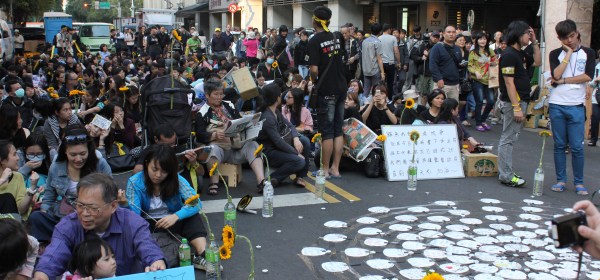
Written by Leon N. Kunz. In March 2014, participants in the Sunflower Movement peacefully occupied the main chamber of Taiwan’s parliament to block the ratification of a controversial trade agreement with the PRC that they viewed as a threat to Taiwanese democracy. In September of the same year, protesters involved in Hong Kong’s Umbrella Movement created street occupations to push for genuine democratic reform. In both cases, participants not merely occupied public space but claimed to engage in civil disobedience. According to the often-cited definition by liberal theorist John Rawls, civil disobedience is “a public, nonviolent, conscientious yet political act contrary to law usually done to bring about a change in the law or policies of the government.” To what extent did the occupations in Taiwan and Hong Kong conform to the dominant liberal civil disobedience script?

1 32 33 34 35 36 55