‘Tigertail’ Missed These Opportunities to Tell Taiwan’s History

Written by Milo Hsieh. Alan Yang’s first feature film, Tigertail, recounts the tale of Pin-jui, a Taiwanese immigrant estranged from his family after arriving in New York. The Taiwanese backdrop sets the film apart from The Farewell, which also captured attention with its Asian American immigrant narrative. This has heightened expectations among Taiwanese and diaspora audiences for a film that portrays Taiwan not as a generic East Asian country but one with a unique culture and history.

Campaign Launched To Remove Limits On Transnational Gay Marriage In Taiwan

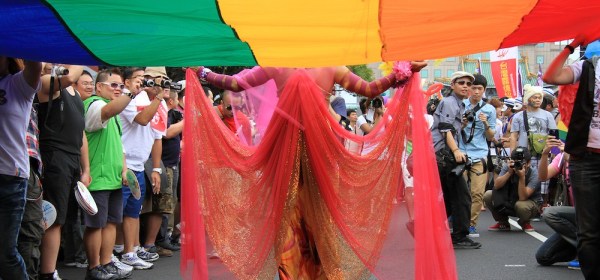
Written by Brian Hioe. The bill to legalize gay marriage cleared its third reading on May 17th, 2019, with gay marriage becoming legal on May 24th. However, there were some gaps in the scope of the bill. If a Taiwanese person wishes to marry a foreigner of the same sex, that foreigner must be from a country that has also legalized gay marriage. Likewise, foreign same-sex couples are not able to get married in Taiwan if one of them is from a country that has not legalized gay marriage. To this extent, same-sex couples who both come from countries that have not legalized gay marriage cannot get married in Taiwan.

Writing History Within/Outside of Taiwan: A Postcolonial Perspective on Shawna Yang Ryan’s Green Island (2016) and Wu Ming-yi’s The Stolen Bicycle (2015) – Part 2

Written by Ti-Han Chang. Many more can be said on the comparative study of these two novels, yet what is important here is to highlight what sort of future prospect that one can further expect from the development of Taiwanese postcolonial literature as well as its significance in “worlding” Taiwanese literature as a whole. An emerging feature that may potentially be established into a kind of “new traditions” for Taiwanese postcolonial literature is the sparks that come out from its cross-disciplinary reference to environmental literature.

Epidemics, National Consciousness and the Existential Value of Taiwan

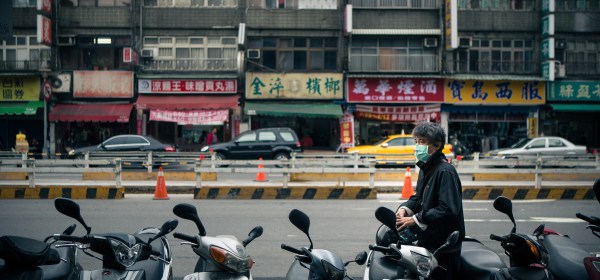
Written by Mary Wang. Reading Nobel Prize winner Albert Camus’ canonical novel, The Plague at the time of the COVID-19 pandemic outbreak led me to meditate on Taiwan’s current situation and the possibilities for its future. As the COVID-19 crisis has been unfolding, paralysing the whole globe, I found that Camus’ novel allows for meaningful comparison between the situation described in Camus’ short novel and the experience of Taiwan as an estranged member of the international community.

Enhancing Physical Activity Levels through Government-led Sports Promotion for Children: A Taiwanese Case

Written by Yu-Ling Chen and Ren-Shiang Jiang. Although the term “physical activity” has been recently introduced to Taiwan in the last decade, the policies of exercise and sports promotion have existed for a long time. While competitive youth sports remain relatively stable in Taiwan, the message from the government is clear: sport and exercise cannot just be an activity for elite athletes, but everyone living in Taiwan.

Sport as a Marker of National Identity in Taiwan

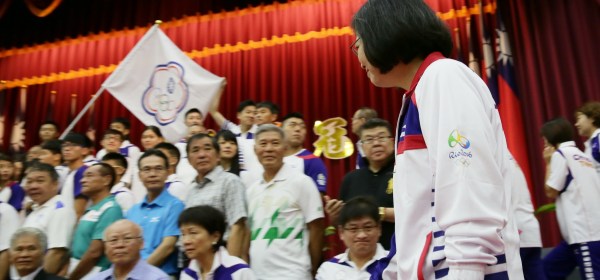
Written by Gerald R. Gems. Given the politics of state-building in Asia over the last half-century, and the continuing contentious debate over Taiwanese sovereignty, sport has played (and continues to play) a significant role in the creation and perpetuation of a national identity. Japan occupied Taiwan from 1895 to 1945 as compensation after its victory over China in the war of 1895. Baseball, an American sport, had taken hold in Japan by that time, and the Japanese introduced the game to Taiwan. In time, it became the most popular spectator sport in Taiwan.

Taiwan’s push for media literacy- is it all “fake news”?

Written by Sam Robbins. Across the globe, more and more countries have introduced media literacy education into their national curriculum in a hope to make students better prepared for the digital media landscape. Although media literacy is much older than the internet, digital literacy has become inseparable from media literacy over the last 10 years or so. It is over this period that media literacy has also began to receive new attention.

Taiwan and Twiplomacy

Written by Najee J Woods. Twitter has been instrumental for Taiwan digging out of the tunnels of diplomatic isolation. Twitter has become the equivalent to an online megaphone for the international community to hear what the Taiwanese people have to express. Political parties, news organisations and influential Taiwanese politicians are now on twitter, which gives the world community a glimpse of the different viewpoints that make up Taiwanese society. Formosa is no longer the forgotten orphan, as President Tsai and her team have successfully tweeted Taiwan back into the global community where it belongs.

Left Perspectives on Connecting Taiwan to the International World: How New Bloom Magazine was Founded

Written by Brian Hioe. New Bloom Magazine, which is approaching its sixth anniversary, was originally founded in 2014 in the aftermath of the Sunflower Movement. Other founders of the publication and myself were participants in the Sunflower Movement, and we first began talking about the need to found a bilingual publication to connect Taiwan to the international world in April, which was around the time of the withdrawal from the Legislative Yuan. The publication subsequently launched in July 2014.

Disease in the Digital Era – is Taiwan in the midst of an “infodemic”?

Written by Sam Robbins. The coronavirus has become a hot topic of conversation on Taiwan’s popular social networking site, D-cart. This has become a space for (primarily university students) to share or ask for relevant information about the disease, but also to share their fears and difficulties that have resulted from the virus. A recurring theme on the discussion board are stories from international students—for example, from Hong Kong—who are not sure of their ability to return to study in Taiwan.

THE MOUNTAIN GOD AND THE MONASTERY – THE PECULIAR CASE OF THE SHANSHEN SHRINE

Written by Wen-Ren Liu. When travelling around Taiwan one will inevitably encounter small temples whose religious affiliation is not immediately evident. The prevalence of such temples reflects an area where Chinese religiosity generally differs from the monotheism prevalent in many other societies – while many Chinese believe in the existence of a realm of invisible, non-material existence, they are less inclined to confine their belief to a specific God. In line with this, many religious sites in Taiwan demonstrate an interesting juxtaposition of spiritual beings and symbols pertaining to different religious/spiritual traditions, the main ones being Buddhism, Taoism (and Folk Taoism), and Confucianism…

1 42 43 44 45 46 56