The Child Welfare League Foundation’s Responses to the Government’s Childcare Policies for Children under five

Written by the CWLF.
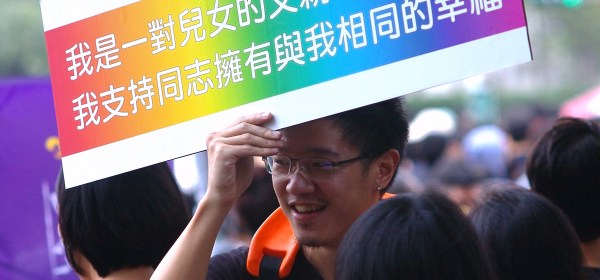
In order to counter the declining birth-rate in Taiwan, in August 2018 the Executive Yuan enacted new childcare policies to support families with children aged zero to five. The new policies mainly consist of expanding the scale of public childcare services, establishing a set of mechanisms for quasi-public childcare providers, and raising childcare subsidies.

The Making of a “Heroine”: Huang Bamei and the Politics of Wartime History in Postwar Taiwan, 1945–1982

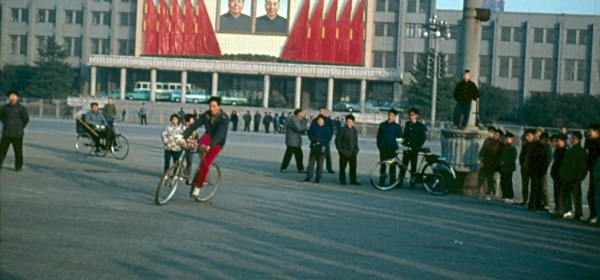
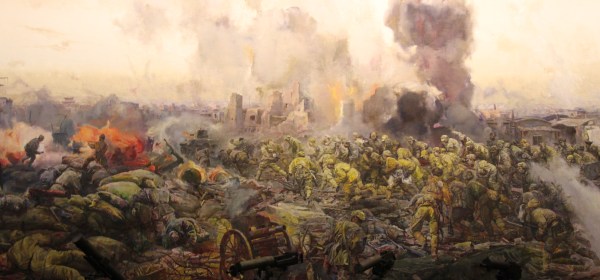
Written by Weiting Guo. While some may think that we have garnered enough fragments of Huang Bamei’s life, one should bear in mind that the richness of her literary representations, together with the scarcity of her appearance in official documents, may have made her disappear inside the conventions of her own stories—a dilemma that often appears in the memories of mythologized figures.

How the Subaltern Feels? A Dialogue on Emotions, Field-work and Subalternity

Written by Beatrice Zani and Lara Momesso. Marriage migration is a glocal phenomenon that refers to the interlink between marriage and mobility within a globalised world. During the last decades, Taiwan has become an illustrative site for global marriages: countries such as China, Vietnam, the Philippines and Indonesia are the main sending societies of females who decide to marry abroad.

International Human Rights Law, Constitution and ‘A Nation Founded upon the Principles of Human Rights’

Written by Kuan-Wei Chen. In Taiwan, which experienced authoritarian rule after World War II, the pursuit of human rights protection was an important task in the process of democratization. The first political party rotation took place in 2000, and during the inauguration of President Chen Shui-bian from the Democratic Progressive Party (DPP), he declared the important policy guidelines of ‘a nation founded upon the principles of human rights as a goal.

Rethinking Diplomacy and its Cultural, Social, and Political Contexts: The Diplomacies of Tuvalu, the Pacific, and Taiwan

Conceptions of diplomacy held in Taiwan and Pacific nations like Tuvalu, Kiribati, the Marshall Islands, and Palau have often come into conflict. One example is how Taiwan’s presidential visits to the Pacific have been conducted and received. Since the Chen Shui-bian administration came to power in 2000, Taiwanese presidents have attempted to visit most if not all of Taiwan’s allies. However, in the Pacific, these visits are often quite abbreviated.

Evaluating the impact of Taiwan’s fertility policy

Written by Wen Shan Yang. In 2010 Taiwan’s total fertility rate (TFR, the number of children who would be born per woman during her life time using an estimation based on the current year) of 0.89 was so low that it became a member of a dubious club: the lowest-low fertility countries in the world club. According to this estimate, a woman in Taiwan will have borne less than one child after passing her child-bearing age of 49.

1 48 49 50 51 52 55