Religious Transnationalism and Historical Narratives of Taiwan Indigenous Peoples during the 1995 Taiwan Strait Crisis  

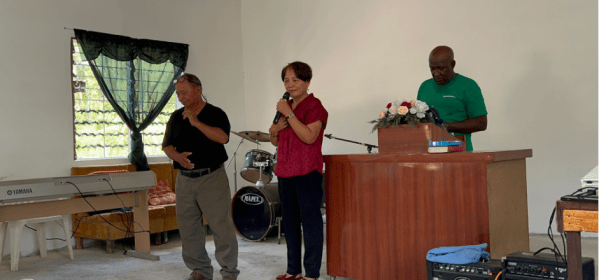
Written by Fasa’ Namoh. This article explores how charismatic Christian prophecy shaped the 1990s migration of Paiwan families from Taiwan to Belize. Drawing on multisited fieldwork in Belize, Taiwan, and the United States, the research examines how religious landscapes and cultural memory are reterritorialised through cross-cultural encounters and diasporic practices.  

What I saw and heard: Vatican Diplomacy and Taiwan

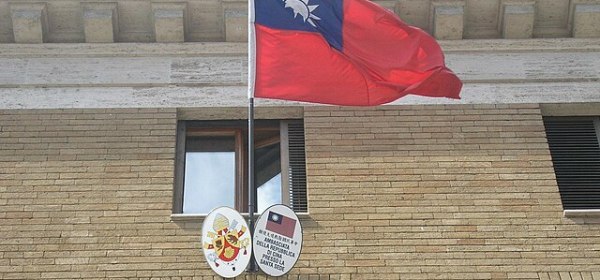
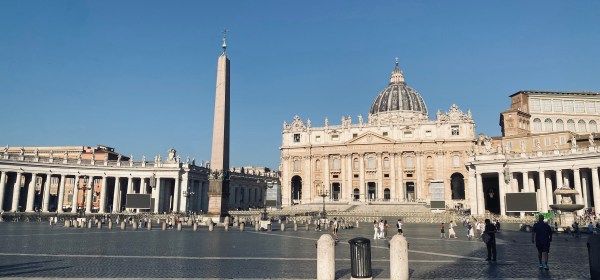
Written by Thomas Ching-Wei TU. This second part of the article presents possible suggestions for promoting Taiwan-Vatican relations. For instance, it could review the visa difficulties of foreign clergy and nuns and strengthen educational and technological exchanges. Only through a greater understanding of the Vatican’s special diplomacy can the friendship with Taiwan’s only European diplomatic partner be deepened.

What I Saw and Heard: Triangular Relations among Taiwan, China, and the Holy See

Written by Thomas Ching-Wei TU. This two-part article reflects on Taiwan’s diplomacy with the Holy See from a high-level politics perspective and examines how Taiwan can enhance cooperation. It argues that in addition to calling for religious freedom in China, the Taiwanese should understand the primary goals of the Vatican’s diplomacy and its differences with secular states. 

Taiwanese Horror Games and the Ghosts from the Past

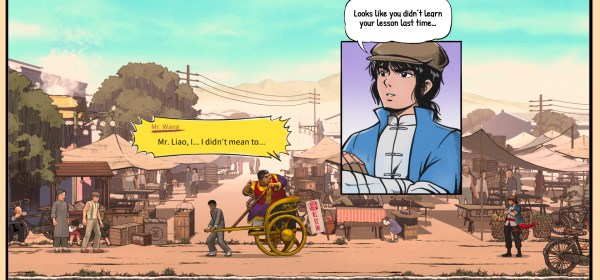
Written by Chee-Hann Wu. Taiwanese horror (taishi kongbu) is a rising genre that has claimed an important space in Taiwanese popular culture, particularly in the video game industry since the debut of Detention in 2017. These video games often incorporate elements of Taiwan’s local religions, ritual practices, and mythologies, especially the ones associated with ghosts and other supernatural beings. Although mostly implicit, many Taiwanese horror games contain hints of historical references to the 228 Incident and the White Terror under Martial Law. Malevolent monsters and ghosts become physical incarnations of state-sanctioned violence by perpetrators and accomplices and the suffering of those who were arrested, executed, or silenced. 

How Much Money Could Ghosts Make? A Case Study on the Most Ferocious Female Ghost of Taiwan – Chen Shou Niang  

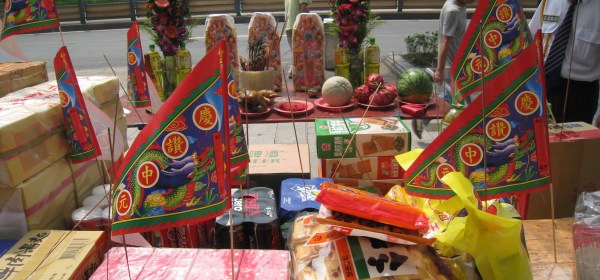
Written by Yi-Ping Wu. Staying at home, not going to the beach, or climbing mountains, and not even opening an umbrella indoors are just a few taboos everyone must remember when Ghost Month 鬼月 arrives. Although the origin of the concept of Ghost Month is uncertain, the Taiwanese still emphasize the rituals that must be practised and the taboos that must be prohibited during this period. What attracts our attention most is the colossal amount of money that the Taiwanese pay for the rituals, offerings, and joss paper (paper money) to honour their ancestors because their past loved ones could return to the world of living since the gate of the underworld would open on the first day of July on the lunar calendar. The huge income that the cultural concept of Ghost Month contributes reminds us of an interesting question to think about thoroughly: How much money the “ghosts” could make?

The Month of Wild Ghosts: Phenomenon and Thoughts on Pudu in Taiwan’s Government Organizations

Written by Liang Ting-Yu. Homeless ghosts are also known as “good brothers.” In Taiwan’s civil society, they are not Youying gong​ (有應公) who are sacrificed in ghost temples, but rather a kind of wandering spirits who do not have or appear on memorial tablets, tombstones, or graves, and who are not worshipped by anyone; there are no temples or shrines to which they can return, and no place in which they can take shelter. On the half of the seventh lunar month, commonly known as the “Ghost Month,” local families, stores and companies, temples and Wanshan shrines(萬善祠) offer sacrifices to homeless ghosts in the form of ​Zhongyuan Pudu​(中元普渡)ceremonies and ​Chaodu​ devotions(超渡法會), which are rituals that free ghosts from suffering and reincarnation.

Taiwan’s Tibetan Buddhist Monk Dilemma and its Unintended Consequences

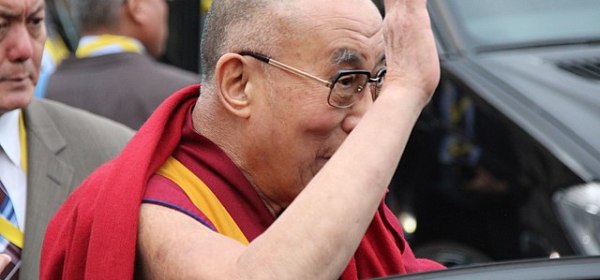
Written by Dolma Tsering. Taiwan is known as the beacon of democracy, and its competitive democratic principles and practices distinguish it from authoritarian China. Advocacy for promoting religious freedom is one of the important tasks undertaken by the government. For instance, as a part of this advocacy, in 2018, President Tsa Ing-Wen announced that Taiwan would donate US$200,000 per year for five years to the United States’ International Religious Freedom Fund as a part of Taiwan’s contribution to advancing global religious freedom. The government, annually in association with the American Institute in Taiwan (AIT), hosts an international forum for religious freedom to establish a more inclusive society in Taiwan. However, on 6th June 2023, more than 112 Tibetan Buddhist centres in Taiwan joined a press conference which called for the government’s unfair treatment of visa restrictions for Tibetan Buddhist monks in Taiwan and therefore demanded an amendment to the existing visa restriction.

The Mysterious Tsou Shaman: The Guardian of Traditional Culture

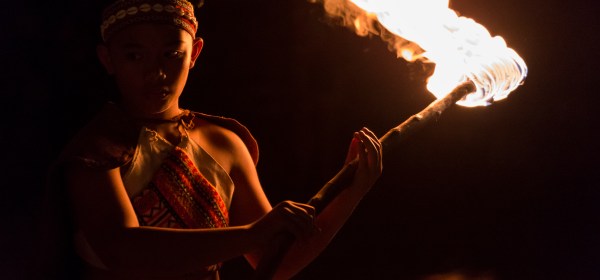
Written by tanivu yasiungu and Aaron Valdis Gauss. Living high up in quiet Ali Mountain, the Tsou shamans intimately connect with the earth and the ancestral spirits. But, of course, they are also connected with the most beloved god of the Tsou tribe––Hamo. Another important role of the Tsou shamans is to preserve, perpetuate and affirm Tsou myths, thereby maintaining a connection with the ancestors. Tsou shamans believe that working with nature is the most suitable way for everyone to live. We, the Tsou people, have always believed that being simple and pure in our beliefs is the only way to maintain the closest relationships with our god Hamo.

A sketch of Taiwanese Christianity

Written by Wen-Hsu Lin. According to statistics from 2017, about 6% of the Taiwanese populace are Christian. Despite having a history dating back several centuries, Taiwan’s Christian community remains largely understudied and rarely discussed. Scholars have tried to better understand this group using survey data. Through the data, we first reveal the demographic characteristics of Taiwanese Christians. More importantly, under the well-documented trend that the country  has become more secularized, we further investigate whether Christian faith still matters to Christians’ behaviour and attitude toward social issues.  

1 2 3 4