The Mysterious Tsou Shaman: The Guardian of Traditional Culture

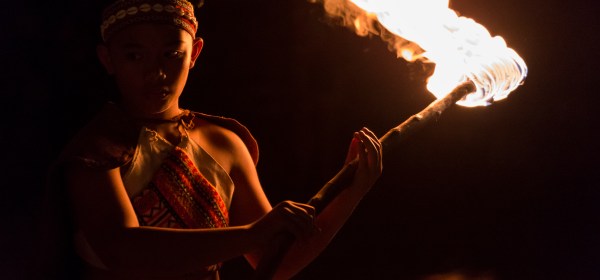
Written by tanivu yasiungu and Aaron Valdis Gauss. Living high up in quiet Ali Mountain, the Tsou shamans intimately connect with the earth and the ancestral spirits. But, of course, they are also connected with the most beloved god of the Tsou tribe––Hamo. Another important role of the Tsou shamans is to preserve, perpetuate and affirm Tsou myths, thereby maintaining a connection with the ancestors. Tsou shamans believe that working with nature is the most suitable way for everyone to live. We, the Tsou people, have always believed that being simple and pure in our beliefs is the only way to maintain the closest relationships with our god Hamo.

The Global Story of Traditional Chinese Medicine in Italy, China and Taiwan

Written by Daniele Mario Buonomo. The diffusion and practice of Traditional Chinese medicine (TCM) is an important issue both in the Chinese and Western worlds. In European and Western countries, TCM, and specifically acupuncture, is increasingly popular. In 1979, for the first time, acupuncture and moxibustion received the attention of the World Health Organization. TCM’s importance has even been stressed in 2010 by UNESCO, who inscribed acupuncture and moxibustion on the Representative List of the Intangible Cultural Heritage of Humanity.

The Earth God and Personifying Climate Change

Written by Natasha Heller. Rising global temperature increases and predictions about sea levels can be abstract, even for adults. How can the phenomena of global warming be visualized? How can climate change and environmental degradation be made understandable by young children? The earth’s round shape, as imagined from space, lends itself to the addition of eyes and a mouth to convey unhappiness or illness on a global level. Distressed or lonely polar bears also convey the negative effects of global warming but are still quite distant from most children’s everyday lives.

Mindfulness in Taiwan

Written by Chung-Wei Lin Mindfulness originated from the early Buddhist classics referred to as “Samyukta-Agama” and “Satipaṭṭhāna Sutta”. Mindfulness are those teachings of the Buddha that were handed to the disciples, and which Buddhists believe are the direct path to realization. Mindfulness has four steps: mindfulness of the body