A Third Front: The Pivot of Businesses Towards Activism

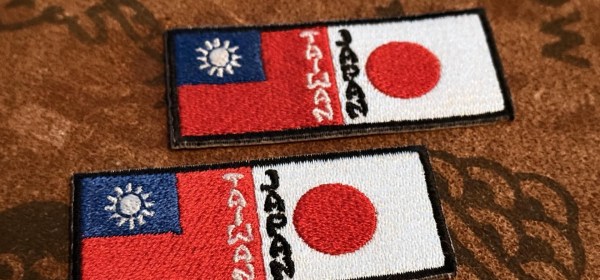
Written by Aleksandrs Gross. This article explores a unique phenomenon that occurred during the recalls – small businesses explicitly voiced their stance on the recalls. This mirrors similar patterns of Hong Kong during the pro-democracy movement in 2019. The author interviewed three pro-recall businesses to understand their stance and how they encourage constructive discussion without alienating opponents.

Vietnam Kinmen Association (Fuji Temple): A Symbol of Taiwan’s Soft Diplomacy in Saigon before 1975

Written by Meiyuan Kou. This article traces the history of the Kinmen Association (Fuji Temple) in Saigon-Cholon, established in the early 1970s as both a religious hub for Kinmen migrants and a channel of Taiwan’s soft diplomacy in South Vietnam. It examines how this small community institution fostered transnational ties, cultural continuity, and identity preservation across shifting political landscapes before and after 1975.

The Unresolved Housing Problem in Taiwan 

Written by Yi-Ling Chen. This article traces Taiwan’s housing transformation, arguing that the state’s role remains central, and that its interventions have facilitated commodification, speculation, and inequality in Taiwan’s housing sector. It calls for restoring housing’s use value and reimagining it as a basic necessity. 

Introduction to The Topical Section on ‘Transitions and Challenges in Taiwan’s Economy and Society’ 

Written by Zong-Rong Lee and Thung-Hong Lin. This article introduces the Taiwan Insight–IJTS special issue on the Topical Section “Transitions and Challenges in Taiwan’s Economy and Society.” Initiated as an open invitation to scholars worldwide, the Topical Section reflects on Taiwan’s economic transformation, convening debate on structural shifts, their consequences, and the pressing challenges shaping Taiwan’s future. 

Gender, Remittances, and Taiwan’s Migrant Worker Financial Ecosystem: Beyond the Numbers

Written by Renee Te-Jung Chen. This article looks beyond the numbers of Taiwan’s Small-Amount Remittance Services for Foreign Migrant Workers from a gender perspective. It argues that the milestone of becoming the primary remittance channel obscures the gendered patterns in adopting the new platform. It suggests that the collection of sex-aggregated data is necessary.

From Conservation to Governance: Advancing Connectivity through Nature-based Strategies within the Taiwan Ecological Network 

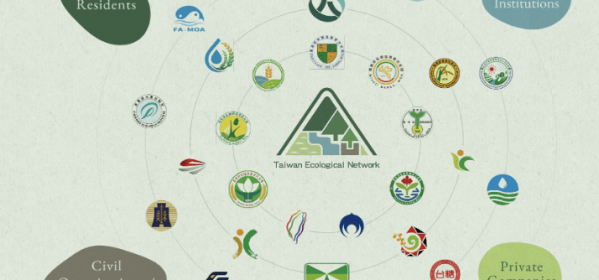
Written by Hwa-Ching Lin, Chih-Chin Shih, Hsiao-Tien Hsieh, and Chia-Tzu Chen. This article explores how Taiwan’s conservation vision has broadened from isolated reserves to an island-wide ecological network. Through data-driven planning, nature-based strategies, and cross-sector cooperation, the governance model contributes to ecosystem services that are essential to public safety, human well-being, and sustainable economic development.

Reimagining Chiayi: A Youth-Driven Project for Regional Revitalisation

Written by Yu-Jui (Ray) Cheng. This article discusses how the Chiayi Youth Project revitalises Taiwan’s Chiayi City by empowering young people through cultural events and innovation competitions. The project fosters local engagement, creativity and identity. With rising youth participation and a growing population, it allows a repositioning of Chiayi as a vibrant, youth-friendly city amid national demographic challenges.

The Death Penalty in Taiwan: An Overview and the Impact of 113-Hsien-Pan-8 

Written by Szu-Yu (Suzy) Chen. This article provides an overview of Taiwan’s legal landscape of the death penalty, focusing on the Constitutional Court’s Judgment 113-Hsien-Pan-8 (2024), which upheld the constitutionality of the death penalty while imposing strict procedural restrictions. It examines the historical context, legal shifts, and the current impact of 113-Hsien-Pan-8, highlighting its influence on Taiwan’s death penalty practices and the ongoing debate.

Taiwan’s Just Transition: Findings from the 2024 Survey 

Written by Jiun-Da Lin and Kuei-Tien Chou. The Risk Society and Policy Research Centre at National Taiwan University have been conducting annual surveys on just transition. This article discusses the results of the latest survey in 2024, revealing Taiwanese citizens’ attitudes and understanding of climate change, Net-Zero policies, and their effects on economic inequality. This article further proposes policy recommendations based on the survey to enhance just transition.

1 2 3 10