The Political and Economic Implications from Taiwan’s Covid-19 resilience performance

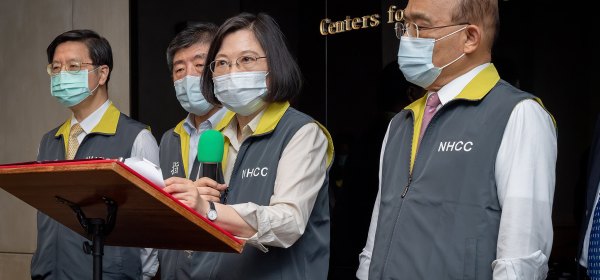
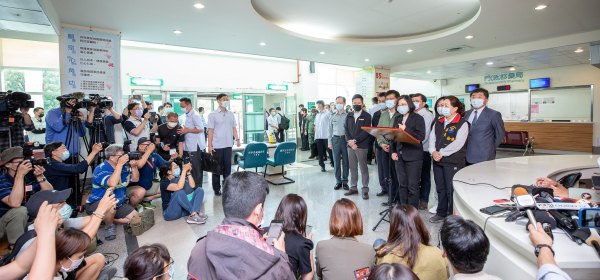
Written by Chun-Chien Kuo. According to the latest Bloomberg Covid-19 Resilience Report, Taiwan’s ranking has slumped to 44th place in June from the 15th in May. Meanwhile, the support rates for President Tsai have declined dramatically. Taiwan had successfully controlled the Covid-19 virus for more than one year under the strict border control, and people had been luckily enjoying the near normal life without lockdown elsewhere. The economy gained positive momentum both from strong export and little affected domestic activities. The CECC Commander Chen, President Tsai and DPP (Democratic Progressive Party) had been rewarded with high political support for their well performance in fighting the Covid-19 virus. However …

Taiwan’s Economy: GDP Growth is a Bright Spot for Now

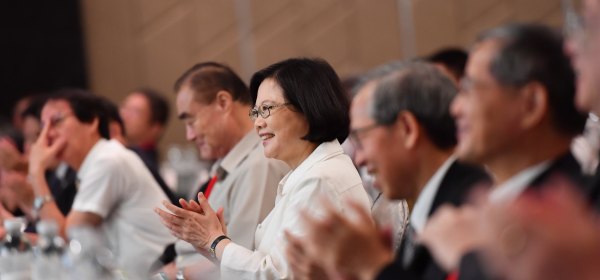
Written by John F. Copper. The recent economic news emanating from Taiwan is the impressive growth in its gross domestic product (GDP)—one of the basic indicators of economic vitality. This is certainly good to hear. After experiencing negative growth throughout most of 2020, conditions changed in the last quarter of the year. As a result, Taiwan even bested China’s GDP growth. Furthermore, the upward trend accelerated this year, with GDP expansion the highest in two decades. If this growth is sustained, 2021 will end with a welcomed 5 per cent or better rise.

Landlords, Subsidies, and Policy Failures: Renting in Taipei and New Taipei City

Written by Natalie Dai(戴淨妍), Jessica Hsu(徐卉馨), Sophia Lee(李昕儒), Dennis He(何正生); Translated by Sam Robbins. In August 2020, Lin Nuo-ning signed a half-year contract with her landlord and planned to stay in this apartment during her career move. However, when Nuo-ning applied for the subsidy for a second time, she received a call from her landlord whilst at work, criticising her for applying for the subsidy without telling her landlord first. As a result, her landlord asked her to move immediately. In applying for the subsidy, Nuo-ning had unintentionally caused the national tax bureau to contact her landlord to expect her tax records.

Location, Location, Location: Renting in Taipei and New Taipei City

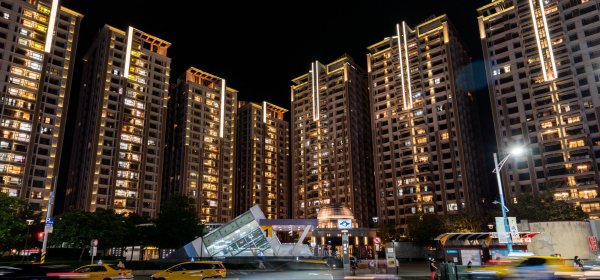
Written by Natalie Dai(戴淨妍), Jessica Hsu(徐卉馨), Sophia Lee(李昕儒), Dennis He(何正生); Translated by Sam Robbins. For recent graduates like Yi-ting, mostly all renters, rent typically takes up between one quarter and one-third of their monthly income. According to the Ministry of Labour, the average monthly salary for recent graduates in 2019 was 28,231NTD (£724; $1021). Judging by mean rental prices per region, if they are willing to move out to the suburbs of New Taipei City, they can expect to pay around 8,000NTD (£205; $289) a month for an eight ping (26 square meters; 285 square feet) apartment.

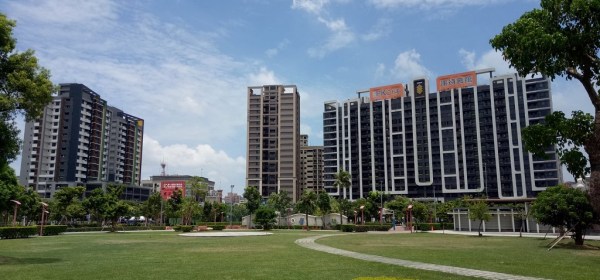
A Tale of Two Cities: Taiwan’s Social Housing Policy Practice in Taipei and Taoyuan City, 2014-2018

Written by Chris Chih-Hua Tseng. Taipei has spawned some policy innovations. Meanwhile, in Taoyuan, an adjacent developing city that has built massive amounts of social housing, none of the above happened. Instead, the city government proudly announced it had built social housing the fastest. Why has social housing developped much more sluggishly in the capital than it has in Taoyuan? To answer the differences between these two cities, we need to expand our scope to broader urban politics and urban developmental processes.

Taiwan: The unsinkable Aircraft Carrier sails again?

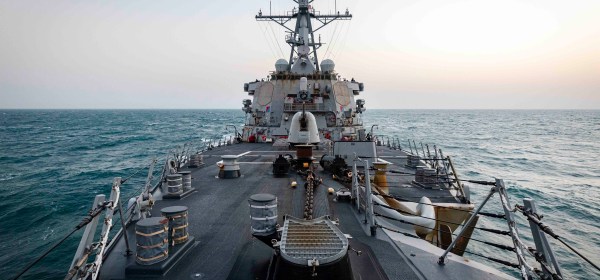
Written by Arthur Ding. In April, the London based Economist carried several in-depth analyses on Taiwan and US-China relations in the context of China’s increasing assertive policy toward Taiwan. Among them, the one titled “Taiwan: the most dangerous place on Earth” elicited heated debates in Taiwan. Assuming that these analyses are correct, what do these analyses entail?

Not obedience but Dignity: A message from a former migrant worker

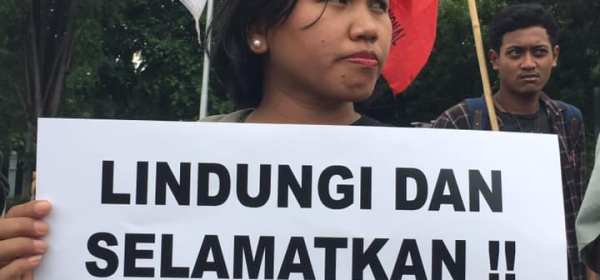
Written by Iweng Karsiwen and Ratih Kabinawa. Edited by Isabelle Cheng. A former domestic worker in Hong Kong for over ten years, Iweng Karsiwen is currently the Chair of Families of Indonesian Migrant Workers (Kabar Bumi). Initially she was recruited to work in Taiwan when the door opened for Indonesian women seeking domestic work there. However, instead of going to Taiwan, Iweng found herself arriving at a Hong Kong MTR station late one evening a year later. Knowing how the brokering industry functioned at home and abroad, after returning to Indonesia, Iweng was determined to help those who worked abroad and who faced similar challenges at various stage of their migration. She has particularly campaigned to outlaw salary reduction. This, as well as other practices mentioned by Iweng, are commonly adopted by brokers in Taiwan, Hong Kong, Malaysia and Singapore.

Taiwan’s Non-Traditional Diplomacy During the Pandemic: The Case of Mexico

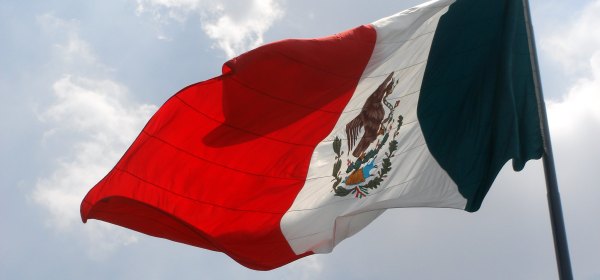
Written by Fabricio A. Fonseca. In the spring of 2020, the social media accounts of the Taipei Economic and Cultural Representative Office (TECRO) in Mexico City began to share posts made by Mexican federal legislators. In these posts, they showed appreciation for the donations made by Taiwan’s representatives in the country under the difficult circumstances posed by the COVID-19 pandemic. Initially, those donations consisted of food baskets and eventually included thousands of face masks. The different images of people across Mexico receiving boxes with the slogan “Taiwan Can Help” (TCH) made me think about how authorities on the island were using different instruments associated with non-traditional diplomacy.

POLITICAL CONTENTION TAKES PLACE IN AFTERMATH OF RAIL ACCIDENT

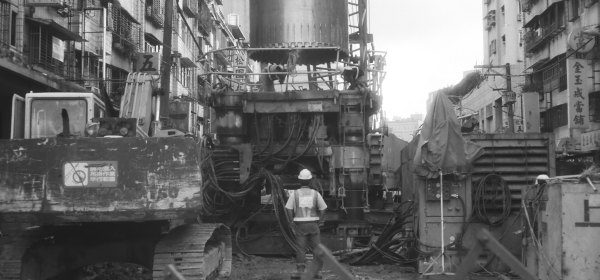
Written by Brian Hioe. After a rail accident on Friday that left fifty dead and injured over 200, there has been much political contention between both the DPP and opposition parties such as the KMT. The railway accident was the deadliest accident in Taiwan in decades and took place after a truck from a construction site on a slope overlooking train tracks slid down a slope and crashed into a train exiting a tunnel near Hualien.

Is It Taiwan’s Turn to Invest in Space?

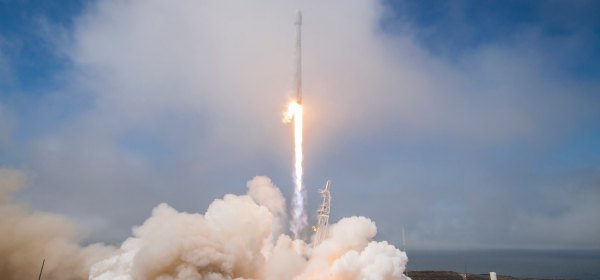
Written by David Michael Jaffe. Space Force. Space Operations Squadron. Strategic Support Force. These are the entities, all created within the last five years, responsible for shaping the future of military space operations in the United States, Japan, and the People’s Republic of China, respectively. Russia, too, calls its military’s outer space division the “Space Force.” Meanwhile, South Korea – while it has yet to name a new division formally – recently launched a military satellite aboard a SpaceX rocket in Florida and plans to launch a military satellite from its own soil in the next few years. Australia has already launched satellites from its own soil. Members of the country’s Defence Science and Technology Group are considering launching their own military satellite and advocating for creating their own space force. It is no secret that North Korea also has ambitions to engage in the military space arena.

The Future of Taiwanese industries’ Supply Chain Reallocations Under Covid-19

Written by Chun-Chien Kuo. By adding fire to the existing US-China Trade War, Covid-19 has accelerated the current economic adjustment pace, along with the need for supply chain reallocation in industries. Thus, industries and firms in Taiwan have responded to adjust their production of diverse parts and components. They have also attempted to establish their own sufficient domestic supply chains. New trends in supply chain reallocation have also emerged, such as localised supply chains, shorten supply chains and digitalisation under the Covid-19 threat.

Attracting and Retaining Talent: Taiwan’s Challenges and Opportunities amid COVID-19

Written by Michael C.Y. Lin. Taiwan’s success in battling the novel coronavirus has promoted its international image, attracting businesses, investment, and a skilled workforce to the country. These trends offer Taiwan a potential opportunity to deepen its talent pool. Over the past two decades, Taiwan has experienced stagnant real wage growth, driving out skilled domestic workers and discouraging overseas Taiwanese talent from returning to their homeland. In particular, talent outflow from Taiwan to China has raised serious concerns.

1 10 11 12 13 14 21