At Different Stages, the Same Roots: How Kew Gardens Shaped Our Path in Plant Science 

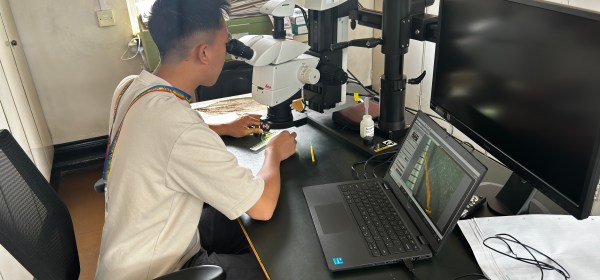
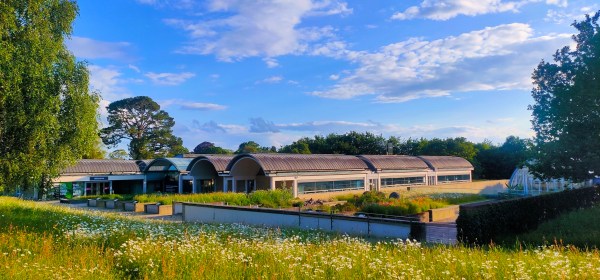
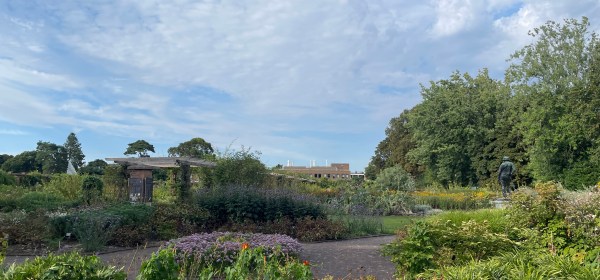
Written by Ni-Chen Lin and Chih-Wei Hsieh. Two NTU students, Ni-Chen and Chih-Wei, joined Kew’s Millennium Seed Bank through the NTU Overseas Internship Programme. Their experiences, studying seed survival and tree seed diversity, broadened their global perspectives on conservation. Returning to Taiwan, both apply Kew’s collaborative, research-driven values in academic and governmental roles.

Connecting Science and Society: Reflections from the Placement Based on a Citizen Science Initiative at Kew

Written by Ssu-Han (Evelyn) Chiu. This article recounts the author’s 2024 internship at Kew Gardens. Working with Kew’s Science Education Team, the author explored citizen science initiatives, attended the International Botanical Congress, and co-organised a workshop on public engagement, which reshaped the author’s understanding of collaboration, communication, and innovation in global plant science.

Taiwan-India University Cooperation: Emerging Corridors of Academic Exchange and Technological Diplomacy

Written by Neeraj Mehra. This article examines the growing educational partnership between Taiwan and India as a strategic soft power tool. Nearly 1,500 Indian students now study in Taiwan, primarily in engineering and technology fields, facilitated by a 2010 MOU and Taiwan’s New Southbound Policy. This collaboration offers complementary benefits: Taiwan’s semiconductor expertise paired with India’s demographic dividend and emerging tech sector. While recent high-level delegations signal strong governmental commitment, challenges remain in administrative barriers, visa processes, and funding stability. The author argues that with proper institutional mechanisms, this partnership could become a major Indo-Pacific academic alliance serving both knowledge diplomacy and technological self-reliance.

Mandarin Soft Power with Taiwanese Characteristics: Values, Visibility, and Challenges

Written by Elaine Chung and Qipeng Gao. This article examines Taiwan’s efforts to promote Mandarin education abroad as a tool of soft power, particularly in the UK. Drawing on student interviews, it explores how political values, language ideologies, and structural constraints shape learners’ choices. It offers insight into how Taiwan can strengthen its visibility and appeal in global language education.

First Round of Early Career Scholars Workshop on Taiwan Studies: Reflections of the Organisers 

Written by Raian Hossain & Ping-An Wei. This article offers a reflection on the motivations behind organising the first Early Career Scholars Workshop on Taiwan Studies, the key achievements of the event, and the broader vision of establishing an Early Career Scholars Network under the Taiwan Research Hub. The organisers highlight how the workshop created opportunities for interdisciplinary exchange, professional development, and long-term community building among emerging scholars in the field.

Taiwan Studies Teaching: The Experience of Connecting Teaching and Event Programmes at SOAS University of London

Written by Dafydd Fell. The article traces the establishment of the Taiwan Studies Programme at SOAS and explores how it integrates Taiwan Studies courses with an extensive event program, including lectures, film screenings, and alumni talks. The strategy enhances student engagement, sustains interest in Taiwan-related studies, and fosters academic-community interaction. By combining teaching with real-world experiences, the Taiwan Studies Programme at SOAS successfully maintains a long-term and sustainable environment for Taiwan studies.

Teaching Taiwan by teaching languages – Performative Interpretation Strategies for Taiwanese Language Learning – A Case Study at Inalco

Written by Chan-yueh Liu. This article emphasizes the importance of teaching Taiwan through its multilingual heritage, advocating for the inclusion of Taiwanese languages (Tâi-gí in academic programs. It introduces “Performative Interpretation Strategies” at Inalco in France, which engages students through performance, music and digital content creation. The approach enhances language learning by fostering creativity, cultural immersion, and communicative competence.

“Mapping Taiwan Teaching” at Trier University: Teaching Taiwan in Script, Speech, and Performance

Written by Thomas Fliß. This article introduces the workshop “Mapping Taiwan Teaching – Teaching Taiwan in Script, Speech and Performance” at Trier University, which focused on teaching Taiwan through language, culture, and performance. Scholars and educators explored Taiwan’s geopolitical significance, linguistic diversity, and cultural identity. The event featured interdisciplinary panels on Taiwan’s literature, theatre, and education, highlighting the need for expanded Taiwanese language courses and intercultural learning methods.

Reimagining Education: The Shift Towards Southeast Asian Students in Taiwan’s Universities

Written by Chia-Yuan Huang. This article reviews the shift of the origins of international students in higher education in Taiwan from mainland China to Southeast Asian nations such as Vietnam, Indonesia and Malaysia in the past few years. This could be attributed to the New Southbound Policy of the Tsai Ing-wen’s administration. This trend calls for more targeted admission policies and internships and job opportunities.

On the Road:  A Taiwan Literary Scholar’s Routes’ of Worlding Taiwan Literature 

Written by Wei-ting Liou. This article focuses on the author’s experiences in “worlding” Taiwan literature through their academic work. This includes engaging with translation, examining Taiwanese American literature, and teaching English-taught courses on Taiwan literature and culture. The author believes these approaches can help reshape the conventional understanding of Taiwan literary studies.

1 2 3 7