“Mapping Taiwan Teaching” at Trier University: Teaching Taiwan in Script, Speech, and Performance

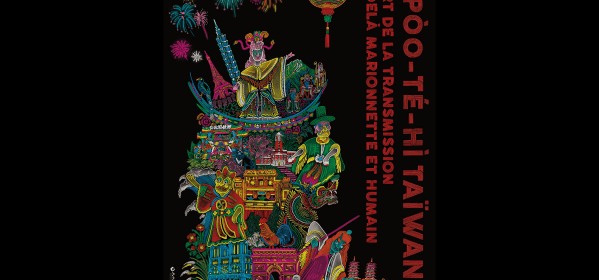
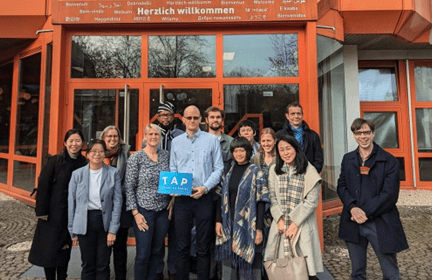
Written by Thomas Fliß. This article introduces the workshop “Mapping Taiwan Teaching – Teaching Taiwan in Script, Speech and Performance” at Trier University, which focused on teaching Taiwan through language, culture, and performance. Scholars and educators explored Taiwan’s geopolitical significance, linguistic diversity, and cultural identity. The event featured interdisciplinary panels on Taiwan’s literature, theatre, and education, highlighting the need for expanded Taiwanese language courses and intercultural learning methods.

Reimagining Education: The Shift Towards Southeast Asian Students in Taiwan’s Universities

Written by Chia-Yuan Huang. This article reviews the shift of the origins of international students in higher education in Taiwan from mainland China to Southeast Asian nations such as Vietnam, Indonesia and Malaysia in the past few years. This could be attributed to the New Southbound Policy of the Tsai Ing-wen’s administration. This trend calls for more targeted admission policies and internships and job opportunities.

On the Road:  A Taiwan Literary Scholar’s Routes’ of Worlding Taiwan Literature 

Written by Wei-ting Liou. This article focuses on the author’s experiences in “worlding” Taiwan literature through their academic work. This includes engaging with translation, examining Taiwanese American literature, and teaching English-taught courses on Taiwan literature and culture. The author believes these approaches can help reshape the conventional understanding of Taiwan literary studies.

Introduction to Island X

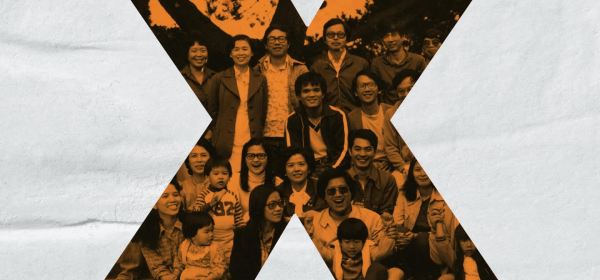
Written by Wendy Cheng. This article introduces Cheng’s 2023 book Island X: Taiwanese Student Migrants, Campus Spies, and Cold War Activism. The book tells the political history of a generation of Taiwanese who migrated to the US as students from the 1960s to the 1980s during the late Cold War and KMT martial law, and who became politically active in struggles for democracy, human rights, and Taiwan independence.

Challenging the Myth of Intercultural Competence: Encounters between the “New Second Generation” and a Philippine Studies Scholar in Taiwan 

Written by Yi-Yu Lai. In the name of promoting multiculturalism in Taiwan, the new second generation is anticipated to utilise their intercultural ability to serve as a bridge between Taiwan and Southeast Asia. This article highlights that the assumption has caused increased anxiety among the new second generation if they are unable to prove their competence. It has also erased the internal disparities and the actual daily experiences of the individuals, making the historical injustice and their own agendas invisible.

Indigenous Language Education in Taiwan: From Language Preservation to Community-Based Learning 

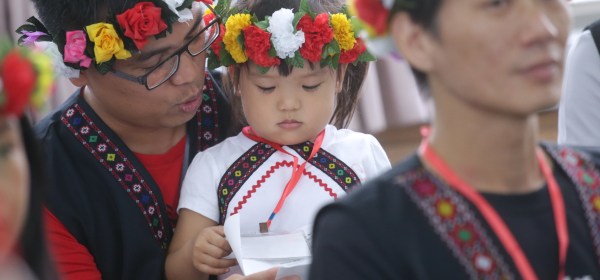
Written by Yang-Hsun Hou, Nikal Kabala’an (a.k.a. Margaret Yun-Pu Tu), and Huiyu Lin. As the Taiwan government has been pushing efforts for Indigenous Language Revitalization and Reclamation, this article highlights the importance of transitioning from government-led preservation to community-based, Indigenous-led education approaches, ensuring that culturally sustaining practices are truly integrated into Indigenous language teaching and learning.  

Wandering Back and Forth in The Sea of Books and Cultural Holdings – In Searching of Indigeneity, Positionality, and Self-identity 

Written by Nikal Kabala’an (Margaret Yun-Pu Tu). This article presents a reflective account from my perspective as one of the curators. It primarily focuses on the “behind the scenes” aspects, adopting an “inside out” approach to share my personal life experiences and the journey of research and curation as a mixed-background Taiwan Indigenous person from the Pangcah/’Amis community and a Ph.D. Candidate studying abroad in the fields of Indigenous Studies, Taiwan Studies, and Law. Supported by the main organisers—the Taiwan Academy in Los Angeles, the Burke Museum, and the Tateuchi East Asia Library (TEAL)—along with the co-organizers and their collaborative and generous sponsorships, I hope to unfold the narratives and open the dialogues driven by a passion for interdisciplinary pursuits. 

Treating the Faceless’ Art Experiences Equally: An Interview with an Independent Researcher Tze-Ning Hong

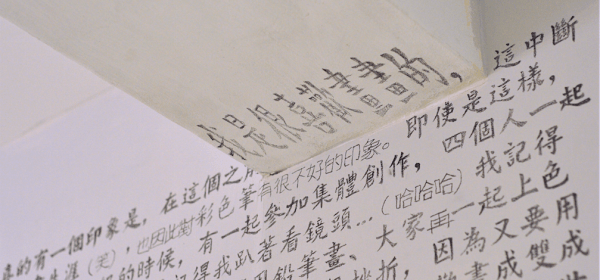
Written by Yi-Cheng Sun; translated by Yi-Yu Lai. Tze-Ning Hong, an independent researcher, designer, and artist, has been immersed in an artistic environment since childhood and graduated from the Department of Fine Arts at National Taiwan Normal University. Her father, a calligraphy teacher in elementary school, provided her with a unique perspective as she navigated between her family and school life during her childhood. From this vantage point, Tze-Ning constantly observed the subtle transformations between “her father as a teacher” and “her father as a dad.” This experience gave her a more nuanced understanding of the teacher’s role than the average person. She has captured and preserved unnoticed and delicate memories regarding art education due to her special position.

There Is No Such Thing As Creativity or Lack Thereof; There Is Only Fun and Not Enjoyable: An Interview with an Artist Pei-Ying Lin

Written by Yi-Cheng Sun; translated by Yi-Yu Lai. This interview attempts to explore the metaphors of “workshops as classrooms” and “art creation as a learning process” in response to my curiosity about the phenomenon of “workshops, each with its own expression,” especially because artist Pei-Ying Lin frequently employs workshops in her art creation. 

Exploring the Undefined Creativity in Youth Theatre Education: An Interview with Wen-Qi Yu, Artistic Director of Flying Birds Theatre Group

Written by Yi-Cheng Sun; translated by Yi-Yu Lai. Before starting the interview, during lunch, Rei-Tzu, the production coordinator of Flying Birds Theatre Group, told us about the “earliest university.” In English, “University” is derived from the word “universe.” In Latin, “universus” is composed of “unus” (one) and “versus” (towards a particular direction), giving it the literal meaning of “towards a specific direction.” According to our limited knowledge of history, the University of Bologna, established by students in 1088 in Italy, is the first university in Europe, earning it the title “mother of universities.” The “earliest university” topic quickly sparked our discussion about knowledge and the essence of education, with art being the primary focus.

1 2 3 4 7