Sustainable Traditional Knowledge: Land Ethics and Disaster Resilience in Cinsbu 

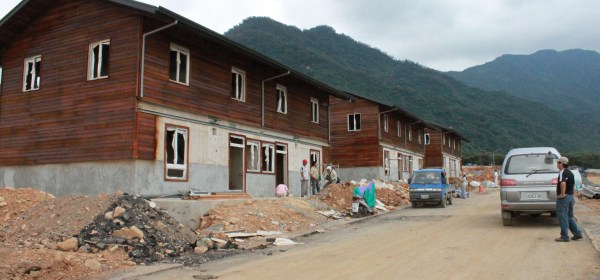
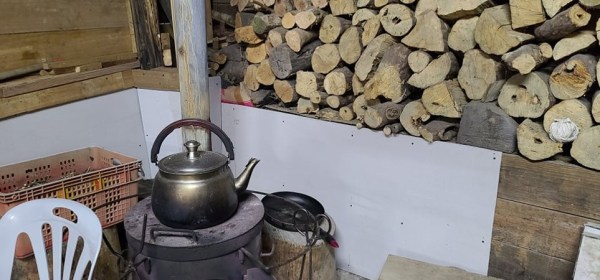
Written by Bayis Atung; translated by Yu-Chen Chuang. In recent years, due to climate change, community members have begun to think more about how to minimise the impact of disasters before they occur. When engaging in farming, we have started to think and take action to incorporate traditional land use knowledge from the past. We continuously experiment and face challenges, ultimately returning to traditional land use and cultivation ethics. We have discovered that this approach can be used to adapt to and address climate change, as it helps Cinsbu adapt to the ever-changing challenges posed by disasters. In this article, I share our land ethics and explain how sustainable land use relates to disaster prevention. Even though the intensity of climate change has increased, the Tayal people have not given up on using the land. Instead, there have been even more changes in how we use the land.

Indigenous Disaster Justice: Reflecting on Typhoon Morakot Recovery 

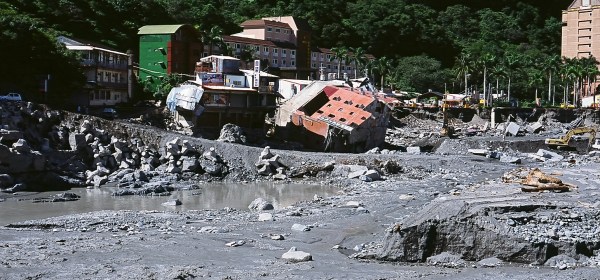
Written by Yi-Te Yu. In the past two decades, Taiwan has endured two major disasters: the 921 Earthquake in 1999 and Typhoon Morakot in 2009. Both events resulted in immense loss of life and property. The Indigenous regions of Taiwan, in particular, have borne the enduring impact that is yet to see a complete recovery. Taking Typhoon Morakot in 2009 as an example, during its onslaught in Taiwan, it unleashed a record-breaking deluge of rain. This led to a large-scale landslide in Mt. Xiandu(獻肚) in Jiaxian District, Kaohsiung, burying the village Xiaolin beneath a deluge of soil and debris. Moreover, this catastrophe also inflicted the mountainous Indigenous communities in the central and southern regions of Taiwan, including Chiayi, Kaohsiung, Pingtung, and Taitung counties, with the onslaught of floods, landslides, and debris flows. In total, it resulted in 678 fatalities and 33 injuries. 

Tracing Disaster Injustice: Indigenous Peoples’ Vulnerability and Resilience in Taiwan 

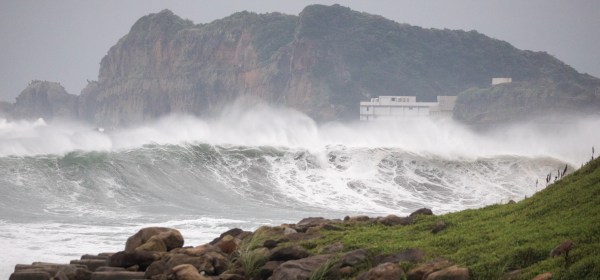
Written by Yu-Chen Chuang. In August 2023, Typhoon Khanun swept across Taiwan, particularly impacting the mountainous regions of central Taiwan. The resultant severe floods and landslides caused significant damage to infrastructure and disrupted the livelihood of local residents. One of the most severely affected areas was Renai Township in Nantou County, which is home to several Indigenous communities. The damages caused by Typhoon Khanun demanded significant labour and financial resources from Indigenous communities to manage the lengthy post-disaster reconstruction. This special issue, titled ‘Indigenous Peoples and Disaster Justice,’ will feature contributions from scholars and practitioners deeply involved in Indigenous-centered disaster management in Taiwan. We hope to foster discussions about the past, present, and future of disaster management, with a particular focus on addressing colonial injustice. 

The Democratic Progressive Party’s Nuclear Policy Dilemma: An Unwavering Anti-Nuclear Stance Amidst Self-Contradictory Policies

Written by Minfan Yu. On May 28th, the DPP-affiliated presidential campaign candidate William Lai Ching-Te (賴清德) stirred controversy by responding to a question about whether the cross-strait tensions faced by Taiwan had resulted in a shortage of natural gas for electricity production. Despite being a staunch advocate for green energy and consistently promoting an anti-nuclear stance, Lai’s answer suggesting the potential reactivation of nuclear power plants in emergency situations appeared contradictory to the DPP’s anti-nuclear policy.

There Is No Such Thing As Creativity or Lack Thereof; There Is Only Fun and Not Enjoyable: An Interview with an Artist Pei-Ying Lin

Written by Yi-Cheng Sun; translated by Yi-Yu Lai. This interview attempts to explore the metaphors of “workshops as classrooms” and “art creation as a learning process” in response to my curiosity about the phenomenon of “workshops, each with its own expression,” especially because artist Pei-Ying Lin frequently employs workshops in her art creation. 

For Molecular Archipelagic Thinking

It is a privilege to present this insightful piece ‘For Molecular Archipelagic Thinking’ from Professor Chun-Mei Chuang, a respected figure in the field of Sociology from Soochow University, Taipei. Professor Chuang’s work is marked by her interests in feminist theories, postcolonial discourse, ecology, and animal studies. In this contribution, she graciously shares her experiences and reflections on teaching sociology in Taiwan, providing a rare glimpse into her unique approach and the broader sociological landscape in Taiwan.Chun-Mei Chuang is a Professor in the Department of Sociology at Soochow University in Taipei, Taiwan. Her research interests include feminist theories, postcolonial discourse, ecology and animal studies.

Energy transition in Taiwan: Generating electricity with love, or inclusive public engagement?

Written by Anthony H. F. Li. A stable electricity supply is vital for national security, economic development as well as the everyday lives of citizens in Taiwan. Since the Democratic Progressive Party (DPP) pursued an ambitious policy to decarbonise the electricity sector with renewable energies and to phase out nuclear energy by 2025, the discussion on whether Taiwan is facing a shortage of electricity amidst the process of energy transition emerges on the social agenda from time to time.

Is Going Green Hurting Indigenous Communities? Reflection from Participating in the United Nations Permanent Forum on Indigenous Issues 

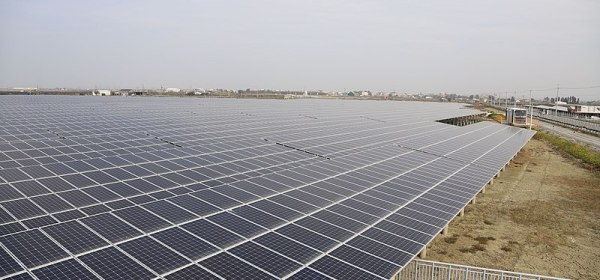
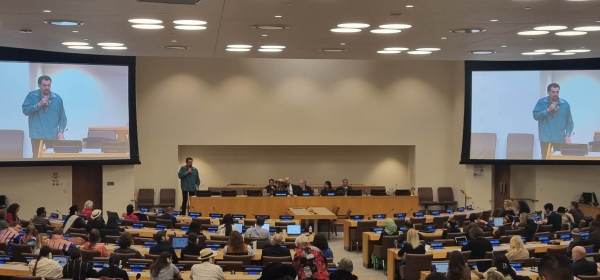
Written by Wasiq Silan. Is going green hurting Indigenous communities? Not necessarily. However, exclusionary conservation measures create a lose-lose outcome for non-Indigenous and Indigenous communities. Indeed, Indigenous peoples’ full and substantial participation is a prerequisite to achieving a sustainable future and halting the rapid loss of global biodiversity. This is true for the Indigenous communities in Taiwan, such as in the case of the solar panel controversy on the Katratripulr Pinuyumayan (Beinan in Mandarin Chinese) people’s traditional territory. Drawing from the experience of the Sámi, my recent participation in the United Nations Permanent Forum on Indigenous Issues (UNPFII) may shed light on this issue.

The Limits of “Ecological Development”: Making Existing Lifeworlds Visible on Taipei’s Shezidao

Written by Aaron Su. In March 2023, yet another round of protests broke out in response to development plans on Taipei’s Shezidao, a flood-prone peninsula on the outer edges of the city home to over 11,000 residents. Spanning multiple mayoral regimes, the Taipei government’s plans to construct on the currently development-restricted Shezidao has been met with dissatisfaction time and again from its residents, who worry about how seemingly optimistic promises of uplift and revitalization spell evictions and other drastic changes to their existing economies, social networks, and modes of life. 

Excavating Ancient Knowledge: Climate Action and the Practice of Sustainability

Written by Chung-chun Wang. Since museums are highly and closely related to society and the public with their transformation, the new definition demonstrates that accessibility, inclusiveness, diversity and sustainability are the key aspects that echo the contemporary trends. Therefore, museums usually aim to include these notions in their plans, research, and exhibitions. For example, the emphasis on “environmental education” is widely seen in museums, as it is directly linked with sustainability associated with the current energy and food crises. In this regard, how does archaeology, a discipline considered an old, ancient, and mysterious field with studying prehistories and peoples, respond to the vision of sustainability?

A Reflection on ‘Taiwan Studies’ as a Discipline in and of Itself

Written by Niki Alsford. To conclude, Taiwan Studies exists as an academic discipline because those who engage with it—whether in the continental or oceanic stories—care deeply about it. Debates surrounding its positionality will continue in an almost cyclical context because the anxieties academics have about the future of the field are shaped by the very concerns that we are all facing in a continued onslaught on languages, humanities, and social sciences at academic institutes across the globe. The future-proofing of the discipline rests in encouraging our students to engage with and think about Taiwan. After all, it is a brilliant island to study.

Pondering the Pacific: One of the Moons Version II

Written by Ysanne Chen, Ilin Tsai, and Shih-Hao Huang. In “Pondering the Pacific,” we conceptualise the Pacific as an oceanic highway or a contact zone. The vast ocean connects Pacific Islands. We travel from the island of Taiwan (we are reluctant to call it main(is)land) to Pongso no Tao to recover and explore this connection. When on the island, we further learn about Tao people’s connectedness to other Pacific Islanders. Upon our return, we wrote these poems to celebrate the Pacific. Along with other Pacific Islanders writers and poets, we praise the Pacific for its abundance and ability to connect people. We also join Pacific Islanders in voicing out against nuclear contamination and all forms of environmental injustice.

1 3 4 5 6 7 10