In Memoriam: Lee Teng-hui and the Democracy that he built

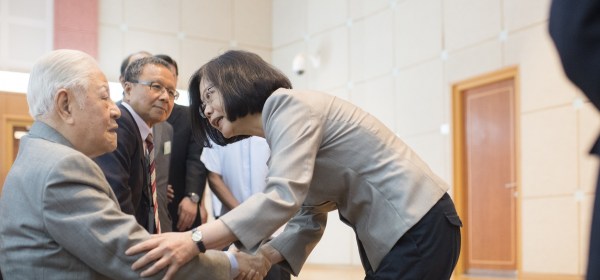
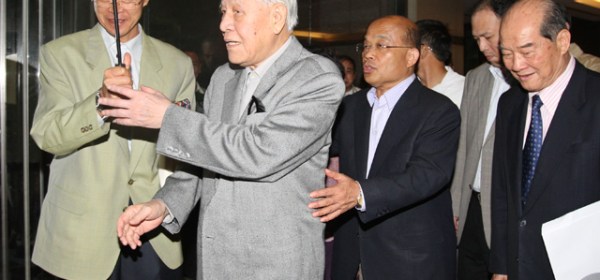
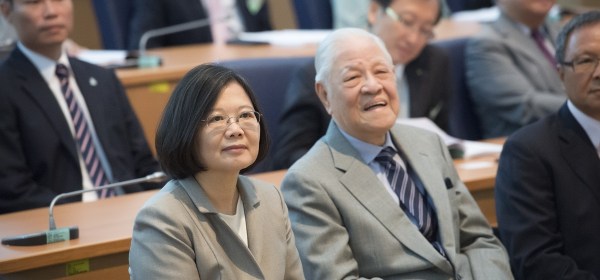
Written by J. Michael Cole. On July 30, former president Lee Teng-hui, whom many regard as the father of Taiwan’s democracy, passed away at the age of 97. Lee leaves behind a nation that is markedly different from what it was when he entered politics decades ago. No figure—none—has had as major an impact on Taiwan than Lee, whose decisions in the crucial period between the late 1980s and early 1990s determined the future course of the nation and propelled into the “third wave” of democratisation.

In Memoriam Lee Teng-hui, 1923 – 2020

Written by Gerrit van der Wees. On July 30 2020, Taiwan’s “Father of Democracy,” former President Lee Teng-hui passed away in Taipei at the ripe old age of 97. He served as the country’s President from 1988 until 2000 and guided its transformation from a repressive authoritarian dictatorship that had been imposed on the island by the Chinese Nationalists of Chiang Kai-shek after World War II, to the vibrant democracy that is Taiwan today.

Is the best friend of Taiwan in Europe the Czech Republic?

Written by Richard Q. Turcsanyi. Perhaps in the clearest form, the Czech Republic symbolises contradictory attitudes towards Beijing and Taipei found in former Communist countries in Central and Eastern Europe (CEE). While for part of the society Taiwan symbolises own rejection of Communist past and sympathy towards humanistic ideals, others are not willing to endanger promises of benefits (real or imaginary) of pragmatic developing relations with China.

Taiwan and Europe: An Uneasy History

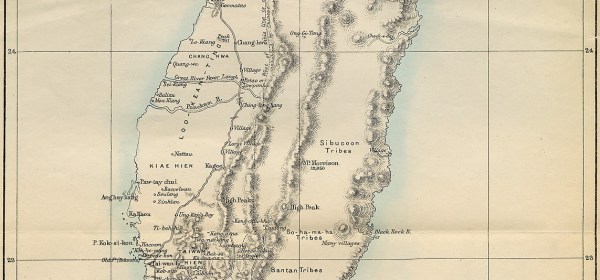
Written by Ian Inkster. The historical relations of Taiwan with Europe are by no means unproblematic. When free of Chinese imperial power, Taiwan became subject to the western Great Powers and then to an expanding, industrially founded Japanese colonialism and militarism. At this point, relations with Europe were commercially close but politically and culturally distant. Led by Britain, the European involvement in Taiwan was never truly benign. After the war of 1937-45, Europe’s interest in Taiwan was principally as a developing economy that traded in a range of complementary goods and services.

DocuSky and Digital Humanities Research

Written By Chijui Hu. Making masses of recourses accessible through digitisation is one of the core tasks for those wanting to promote digital humanities research. After twenty years of digitising archival efforts, Taiwan has amassed a sizeable digitised collection of primary materials and resources. Digital presentation of an indexing dataset in databases has facilitated far-reaching research work. However, the fact that each database has its own format and functions with its own tools makes it challenging to integrate material from multiple databases. That is, many materials have been digitised, but they cannot be used together.

Mapping the Development of Capitalism in Colonial War-time Taiwan Through New Digital tools 

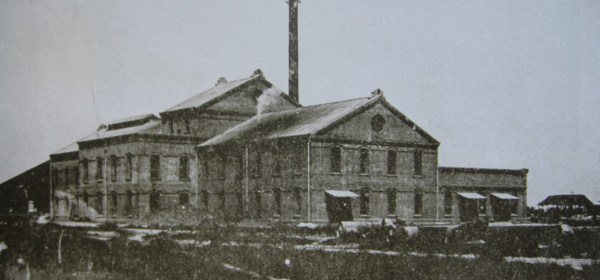
Written By Yueh-Cheng Tien. Establishing relations is a central feature in the research of humanities and social sciences. It also lies at the heart of most historical analysis—these relations concern how different individuals and institutions connect and influence one another. However, researchers often struggle to prove specific relationships due to the multitude of relations that exist concurrently, and the actual effect of these relationships can be hard to prove. This has led many historians to turn to digital and mathematical methods to model relations visually and statistically.

Preserving the History of the Present: Lessons from National Taiwan University Web Archiving System (NTUWAS)

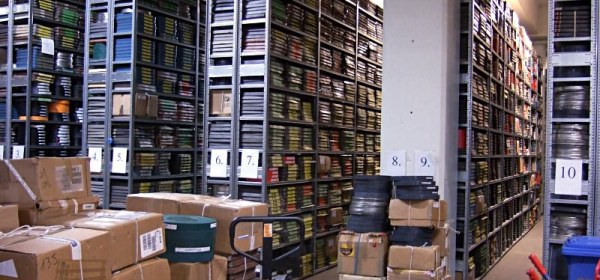
Written by the team at NTUWAS. The 21st century is, of course, very much still ongoing. We have worked to preserve documents from defining events such as the 2003 SARS pandemic and the flooding that occurred in Southern Taiwan in 2008. Recently, we have been working on recording the digital history of the ongoing pandemic and have created a new event section titled “COVID-19”

Writing History Within/Outside of Taiwan: A Postcolonial Perspective on Shawna Yang Ryan’s Green Island (2016) and Wu Ming-yi’s The Stolen Bicycle (2015) – Part 2

Written by Ti-Han Chang. Many more can be said on the comparative study of these two novels, yet what is important here is to highlight what sort of future prospect that one can further expect from the development of Taiwanese postcolonial literature as well as its significance in “worlding” Taiwanese literature as a whole. An emerging feature that may potentially be established into a kind of “new traditions” for Taiwanese postcolonial literature is the sparks that come out from its cross-disciplinary reference to environmental literature.

Epidemics, National Consciousness and the Existential Value of Taiwan

Written by Mary Wang. Reading Nobel Prize winner Albert Camus’ canonical novel, The Plague at the time of the COVID-19 pandemic outbreak led me to meditate on Taiwan’s current situation and the possibilities for its future. As the COVID-19 crisis has been unfolding, paralysing the whole globe, I found that Camus’ novel allows for meaningful comparison between the situation described in Camus’ short novel and the experience of Taiwan as an estranged member of the international community.

Will there be a Future Taiwan-US Military Alliance?

Written by Mark W. Lai. Without a doubt, from an American perspective, Taiwan is still — or potentially will be —part of China. One election in the future, another pro-China high school textbook, a charming KMT politician, or a more productive and better China, will alter Taiwan’s identity and its enthusiasm in allying with the US. America is no fool, and Japan, South Korea, Singapore and Australia cannot protect themselves without American help.

Does the TAIPEI Act help a marginalised Taiwan? Taiwan’s Growing International Isolation

Written by James Lin. While the TAIPEI Act affirms US support, it does not change the capitalist structure of the international political economy, nor the hard economic and political advantages Beijing holds over Taipei and, to a certain degree, Washington. The United States is no longer in a position to shape the United Nations, or the Bretton Woods system, as it did in the immediate post-World War II moment. Even if Taiwan regains some of its diplomatic allies, Taiwan’s international existence is precarious without formal membership in international organizations and formal diplomatic recognition from the majority of the world’s nations.

Sport as a Marker of National Identity in Taiwan

Written by Gerald R. Gems. Given the politics of state-building in Asia over the last half-century, and the continuing contentious debate over Taiwanese sovereignty, sport has played (and continues to play) a significant role in the creation and perpetuation of a national identity. Japan occupied Taiwan from 1895 to 1945 as compensation after its victory over China in the war of 1895. Baseball, an American sport, had taken hold in Japan by that time, and the Japanese introduced the game to Taiwan. In time, it became the most popular spectator sport in Taiwan.

1 10 11 12 13 14 15