Teasing Romantic and Literary Appetite: Reading Taiwan Travelogue

Written by Mu-Hsi Kao Lee. The article explores the experience of reading Taiwan Travelogue as a translated historical yuri novel. Kao Lee reflects on how the narrative, despite its clear genre and straightforward plot, evokes a sense of both satisfaction and longing in the reader. The article highlights the story’s ability to interweave historical and cultural details with the protagonists’ emotional connection, examining themes of desire, identity, and the complexities of relationships within a specific historical context.

Whose stratified reproduction? Disparities in Taiwanese gay men’s quest for overseas surrogacy

Written by Jung Chen. This article begins by examining the current Assisted Reproductive Act in Taiwan. Its exclusion of Tongzhi couples’ leads many to seek transnational surrogacy services. Recognising the controversy surrounding the services in LGBTQ+ community, the author argues for ‘flexible moral boundaries’ to distinguish between ‘problematic’ and ‘ethical’ surrogacy practices.

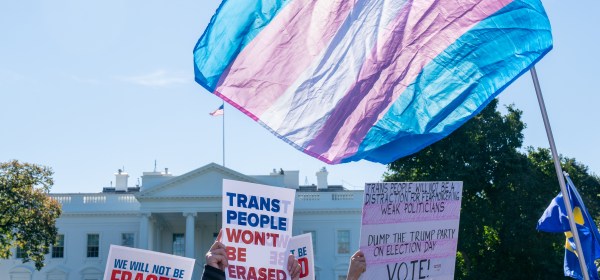
How Will 2023 Gains in Transgender Rights Fair after the 2024 Elections?

Written by Yo-Ling Chen. 2023 was a big year for Taiwan’s transgender rights movement. This article traces important legal cases regarding transgender rights in 2023, and explores how the growing public visibility of transgender issues and legal consensus around the need to abolish compulsory surgery for changing one’s legal gender play in the aftermath of the 2024 elections.

Assisted Reproductive Act Amendment: The Testing Ground for the New Taiwanese Parliament’s Power Dynamics

Written by JhuCin Rita Jhang, Ph.D. The 2024 Taiwanese presidential election has garnered substantial international attention due to the ever-intricate US-Taiwan-China relationship. However, this election means more to the Taiwanese than just how they want to engage with China. Contrarily, domestic issues carried much more weight than usual, including housing prices, economic policies, transportation infrastructure, and, for the first time in the centre of the competition, the Assisted Reproductive Act (ARA).  

The Procrastinating Progress of Transnational Same-Sex Marriage Rights in Taiwan

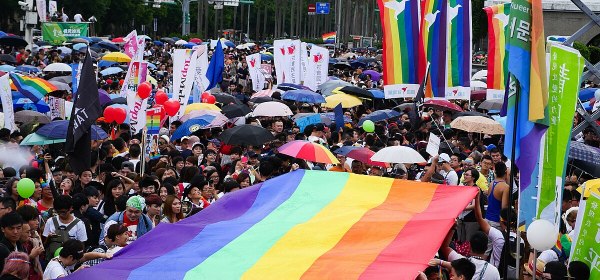
Written by Annie Huang. One historical human rights progress Taiwan made happened in 2019 when the government legalised same-sex marriage. It was a rainy morning, and hundreds of LGBTI groups and activists were standing outside the Legislative Yuan waiting for results. When the president of the Legislative Yuan announced the legalisation of same-sex marriage, the rain stopped, and a rainbow appeared in the sky. People hugged and wept with joy for this historical first in Asia. However, at the same time and in the same plaza, a group of Taiwanese same-sex people burst into tears not because of happiness but because of sadness and discrimination. Transnational same-sex couples are left out of the legalisation content in the same-sex marriage bill without much reasonable reason.

An Unlimited Future: How Do We Get There? 

Written by JhuCin Rita Jhang. The year 2022 marked the 20th anniversary of the pride parade in Taiwan. It is a feat worth celebrating, and its theme, “An Unlimited Future,” adumbrates directions we are, or ought to be, heading toward.        

The host of the pride parade, Taiwan Rainbow Civil Action Association, explained, “this year’s theme, An Unlimited Future, heralds our long-term goal—to liberate all oppressions against sex and all stereotypes, allowing endless possibilities for everyone’s identity. The ultimate goal is that one day, no one needs to announce their identity in any way but can be anyone they want without judgment.” However, to arrive at the future depicted in this statement, we need first to understand what were, are, and may remain the limits, who put these limits and on whom, what are the consequences of the limits, and more importantly, the results of removal of these limits.

Health Issues Facing Tongzhi/LGBTQ+ People in Taiwan 

Written by JhuCin Rita Jhang, Ph.D. The possibilities to study tongzhi/LGBTQ+ health are endless. Tongzhi/LGBTQ+ issues are a chance to reexamine existing power structures, assumptions, beliefs, and biases and challenge exclusive and even oppressive systems. Suppose Taiwan pledges to adhere to international human rights standards and aspires to be the leader in tongzhi/LGBTQs rights in Asia. In that case, we cannot afford to ignore tongzhi/LGBTQ+ (nor anyone else) in health, medicine, and social policies.  

With What Difficulty Indigenous LGBTQ Groups Struggles in Taiwan

Written by Remaljiz Mavaliv. Translated by Yi-Yu Lai. Taiwan is a beautiful country with diverse cultures, the Indigenous peoples of which are often viewed as significant worldwide highlights. Currently, sixteenth Indigenous groups are officially recognised in Taiwan. However, this does not protect them from discrimination and unfair resource distribution. After successive colonial regimes arrived in Taiwan one after another, colonialism and imperialism profoundly influenced the Indigenous population, and the political repercussions have persisted to the present day.  

Chemsex, digital writing, and changes in sexual practice in 21st century Taiwan 

Written by Poyao Huang. Almost parallel to the development of Taiwan’s LGBTQ+ history is a chapter on gay men’s lived experiences with drugs—a taboo chapter that many tend to ignore. In Taiwan, it is reported that young drug users are the most vulnerable population affected by HIV/AIDS and drug abuse as we see increasing numbers of young people getting involved with drugs and HIV. Drug use among bisexual and gay men is often understood in the illegal vs recreational debate. In other circumstances, the issue of drug use is associated with health concerns (HIV/AIDS or other sexually transmitted diseases), thus becoming a moral threat to social well-being.

“I’m on PrEP, hbu?” – The Meaning and Influence of PrEP among Taiwanese Gay Community 

Written by Yu-Chuan “Daniel” Lin. Although PrEP medication solves the HIV epidemic, research has found an inadequate number of MSM receiving it. For example, a 2015 U.S. CDC report has indicated that at least one of four gay men should be taking PrEP daily to effectively avoid more extensive HIV transmission, requiring the participation of roughly 1,200,000 MSM nationwide. However, its data showed that no more than 50,000 MSM are doing so, which translates into a poor execution rate (around 3%) of the government’s PrEP project designated to combat the HIV epidemic.  

1 2 3 5